
One brake pad wearing much faster than the others suggests unequal contact, movement or release that needs inspection. Possible areas include pad fit, caliper guides, piston operation and the hydraulic system. The thin pad’s position is a clue, not proof that one particular component has failed.
Do not replace only that pad and assume the issue is solved. Inspect the complete axle, determine the cause and follow the applicable pad-set and rotor requirements. If braking is compromised or there is grinding, smoke, a strong pull or an abnormal pedal, do not keep driving to compare wear.
Define exactly which pad is different
Record the wheel position and whether the pad is inner or outer. Measure friction material at more than one point and compare the partner pad at that wheel and both pads at the opposite wheel. A tapered pad can look acceptable at one end and be near its limit at the other.
Do not include the steel backing plate in the friction measurement. Also distinguish a deliberately shaped or chamfered new pad from wear that developed in service. Photographs help preserve the pattern, but measurements and the part specification are needed to interpret it.
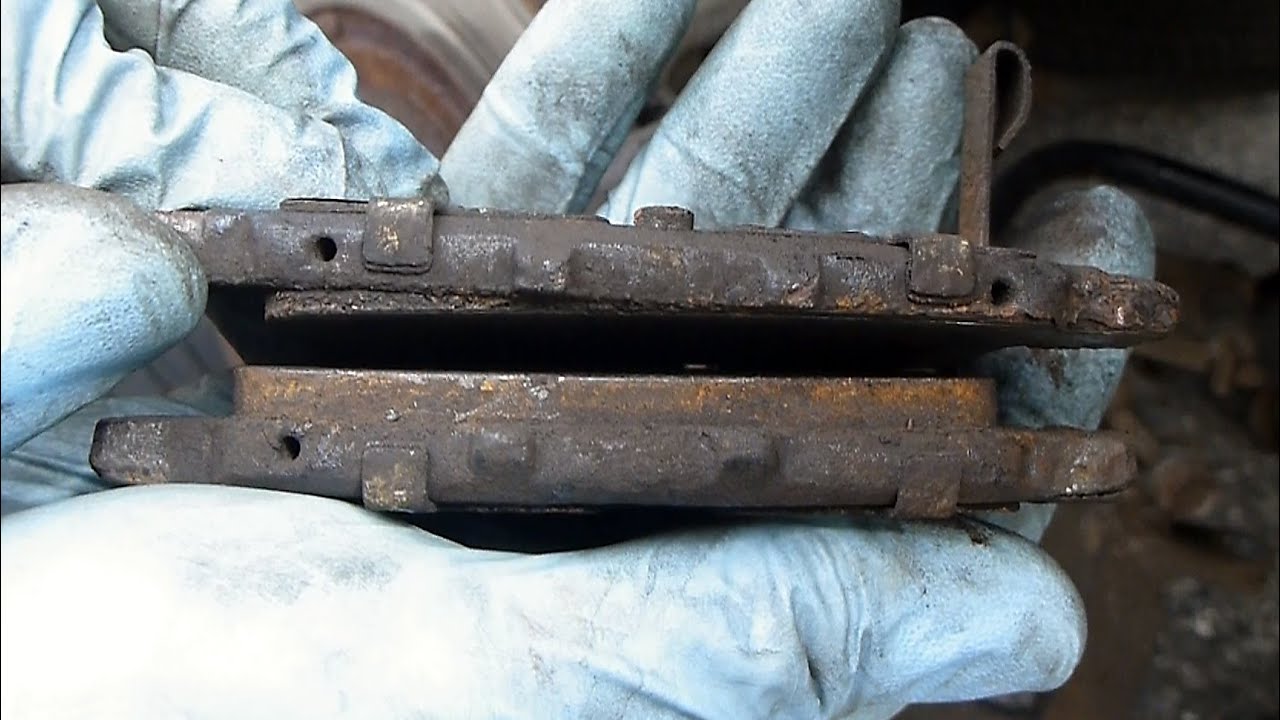
Credit: www.youtube.com
How a floating caliper makes the comparison useful
In a floating-caliper design, the piston and sliding assembly work together to apply both pads. A restriction in movement or release can disturb the relationship. Fixed calipers use a different layout, so the same inner-versus-outer explanation cannot be applied without identifying the design.
Bendix’s wear-pattern guidance uses inner, outer and tapered wear as diagnostic clues. A technician still needs to inspect the mechanism. Avoid internet rules that identify a seized piston or slide solely from which pad is thinner.
Check pad fit and supporting hardware
A pad can bind at its support even when the caliper piston is functional. Inspect corrosion, clips, backing-plate condition and application fitment. Confirm that parts installed during previous work match the brake configuration.
The separate pad-fit guide explains why forcing or grinding a pad into place is not a diagnosis. A carrier distorted or damaged by earlier work may need correction or replacement rather than another coating of grease.
Inspect guide and piston operation
Where fitted, guide pins, sleeves and boots must be assessed using the service procedure. Piston movement and dust-boot condition also matter. Delphi’s wear guidance relates abnormal patterns to problems that can affect application and release.
A piston that can be forced back with a tool is not automatically proven healthy in operation. Similarly, a guide that moves while disassembled may still need evaluation with the correct components and lubrication. Use the specified checks rather than force as a pass/fail measure.
Consider hydraulic release without guessing
A brake can remain applied because of a mechanical restriction or because hydraulic pressure is not releasing as intended. Distinguishing those requires a controlled diagnostic procedure; the wear pattern alone cannot establish a restricted hose or master-cylinder fault.
Do not clamp a brake hose with ordinary pliers or open a bleeder as an improvised roadside test. Hydraulic work can introduce leaks and air and requires proper restoration. A qualified workshop can isolate the fault using the vehicle’s procedure and then verify the repair.
Check the rotor and the rest of the axle

Credit: www.reddit.com
The pad’s contact pattern may also reflect rotor condition or previous assembly problems. Compare the rotor measurements and surfaces against the service limits. Ask whether the opposite wheel has the same issue at an earlier stage rather than inspecting only the most worn pad.
Pad replacement should follow the specified axle-set practice. Do not mix an old thick pad with a new thin-side replacement merely to equalize appearances. The repair needs compatible friction components and correction of the condition that produced the imbalance.
Verify the cause has actually been corrected
Document what failed: restricted pad movement, a damaged guide, a piston or hydraulic-release problem, or another confirmed defect. After repair, complete the prescribed functional checks and running-in instructions. A later measured inspection can confirm that the severe imbalance is not recurring.
If all pads are wearing relatively evenly but faster than expected, the broader issue is overall short pad service life. Keeping those two questions separate prevents normal heavy-use wear from being mistaken for a one-corner fault—or a dragging brake from being dismissed as driving style.


Automotive reference information. Confirm specifications in the manual for your exact vehicle. Original replacement guides link to their research sources. About us


