
Brake pads can wear quickly because they do a lot of braking work or because a fault keeps them in contact with the rotor. The most useful first check is the wear pattern across all pads on the axle. Uniform consumption and one nearly worn-out pad point toward different diagnostic paths.
Do not judge service life from a mileage claim alone. Driving conditions, vehicle load, pad specification and brake-system condition all affect wear. A replacement set that disappears unusually quickly needs an explanation before another set is installed.
Measure before calling the wear abnormal
Compare the remaining friction-material thickness at the relevant points on each pad, excluding the backing plate. Record mileage and time since installation, and compare with the vehicle’s wear limits. Looking through one wheel opening can miss the inner pad or a tapered edge.
An estimate from a previous inspection is more useful when it includes actual measurements and pad positions. “Pads were fine last month” does not show how much material was present or whether all four pads on that axle were checked.
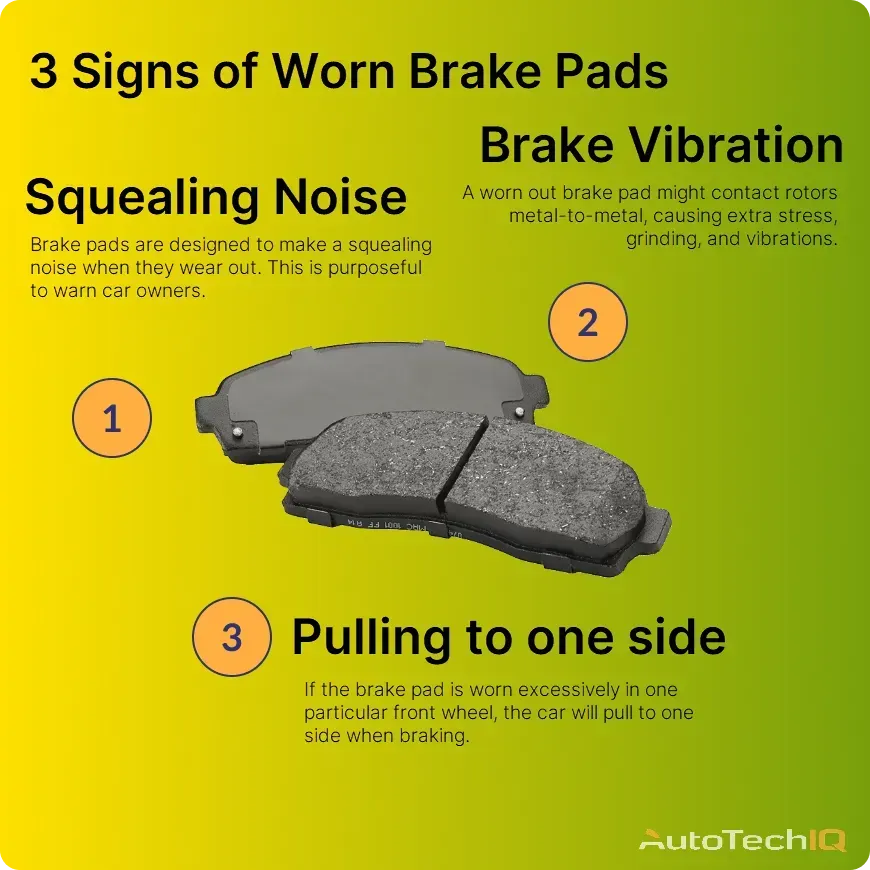
Credit: www.autotechiq.com
Distinguish usage from a brake that does not release
Frequent stops, sustained downhill braking and heavier operating loads can require more energy to be absorbed by the brakes. That does not automatically mean a component is defective. Consider whether the vehicle’s use changed after the previous set was installed.
Abnormal drag is different: the brake remains applied more than intended after pedal release. Delphi’s wear-pattern discussion identifies caliper and parking-brake problems among issues to investigate. A hot smell, smoke or pronounced pulling calls for prompt assessment, not a plan to “use up” the remaining pads.
Compare inner, outer, left and right
A pronounced difference can help direct inspection toward pad movement, caliper guides, piston operation or another release problem. Bendix explains how wear patterns provide clues to wider brake condition. The pattern is evidence to investigate, not a one-to-one component diagnosis.
For the narrower case of one pad being much thinner, see unequal pad-wear diagnosis. Avoid replacing only the thin pad and leaving the cause unresolved. Follow the applicable axle-set replacement and rotor assessment requirements.
Review the previous installation
Check part fitment, hardware, pad orientation and the condition of the carrier and guides. A correctly specified pad still needs to move in the intended way within its brake assembly. Excessive corrosion, damaged clips or incorrect installation can compromise that movement.
HELLA’s repair guidance links seized guides, stiff pistons and stuck pads with thermal damage. It also emphasizes vehicle-specific installation instructions. Extra grease or filing a pad until it fits is not a substitute for determining why the assembly binds.
Assess the rotor and friction surfaces together
A damaged or unsuitable rotor surface can affect the new pad’s contact and wear. Confirm rotor condition and measurements against the application limits rather than assuming that a recently installed pad makes the rest of the brake healthy.
Contamination, cracking or overheating needs its own assessment. Do not attempt to extend pad life by spraying oil or a general lubricant on the friction surfaces. If there is a leak, correct its source and follow the friction-component manufacturer’s replacement instructions.

Credit: www.astrobrake.co.za
Choose a correction that addresses the cause
If the system is operating correctly but duty is demanding, use a pad approved for the application and follow the correct running-in procedure. Do not select solely for a claimed longest mileage: friction performance, compatibility and intended use matter too.
If there is mechanical or hydraulic drag, repair that fault before judging a replacement compound. A workshop should document the failed movement or release check and verify normal operation after the repair. New pads alone cannot correct a brake that remains applied.
Use a follow-up measurement rather than a promise
After the repair, keep the installation mileage and the measured condition of the serviced brakes. A later inspection can establish whether wear is now reasonably balanced and whether the original rapid-loss pattern has stopped.
There is no universal distance that proves pads were good or bad. A useful conclusion connects measured wear to vehicle use and confirmed mechanical condition, instead of assigning blame from age, brand or a single visible pad.


Automotive reference information. Confirm specifications in the manual for your exact vehicle. Original replacement guides link to their research sources. About us


