
Tie rod ends do not have one dependable lifespan that applies to every vehicle. Some remain serviceable for many years; others need earlier replacement after wear, damage or contamination. Use the vehicle’s inspection guidance and the condition of the actual joints, not a generic mileage figure, to plan service.
Mileage is still useful as a record. It becomes misleading when it is treated as a guarantee that a joint below a certain odometer reading cannot be defective.
Why two similar vehicles can differ
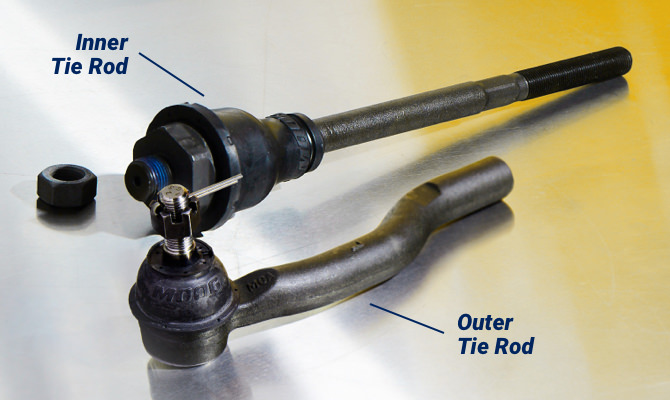
Credit: www.moogparts.com
MOOG’s overview of tie rods notes the influence of operating conditions and damage on service life. The same replacement date on two cars does not imply the same remaining condition after different roads, impacts or maintenance histories.
When comparing your car with someone else’s, consider whether the parts are original, whether the vehicle has been modified and whether the comparison is based on an inspection or simply the absence of complaints. These are different kinds of evidence.
Keep a usable history
Record the installation date, mileage, side, inner-or-outer position and part number whenever a joint is replaced. Keep the reason for replacement and any related repair. This can reveal repeated problems at one location without assuming that every recurrence is a defective new part.
A record also helps establish whether maintenance requirements changed. An aftermarket joint may have a service arrangement different from the original component. The relevant instructions should travel with the vehicle’s service history.
Follow the actual lubrication requirement
For greaseable components, maintenance can be part of their intended service. MOOG’s lubrication guidance distinguishes serviceable designs and explains that operating conditions affect its recommended maintenance approach. Follow the requirements for the installed product.
Do not puncture a sealed joint to copy another product’s greasing routine. Conversely, do not assume that every replacement is maintenance-free. If the design is uncertain, confirm the part number and instructions with the supplier.
Inspect after a change in condition
New steering looseness, an impact or other suspicious change deserves assessment rather than waiting for an arbitrary replacement mileage. A symptom may have several causes, so the inspection must identify the actual faulty component.

Credit: www.greatap.com.tw
Ask for the specific joint and the applicable pass-or-fail criteria. A quick look at a boot or a photograph of the outside cannot by itself establish the condition of the internal bearing surfaces.
Replace based on findings
A sound plan is to follow scheduled inspections, respond to new symptoms and replace parts that fail the specified checks. Where a shop recommends work, request the findings and the complete repair scope.

Credit: www.testingautos.com
There is no evidence in the cited manufacturer guidance for promising a fixed number of miles after a joint begins to wear. See the driving-risk guide if a defect has already been identified.


Automotive reference information. Confirm specifications in the manual for your exact vehicle. Original replacement guides link to their research sources. About us


