
No. Tie rod ends differ by steering design, vehicle application and position. Even parts with similar housings can use different connections or adjustment arrangements. Order by verified fitment and the complete part number, not by appearance alone.
This checklist is for choosing the correct replacement. It does not provide dimensions or torque settings for an unidentified vehicle.
Name the component precisely
Establish whether the job concerns an outer end at the wheel-side steering connection, an inner joint at a rack, or another part of a different steering-linkage arrangement. Identify the side where the application distinguishes it.

Credit: mygarageairdrie.ca
The terms used in advertisements are not always precise. Ask for the diagram position and part number if an estimate says only “tie rod.” A complete assembly and one replacement joint may include very different amounts of hardware.
Use the full vehicle application
Have the model year, model, drivetrain and relevant steering options available. Where requested, use the VIN and production information. MOOG’s part lookup is one manufacturer example of application-based selection.
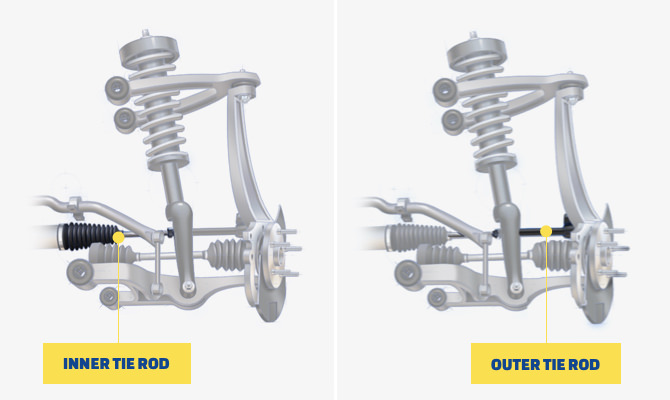
Credit: www.moogparts.com
A listing covering many years may include notes that narrow the fitment. Read those notes before ordering. If the vehicle has modified steering, also identify the actual rack, knuckles and mating components; the original registration details may no longer describe the complete assembly.
Do not let one matching feature decide
Matching threads do not establish every other interface. Overall geometry, the mounting connection, usable adjustment, articulation and clearances must also meet the intended application. Required nuts, retainers and other hardware matter too.
A replacement that needs force, improvised spacers or altered mounting surfaces to fit should trigger a fitment review. Do not treat successful partial assembly as evidence that the part is correct.
Check installation and maintenance differences
Find the instructions before disassembly. Confirm whether the component is sealed or serviceable and which supplied hardware must be used. MOOG’s installation notes illustrate that orientation within the assembly can matter; installation is not simply tightening whatever fits.
A different service design can be legitimate when the manufacturer specifies the application. It still needs to be understood so future maintenance does not overlook a fitting or attempt to grease a sealed component.
A practical order record
Record five things: the vehicle configuration, component position, complete replacement number, catalogue confirmation and required additional hardware. Keep the seller’s written clarification if a note was ambiguous.

Credit: www.moogparts.com
Use the focused guides for Ford-to-Chevy interchange questions and S13/S14 steering setups. A verified application is a better answer than a general claim that all ends are either identical or incompatible.


Automotive reference information. Confirm specifications in the manual for your exact vehicle. Original replacement guides link to their research sources. About us


