
A ball joint should remain in service only while it meets the applicable condition and inspection requirements. There is no mileage at which every joint fails, and no general lifespan estimate can certify the condition of the one on your vehicle. Design, installation, exposure, use and maintenance affect the result.
Mileage is useful history, but it is not a wear measurement. The practical question is whether the part is still serviceable and what evidence supports that judgment.
A joint may require attention because of wear, damage, binding or an unsafe attachment before a commonly quoted lifespan is reached. Another may remain acceptable for much longer when inspected correctly.
Neither outcome can be predicted from the vehicle’s odometer alone. This guide concerns expected service life and how to investigate unusually early trouble.
It is not a safe-driving allowance after a defect has been found. If a joint has been judged unsafe, use our driving-risk guide to plan repair and transport rather than trying to convert an average lifespan into permission for another trip.
Lower-joint life depends on the actual suspension
Do not assume that every lower ball joint carries the same load or has the same service life. Suspension architecture determines how forces reach the joint. Two vehicles can both have upper and lower joints while placing different demands on them. Position is useful for identifying the part, but it is not a complete explanation of its operating conditions.
Ask which component was assessed and how the inspection applies to that design. A report that lower joints always wear first is less useful than findings for the actual vehicle. The installed part number, attachment condition and maintenance history provide more relevant context. If only one side was replaced previously, the two sides also have different histories even when the present mileage is identical.
A replacement supplied within a control-arm assembly should not be compared casually with a separate joint used on another vehicle. Its mounting and related components may differ. When evaluating whether life seems unusually short, compare like applications and documented conditions rather than treating all parts carrying the same name as equivalent.
Separate wear evidence from symptoms
- A clunk, steering change or uneven tire wear can prompt inspection but does not establish the joint’s age-related condition by itself. Other suspension, steering or wheel-end faults can produce similar complaints. A technician should identify the source and use the proper inspection method. The fact that a component is old does not prove it caused the symptom.
- Likewise, quiet operation is not a complete health assessment. A damaged boot or measured excessive movement may be found before a driver notices anything. Record the actual defect rather than reducing the conclusion to old versus new. Our symptom guide explains why those observations need confirmation.
- The distinction matters when estimating future maintenance. An inspection showing acceptable condition is evidence about the present assessment. It is not a guarantee of a specific remaining mileage. A report showing a defect needs an appropriate repair decision regardless of whether the part has reached an informal lifespan target.
Exposure, loading and maintenance change the context
- MOOG’s discussion of ball-joint wear identifies driving conditions and exposure to road splash and salt among factors affecting service life. These factors help explain variation, but they do not allow a precise calculation of months remaining. The effect on an individual component depends on its condition and protection. Consider the complete history when a joint wears unexpectedly. Was the vehicle exposed to damage, frequent rough-road use or changed suspension geometry?
- Was the correct part installed? Were protective components intact? Were applicable lubrication requirements followed? These are questions for investigation, not proof that the driver caused the failure.
- Do not use one factor to dismiss another. A vehicle can have harsh operating conditions and an installation problem at the same time. A supplier’s claim of improved durability also does not eliminate the need for correct fitment and inspection. The useful result is a supported explanation of the actual defect.
Why a quoted average is a weak replacement rule
- A mileage figure often lacks the information needed to apply it. It may describe a broad expectation for some vehicles rather than a measured average for your exact part and use. It may also refer to the original component while your vehicle carries a replacement with different maintenance provisions. Without those details, the figure is background context, not a service instruction.
- Averages also conceal variation. Even a well-supported average would not tell you whether one particular joint remains within its limits. Do not delay a necessary repair because the mileage seems too low, and do not replace a sound part solely because it crossed an unsupported internet threshold. Follow the vehicle’s inspection schedule and the findings for the installed assembly.
Use inspection to decide when replacement is necessary
- Delphi’s service guidance emphasizes assessment for damage and excessive free play and notes that the inspection approach depends on suspension type. That points toward condition-based decisions rather than a universal replacement countdown. A valid finding should name the joint, the defect and the relevant criterion. If a report gives a movement measurement, ask how it was taken and which limit applies.
If it cites physical damage, ask which area is affected. A wheel-shake demonstration without localization can include movement from another component. Our inspection-method guide explains what makes the evidence meaningful.
A repair estimate should also address installation hardware and any damaged receiving component. Replacing the joint alone may not resolve a loose or damaged attachment. The purpose is to restore the assembly’s required condition, not simply reset the age of the most visible part.
Mileage is a record, not a verdict
Record both vehicle mileage and mileage since the last joint replacement when known. These answer different questions. The odometer does not reveal whether the part is original, whether an earlier owner repaired one side or whether a control arm was replaced after impact damage. Good records make a service-life discussion more accurate and reduce the temptation to fill gaps with assumptions.
Build a useful history before comparing lifespans
Collect the installation date, part identity, side and position, repair invoice and any subsequent inspections. Note whether the component is sealed or greaseable and what service was documented. Add major changes such as suspension modifications or relevant impacts. This record does not prove the cause of failure, but it gives the inspector a much stronger starting point than a mileage claim without context.
Investigate an early failure without jumping to blame
- An early complaint should first be confirmed as a fault in the replacement joint. Noise can come from a retained bushing, steering connection or another wheel-end part. If the joint is defective, identify whether the issue is internal wear, binding, boot damage, housing retention or the stud connection. Different defects lead to different explanations.
- Check application and installation against the actual part instructions. A component that fits into a hole is not necessarily the correct design or orientation. Ask whether the receiving surfaces and related hardware were inspected during the original repair. Retain photographs and part identification where practical.
- These details may help a supplier or repairer assess a warranty claim. Do not alter the failed part before discussing the evidence with the responsible workshop. Unnecessary grinding, drilling or disassembly can remove clues and complicate the review.
- Keep any replaced parts safely if the repairer’s process permits it. A factual description is more useful than deciding in advance that the brand, installer or driver must be at fault. If the same corner has repeated problems, review the entire pattern.
- Consider what has been replaced, what remains, how the fault was verified and what changed after each repair. Repeating the same replacement without a cause assessment can leave an underlying fitment or system problem unresolved. A warranty replacement is a remedy for a part claim, not automatically a diagnosis of the vehicle.
Maintenance supports serviceability; it cannot reverse wear
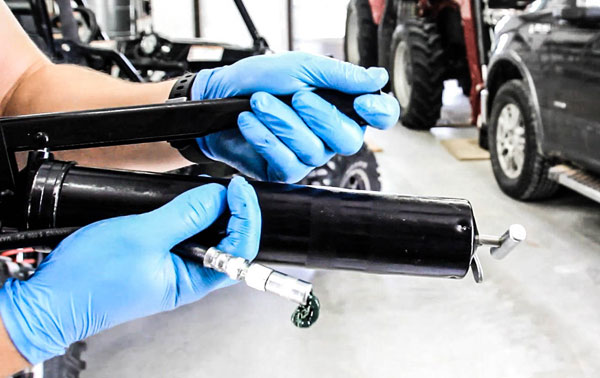
- Follow the requirements of the installed component. A greaseable replacement may need routine service even where the original joint did not. A sealed design should not be punctured to imitate that routine. Identify the actual part before applying either assumption.
- Correct lubrication can support a serviceable joint, but more grease cannot replace lost bearing material or restore a damaged attachment. A change in noise after servicing is not proof that the assembly meets its inspection criteria. If wear has been confirmed, address the repair rather than increasing lubrication frequency as an improvised substitute. Protective boot damage also needs an appropriate service decision.
- Do not assume that fresh grease or an external patch removes contamination already inside. The available repair depends on the design and findings. Document what was inspected and what was actually corrected.
New symptoms require a current assessment
- A recent good inspection does not invalidate a new steering change, impact or noise. Report what changed and when. Avoid driving to reproduce a severe symptom.
- If the vehicle is unstable or a connection is known to be unsafe, arrange recovery. Likewise, a recent replacement does not make a complaint harmless. Installation condition, surrounding parts and the replacement itself all remain possible areas for assessment.
- Give the repairer the original invoice and explain whether the symptom is new or unchanged. Treat the resulting report as a current condition assessment rather than another lifespan prediction. This keeps the repair decision connected to evidence instead of expectations about how long a new part ought to last.
Questions to ask at the next inspection
Ask whether the joint passed the correct inspection and whether any damaged protection or attachment was found. Ask what maintenance applies to the installed part.

Credit: www.reddit.com
Ask whether other components could explain the reported noise or tire wear. Ask which findings support any proposed replacement.
Ask what should prompt an earlier return between scheduled services. Those answers provide a practical ownership plan without inventing a guaranteed lifespan.
Keep the report with the vehicle records and follow the specified service schedule.
The goal is to identify deteriorating condition while it can be addressed appropriately, not to extract the last possible mile from an uncertain component.


Automotive reference information. Confirm specifications in the manual for your exact vehicle. Original replacement guides link to their research sources. About us