
There is no reliable single Meineke brake-pad price for every vehicle and location. Ask the branch for a written estimate for your exact vehicle and axle. A pad-set price, an advertised starting offer and a complete installed brake job describe different purchases.
The useful question is not just how much the pads cost. It is what condition the brakes are in, what work the quote includes and which charges can change after inspection.
What the official service page establishes
Meineke’s brake-service page says cost depends on the vehicle and brake condition, and directs customers to an inspection for an accurate estimate. It does not establish a nationwide installed price that applies to every brake job.
Check the selected location’s current offer and its exclusions. An expired coupon or another city’s promotion is not a quote for your car. Save the offer you intend to use and ask the branch to confirm eligibility before authorizing work.

Credit: www.meineke.com
Separate pads from an axle service
An estimate should identify front or rear service, the pad product and labor. Ask whether the quoted pads are for both wheels of the axle. Do not assume a number advertised as starting at represents four-wheel service.
Ask about clips, shims, wear sensors and any required single-use hardware. Some parts are supplied in the pad box; others may be separate for your application. The invoice should make clear what you are buying rather than presenting an unexplained brake package.
Why rotor work changes the total
Pad replacement and rotor replacement are different operations. Ask for the rotor measurements, applicable limit and condition findings behind the recommendation. A rotor may need replacement because of its condition even when the pads were your original concern.
If machining is proposed, ask whether the finished rotor will meet the vehicle specification. If replacement is proposed, ask whether the quoted price includes both rotors on the serviced axle. Two estimates are not equivalent if only one includes that work.
How to compare two quotes fairly
Request the same scope from each shop: the same axle, a comparable pad specification, the same rotor decision, hardware, labor, taxes and fees. Ask whether diagnosis is charged separately or credited toward the repair.
A lower headline price can become a higher final invoice if essential items were omitted. Conversely, additional services should have a reason. A brake-fluid service, caliper replacement or other repair should be explained independently, not presumed necessary because pads are worn.
Questions before approving the job
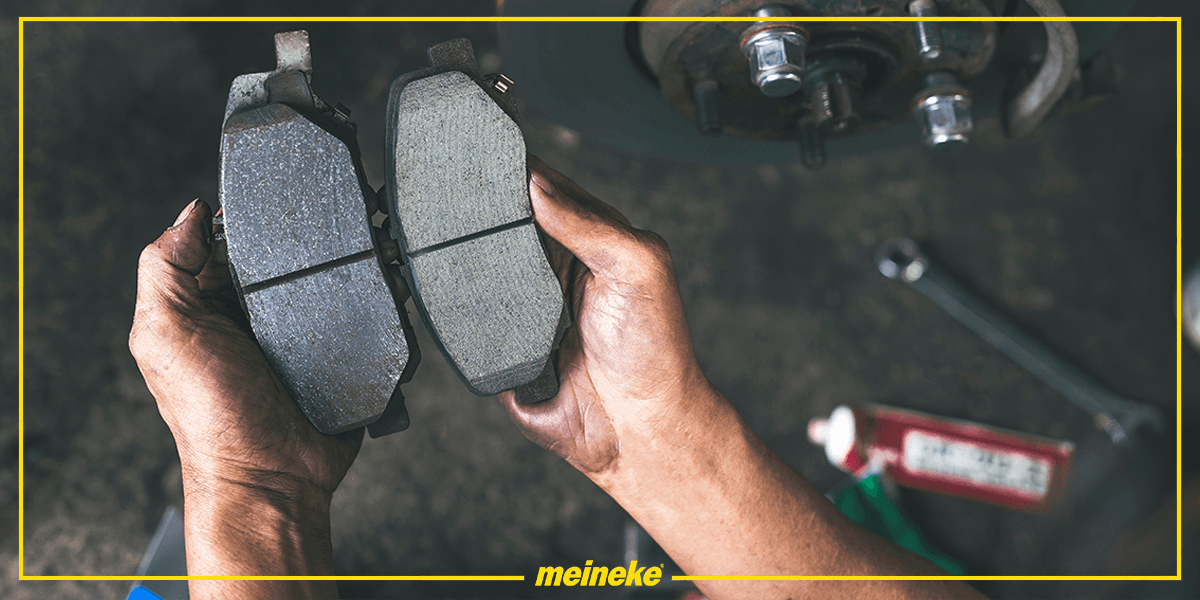
Credit: www.meineke.com
Ask for the measured remaining friction thickness and any uneven wear. Ask which items are required now, which are recommended for a documented reason, and which are optional. Request approval before the shop exceeds the agreed amount.
Clarify parts and labor coverage separately. Ask whom to contact if there is a noise, pulling or pedal complaint after collection. Keep the written estimate and final invoice with the vehicle’s service records.
When waiting for a deal is the wrong decision
If braking has become weak, the pedal sinks, fluid is leaking or a wheel is overheating, do not drive from shop to shop seeking a coupon. Arrange appropriate inspection and transport. Price comparison is useful for planned maintenance, but it is not a diagnosis of a braking fault.
For material choices within an otherwise comparable estimate, use the ceramic-versus-metallic comparison. Choose the correct service first; then compare the price of that service.


Automotive reference information. Confirm specifications in the manual for your exact vehicle. Original replacement guides link to their research sources. About us


