
Disconnecting a fuel pump can mean disabling its electrical supply, unplugging its connector or removing its fuel connections. Those are different operations. Unplugging the pump does not necessarily remove pressure from the fuel system, and removing a fuse does not prove that every circuit in a module is isolated. Before touching anything, identify the exact task and obtain the service procedure for the vehicle's year, engine and fuel system.
If the purpose is emergency response to a fuel leak, do not crawl beneath the vehicle searching for a connector or create sparks by experimenting with electrical connections. Stop the engine if it is safe, move away from the hazard and obtain appropriate assistance. If the purpose is planned maintenance, begin with a cool vehicle in a suitable work area. Fuel work requires control of ignition sources, spilled liquid and vapor, not merely a pair of gloves.
This guide helps organize that preparation. It does not provide a universal relay position, wire color or pressure-release sequence. A procedure that is correct for one conventional gasoline system may be inappropriate for a direct-injection vehicle, a diesel, a hybrid or a pump controlled by a separate module. If the service information or safe access is unavailable, arranging professional work is the practical next step.

Credit: www.reddit.com
Define the isolation sequence before opening the system
Write down what needs to be disconnected. Replacing an accessible electrical connector may not require removing a fuel line. Replacing a tank module usually involves several systems: electrical supply, fuel delivery, vapor plumbing, the level sender and the tank seal. A drawing of those connections prevents an unnecessary opening and helps identify parts that must be renewed. Do not unplug every nearby connector simply to find out which one stops the pump. Consult the correct wiring diagram and service instructions.
A pump may be fed through a conventional relay, a solid-state controller or a different arrangement. The connector can also contain circuits for the level sender or other functions. Pin count and wire color alone are insufficient identification. A replacement pigtail must be mapped using its supplied instructions and the vehicle circuit information, not matched casually by whichever wires look similar. Record existing diagnostic codes and the complaint before disconnecting power when it is safe to do so. Isolation can alter the available evidence or create new circuit codes.
If diagnosis is still in progress, the technician may first need measurements with the system operating under controlled conditions. Do not confuse that diagnostic stage with the later stage in which the system is made safe for dismantling. The sequence matters because some manufacturer procedures require power for a pressure-relief operation. Follow the specified depressurization method. It may involve a controlled pump-disable procedure, scan-tool operation or another defined process, depending on the system. Removing a fuel cap addresses the tank opening; it does not establish that a pressurized delivery rail is safe to open.
A stopped engine can retain fuel pressure. Never loosen a high-pressure injection fitting as an improvised way to release it, and do not assume waiting an arbitrary number of minutes guarantees zero pressure. After the required pressure-relief steps, follow the manufacturer's electrical isolation sequence. Prevent accidental starting and keep the key or remote from triggering an unintended operating state. Hybrid and start-stop vehicles can require additional precautions beyond what an older vehicle uses. Do not improvise high-voltage work.
The fact that a fuel pump is part of a low-voltage circuit does not make every surrounding vehicle system safe to handle without the appropriate procedure. Access the connector without putting yourself beneath an unsupported vehicle. If the pump is reached through an original service opening, use that opening as specified. If tank removal is required, plan suitable lifting support and fuel handling before undoing straps or lines. Cutting a new hole in the body above a fuel tank is not an acceptable substitute for a missing access panel. The preparation should account for the actual installation rather than forcing an easier-looking route.
Clean loose debris away from connectors and surrounding openings before separation. Dirt that falls into an exposed fuel fitting can create a later restriction or damage sealing surfaces. Use only the cleaning method and materials suitable for the component. Do not flood an electrical connector with an unapproved solvent, and do not direct compressed air into an open fuel system. Clean access is part of the repair, not a cosmetic finishing step. Release the connector's lock according to its design.
Some have a secondary lock that must be moved before the main latch works. Pull on the connector housing where the procedure directs, not on the wires. A latch that will not release is a reason to inspect its mechanism, not to lever against brittle plastic until it breaks. Photograph the original routing and lock position before removal so reassembly can be checked against a clear record. Inspect both halves after separation.
Look for damaged seals, displaced terminals, corrosion or heat damage. Delphi: performing a fuel-pump voltage-drop test warns against using inappropriate meter probes that damage harness terminals. The same principle applies during handling: do not force objects into cavities to test their size or scrape contacts casually. A visibly overheated connector may need the approved repair rather than being plugged into a new pump unchanged. Correct the cause of resistance as well as the damaged part.
If fuel lines must also come off, identify each connector type and its specified release tool. Electrical disconnection is not permission to pull a pressurized line apart. Provide suitable containment, cap openings with fuel-system-compatible caps and preserve the distinction between feed, return and vapor connections. A rag stuffed into an opening is not a proper cap. Labeling and clean temporary protection reduce the chance of contamination or incorrect reconnection during a longer repair.
Check replacement instructions and avoid electrical shortcuts
Delphi: in-tank fuel pump replacement instructions highlights application-specific installation instructions and connector updates for certain replacement modules. This is why the instructions supplied with the actual part must be read before cutting or modifying any harness. A change in connector shape does not justify inventing a splice arrangement. Use the required terminals, sealing method, wire assignment and routing for the documented repair. If the supplied information conflicts with the vehicle identification, stop and resolve the discrepancy with the supplier. Do not determine safety by guessing the pump's normal current draw.
Different motors, pressures, control methods and operating states produce different values. A fuse rating is not the normal operating-current specification, and a larger fuse is not a repair for a circuit that blows the correct one. Likewise, bridging a relay socket with a loose wire can bypass control and create an ignition source. Diagnostic energizing requires a defined, protected test arrangement, not an improvised connection beside open fuel. If a damaged connector is the reason for the work, preserve enough of the original assembly to understand the failure.
Note whether the seal was displaced, whether a terminal lost grip and whether the harness was stretched against the tank. A replacement that follows the same damaging route may fail again. Routing must allow the intended movement without contacting sharp edges, hot exhaust components or moving parts. Refit the original protective hardware or its approved replacement. A disconnected pump may still contain fuel.
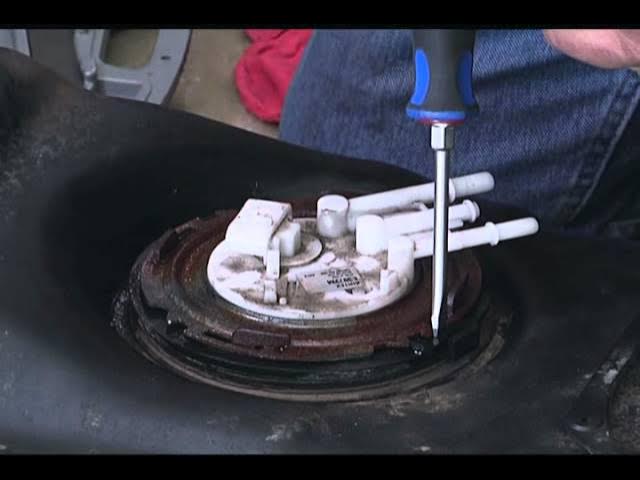
Removal, transport and storage therefore require appropriate precautions even after the electrical supply has been isolated. Do not place it next to a battery charger or carry it into a living area to inspect it. Follow workshop and local waste-handling requirements for residual fuel and contaminated materials. Motorservice: electric fuel pump designs and damage analysis is useful background on pump designs and damage, but the service information remains the authority for dismantling the particular assembly. Before reassembly, compare every connection with the record made during removal.
Check part identity, seals, retainers and the planned routing. An electrical connector that appears inserted may still have an unlatched secondary lock. A fuel connector may need a defined retention check. These details should be verified deliberately rather than assumed because the engine started. Do not use adhesive, cable ties or sealant to compensate for a broken connection mechanism.
Credit: www.youtube.com
Restore the system and verify the reason for the work
Reconnection follows the vehicle and replacement-part instructions, including any required priming or initialization. Restore power only when the fuel system is assembled and the work area is ready for the prescribed checks. Inspect for leakage during the specified pressurization stage before normal operation. If fuel appears or a strong unexpected fuel smell develops, stop and correct the problem rather than tightening random fittings while the system is energized. Confirm that the original purpose of the disconnection has been achieved. If a connector was repaired, verify the electrical result under the appropriate load. If a pump was replaced, verify delivery and the original complaint.
If the work was only to gain access for another repair, check that the fuel system and level indication still operate correctly afterward. A successful restart is useful, but it is not the only completion check. Keep the part number, wiring repair information and test results. Those records explain any intentional change from the original connector and prevent a future technician from mistaking an approved repair for an unknown modification. The essential rule is to treat electrical isolation, pressure relief and mechanical separation as distinct steps. Completing one does not automatically complete the others, and the vehicle-specific sequence is what connects them safely.


Automotive reference information. Confirm specifications in the manual for your exact vehicle. Original replacement guides link to their research sources. About us


