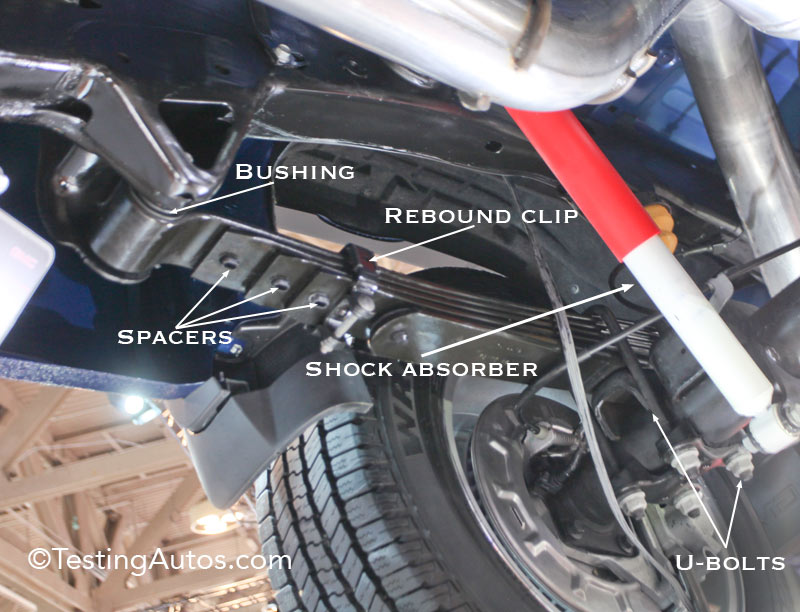

The right fix for squeaky leaf springs depends on where the movement and noise originate. A spring pack, eye bushing, shackle, contact pad or nearby suspension part can sound similar from the driver’s seat. Spraying everything with lubricant can hide a clue without repairing the fault.
Start by distinguishing an isolated noise from a structural problem. If a spring is broken or displaced, the vehicle sits suddenly lower, or the axle appears out of position, stop driving and arrange a qualified inspection. Noise troubleshooting comes after the suspension is known to be secure.
Record when the squeak happens

Credit: www.tiktok.com
Note whether the noise began after spring replacement, appears only when loaded, changes in wet weather or occurs over one-wheel bumps. These conditions help a technician reproduce it. A recording from inside the cabin is useful; nobody should ride outside the vehicle or stand beneath it while it is moved.
Remove loose cargo from the diagnosis before blaming the spring. Bed hardware, spare-wheel mounts, exhaust supports and other suspension joints can transmit sound through the body. A noise heard near the rear axle does not establish which component is responsible.
Recent installation changes the first checks
EATON’s guidance for squeaks after installing springs identifies attachment-related problems, including eye/shackle fasteners and U-bolt clamping. That is a reason to review the installation, not permission to loosen fasteners experimentally.
Have the installer verify the correct hardware, bushing arrangement, tightening condition and applicable specifications. The required suspension loading position and any later fastener check depend on the actual system. A generic torque figure or instruction to leave bolts “just snug” is not a safe substitute for that information.
Why grease is not a universal cure
EATON cautions against indiscriminate greasing between spring leaves. Spring materials, liners, coatings and bushings differ, so the appropriate treatment must come from the vehicle or component manufacturer. A lubricant suitable for one serviceable joint may be unsuitable for another.
If a documented service procedure specifies cleaning or a lubricant, follow its exact contact location and material requirements. Do not coat the pack as a general maintenance ritual, and keep products away from brakes and tires. A temporarily quieter noise does not prove a damaged component has been repaired.
What a proper inspection should establish
The technician should check spring alignment, cracks, mounting security, bushings and any designed isolators or contact pads. Hendrickson’s HTS service document is one manufacturer example that treats damaged leaves and clips as inspection and replacement issues, not simply noise complaints. Its repair rules are specific to that suspension.
Ask which part is actually moving incorrectly and whether evidence shows wear, missing isolation material or an installation fault. If the spring assembly is sound but a bushing has failed, replacing the identified component is more defensible than automatically replacing the whole spring pack.
Keep diagnosis and repair within safe access limits

Credit: www.youtube.com
A leaf spring can store energy and help locate the axle. Do not remove clamps, U-bolts or spring-eye fasteners while trying to isolate a sound. Proper support and a vehicle-specific procedure are necessary before disassembly; a jack under the differential alone does not establish a safe repair setup.
After a confirmed repair, the shop should check the original operating condition and any specified follow-up inspection. Persistent squeaks deserve another localization check rather than successive layers of spray. For visible damage and ride-height concerns, use the separate guide to bad leaf-spring warning signs.


Automotive reference information. Confirm specifications in the manual for your exact vehicle. Original replacement guides link to their research sources. About us


