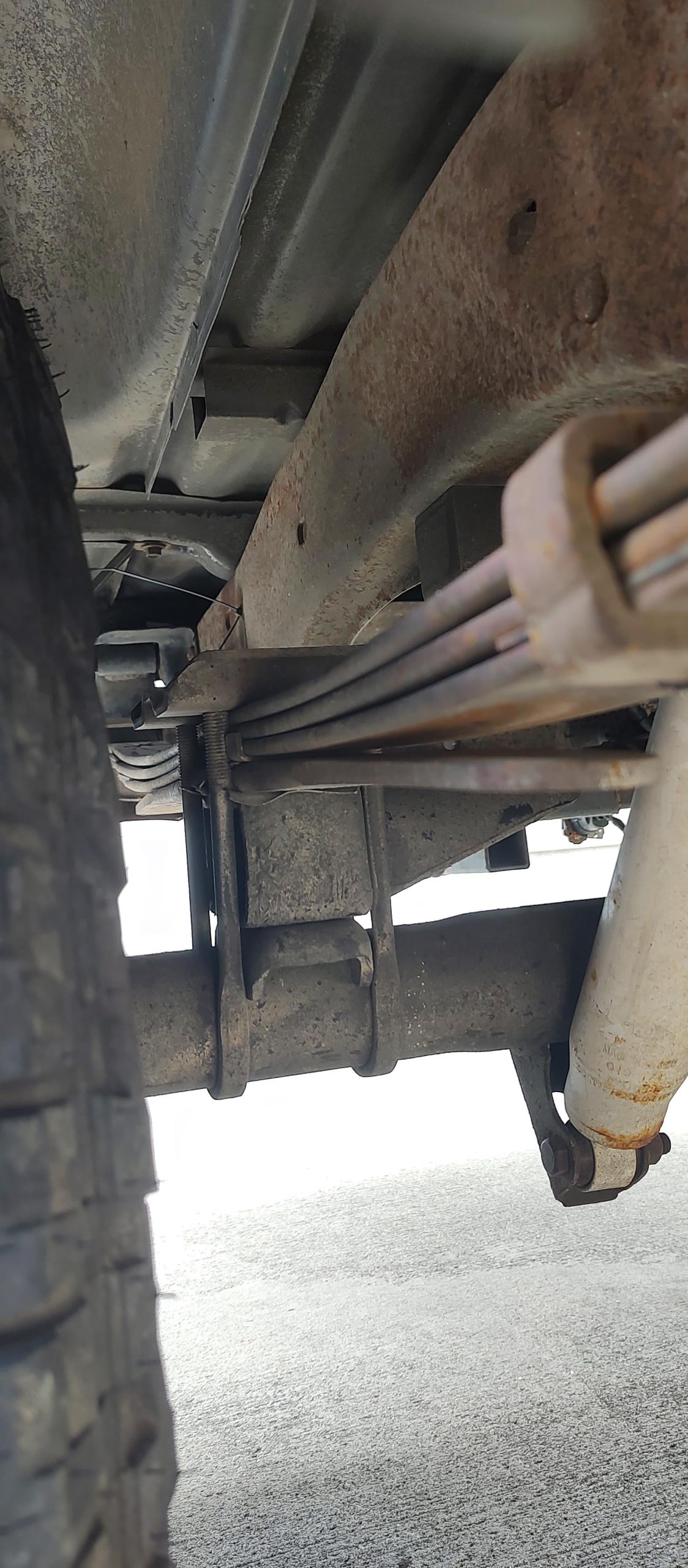

A cracked or broken leaf, a shifted spring pack or a damaged attachment is stronger evidence of a leaf-spring problem than a squeak alone. Persistent sag or a new lean also deserves investigation, but loading, tires and other suspension damage can produce similar observations.
Do not keep driving with a displaced spring, an insecure axle attachment or a broken component that may contact a tire or other part. Arrange professional inspection and recovery where necessary. A suspension defect cannot be made safe simply by removing some cargo.
Look for a change, not an imaginary perfect shape
Leaf springs are designed with different shapes and operating positions. A spring that looks relatively flat under load is not automatically worn out. Compare its condition with the vehicle’s specifications and history rather than a photograph of a different truck.
Useful clues include a newly uneven stance on level ground, less clearance than before with the same permitted load, or repeated bottoming that did not previously occur. Record these changes. They help a technician choose measurements but do not identify a replacement spring by themselves.
Visible defects that deserve prompt attention
Ontario’s truck inspection guidance includes broken, missing and displaced spring components. Those are useful inspection categories, although its legal defect classifications apply to the vehicles and jurisdiction it covers.
From a safe position, look for an obviously broken leaf, a stack no longer aligned as intended, damaged mounting brackets or contact marks where parts should not touch. Do not crawl under a vehicle without appropriate support, and do not use your hands to check moving suspension parts while another person rocks it.
Rust requires a condition assessment

Credit: blog.1aauto.com
Surface oxidation is not the same as a structural crack or deep section loss. Conversely, heavy corrosion can obscure defects and weaken attachments. A photograph of a rusty spring cannot reliably establish how much strength remains.
Have a technician inspect suspicious corrosion, especially at spring eyes, attachment points and areas hidden within the assembly. Grinding or coating everything before inspection can remove useful evidence. Do not heat, weld or attempt to straighten a damaged spring as an improvised repair.
Noise and handling symptoms are supporting clues

Credit: www.roadrescueinc.com
A squeak may come from a bushing, contact pad, mounting issue or another component. A clunk can also have several causes. Our squeaky leaf-spring guide focuses on identifying the noise before choosing a treatment.
Likewise, poor tracking, hopping or a rough ride is not a diagnosis of worn springs. Tire condition, dampers, alignment and loose suspension hardware may contribute. Report when the behavior occurs and avoid test driving a vehicle with suspected structural or attachment damage.
What the repair inspection should answer
Hendrickson’s HTS service instructions call for a wider suspension inspection when their specified spring assembly has damaged leaves or clips. That illustrates the need to assess the assembly and its surroundings; its parts-replacement rule should not be applied blindly to other designs.
Ask whether the fault lies in the spring itself, its bushings or its mounting hardware. The replacement must match the application and intended ride height. The shop should also explain whether the opposite-side spring needs replacement under the manufacturer’s guidance and the condition found, rather than assuming either one or both is always correct.
Do not use a helper spring to conceal a defect
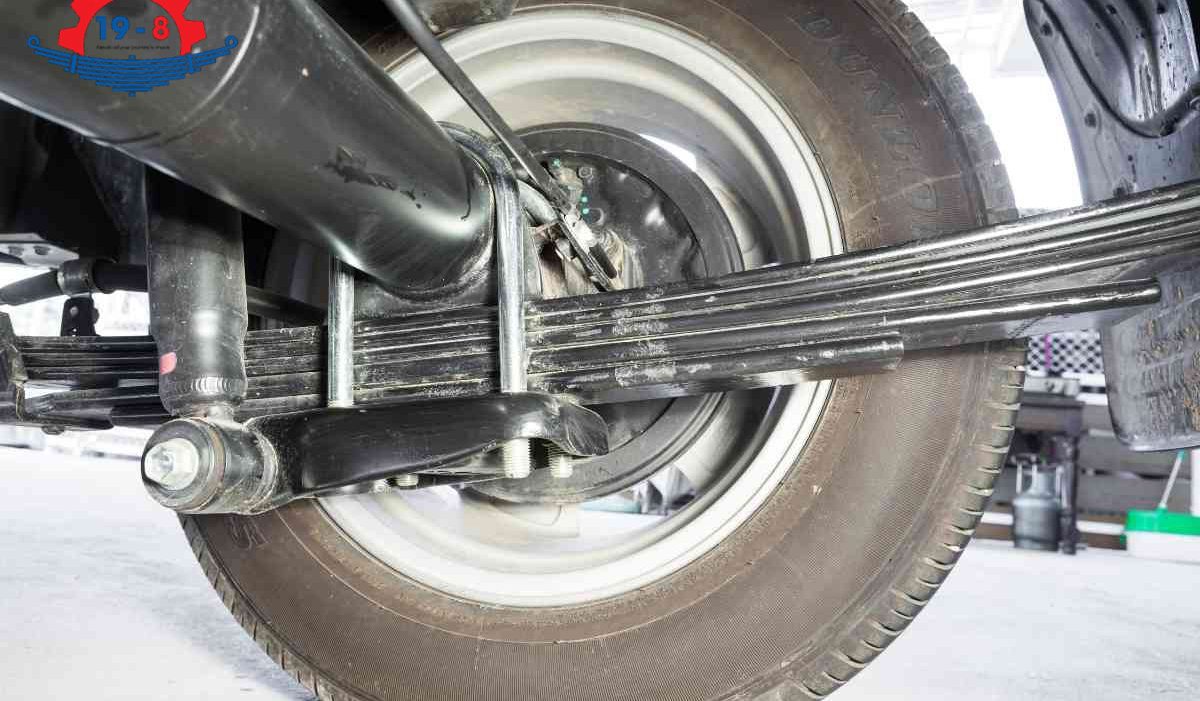
EATON emphasizes selecting the correct spring for the vehicle. A helper is not a repair for a cracked leaf or failing attachment. First establish why the truck sags and whether its actual load is within its ratings.
Credit: leafsprings198.com
Before approving work, request the inspection findings, the proposed spring specification and the required new hardware. After repair, confirm ride-height and handling concerns have been reassessed and follow any specified fastener inspection schedule. The goal is a sound, correctly assembled suspension, not simply a truck that looks more level.


Automotive reference information. Confirm specifications in the manual for your exact vehicle. Original replacement guides link to their research sources. About us


