If a brake caliper will not release and the wheel drags, overheats or remains locked, do not try to free it just enough to continue driving. Stop safely and arrange recovery when braking is impaired or the wheel cannot move normally. A temporary change after cooling, forcing a piston or releasing pressure does not establish that the fault has been repaired. The correct next step is to identify what is holding the brake applied and address that cause. A driver may describe the entire problem as a stuck caliper, but the resistance can come from several places.
The piston, sliding hardware, pad fit, hydraulic supply path or parking-brake mechanism may need investigation. This guide explains the decision process after a brake fails to release. It does not provide a roadside bypass, a universal piston-retraction method or permission to open a hot hydraulic circuit. The aim is to make the vehicle safe and give the repairer useful evidence without creating another overheating event.
Decide whether the vehicle should move at all
Smoke, a strong burning smell from a wheel, severe pulling, reduced braking, fluid leakage or an abnormal pedal are reasons to stop using the vehicle and obtain assistance. Keep people away from hot components. Do not touch the caliper or rotor to compare temperatures, and do not pour water onto a hot brake to make it release. If the wheel is visibly displaced, something has come loose or rotation appears obstructed, tell the recovery operator before loading.
The operator needs to choose a suitable movement and transport method for the actual condition. If the car is already parked, leave it parked until the problem is assessed. A dragging brake that frees when cold can still repeat the fault once pressure or temperature changes. A normal dashboard display is not proof that the wheel brake is safe.
Mechanical faults do not always produce a warning that names the failed component. Equally, a warning light does not tell you which part should be replaced without further checks. Record messages and symptoms rather than clearing them to see whether they return. Distinguish a brake that remains applied from a tire briefly locking during a hard stop.
These descriptions can lead to different diagnostic paths. Tell the technician whether the wheel stayed difficult to turn after releasing the pedal, whether the parking brake had been used and whether recent work preceded the problem. Note which corner seemed affected, but do not invent a temperature or timing measurement that you never made.
A concise description of the original event is more useful than another unsafe drive to reproduce it. For example, a brake that began dragging immediately after pad service raises questions about assembly, pad fit and piston preparation. A complaint after hydraulic repair adds questions about pressure return and correct installation.
A rear brake that remains held after parking-brake operation needs the mechanism identified before assuming a hydraulic piston has seized. These patterns guide inspection; they do not establish the cause by themselves. The same vehicle can have more than one fault, especially after severe overheating.
Credit: haynes.com
Separate mechanical binding from retained hydraulic force
- A qualified technician begins by identifying the brake design and supporting the vehicle correctly. The parking brake, drivetrain and any electronic brake-system precautions affect how movement can be checked. There is no universal number of free wheel turns that proves a disc brake is healthy. Light contact and driveline resistance need to be distinguished from abnormal brake drag using the appropriate procedure. Comparing with the other side can help, but the other side is not automatically fault-free. The inspection should explain why the observed resistance is abnormal for this vehicle.
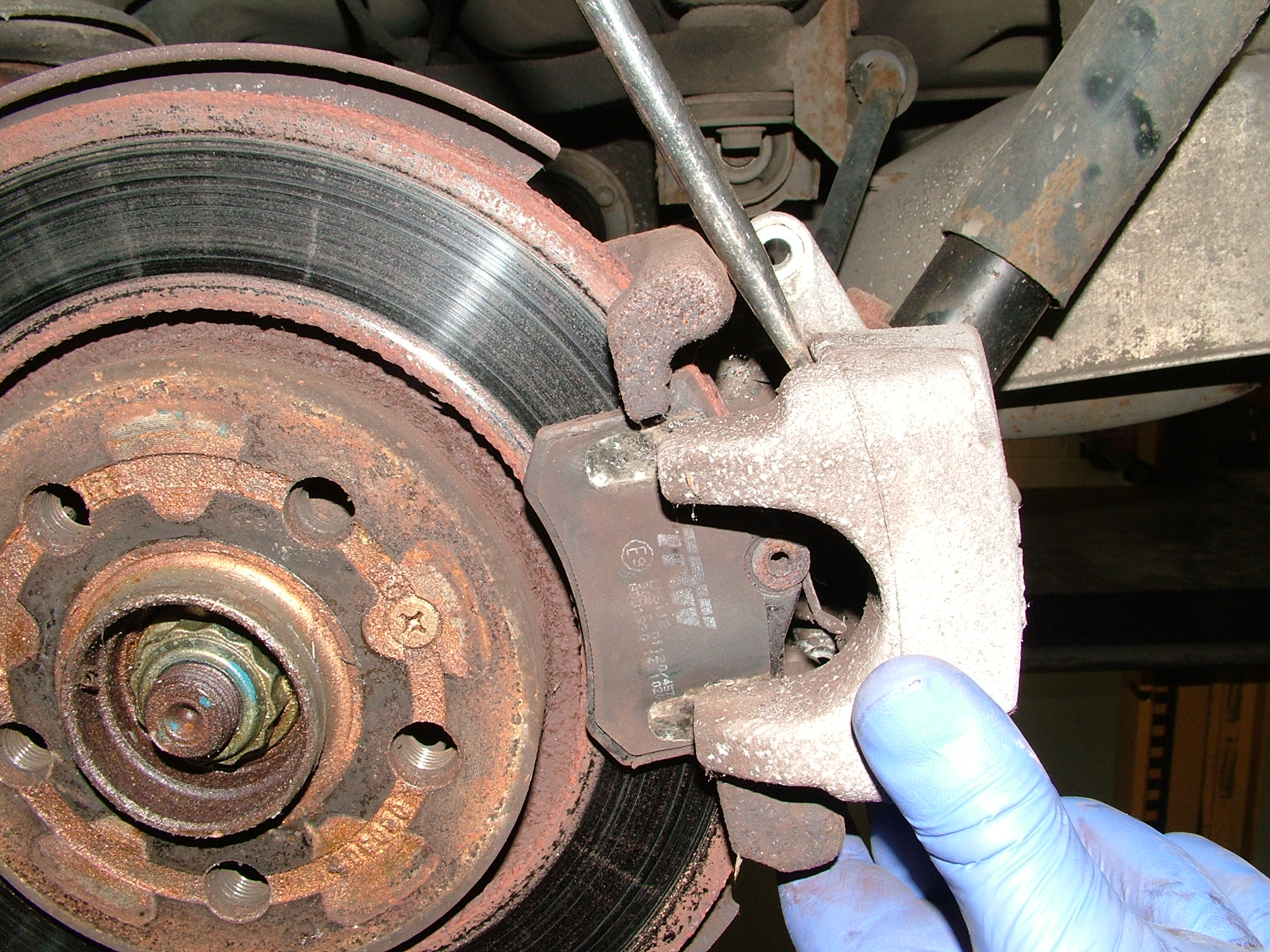
- Mechanical binding means a part cannot move as intended even when hydraulic force is no longer holding it applied. On a floating caliper, restricted guides can interfere with operation. Pads may also bind in their supporting hardware, and the piston or integrated parking mechanism can have its own defect. HELLA’s guide-pin guidance identifies restricted guide movement as a contributor to uneven wear and overheating. That supports inspecting the guides, not coating every surface with grease. Friction faces must remain uncontaminated, and damaged components may need replacement rather than lubrication.
- Hydraulic retention means pressure remains in the brake when it should have released. A restricted hose is one possible cause, but the diagnostic process must consider the relevant circuit rather than assuming the hose is always responsible. Wagner’s brake-system inspection guidance distinguishes an internally binding caliper from hose restriction using controlled service checks. Such checks are workshop diagnostics requiring correct containment and restoration of the hydraulic system. They are not an instruction to loosen a fitting at the roadside, let the wheel turn and then drive away. A release after pressure is relieved is evidence to interpret, not a finished repair.
- The distinction changes the repair plan. A new caliper will not necessarily cure pressure that remains because of a fault elsewhere. Conversely, replacing a hose will not restore a corroded guide or correct an unsuitable pad fit. Ask the workshop what observation separated these possibilities and which condition was actually confirmed. If both a caliper and hose are recommended, ask whether both failed independently or whether one was damaged by the consequences of the other. A clear explanation can support a broader repair without relying on a blanket parts list.
- Piston retraction also depends on the mechanism. Some calipers use controlled straight pressure, while integrated parking-brake designs may require a specified winding action or an electronic service state. Resistance to the wrong method does not prove seizure. HELLA’s integrated-handbrake guidance illustrates why these arrangements need their own procedure. Do not apply power directly to a parking-brake motor or use extra leverage to bypass an uncertain instruction. See our piston-retraction guide for the identification questions that come before choosing a tool.
- If a technician frees a corroded moving part during assessment, ask what establishes its serviceability afterward. Moving once is not proof that its surface, protection and fit meet the required criteria. A torn boot or damaged guide can allow the same problem to recur. Similarly, a piston that eventually retracts after excessive force may have suffered damage during the attempt. Repair decisions should follow inspection limits and approved service methods. The goal is repeatable, correct application and release, not merely a wheel that can be rotated while the vehicle is on a lift.
Severe heat may also have affected the pads, rotor, fluid, hose or nearby components. Those consequences need assessment even after the initial source of drag is found. Do not declare overheated friction material serviceable solely because the wheel now turns. Ask which related parts were inspected and what findings justify reuse or replacement. The resulting repair can be larger than the original fault without being arbitrary. A documented condition assessment is the way to distinguish necessary follow-up work from speculative replacement.
What a complete release repair should verify
A finished repair restores the correct parts, routing, attachments and operating procedures for the vehicle. Any opened hydraulic circuit requires the appropriate bleeding and leak checks. If a parking-brake service mode or mechanical adjustment was involved, complete that process and verify the parking function as well. A cleared warning or a firmer pedal does not replace checks at the wheel.
Brembo’s fitting instructions reinforce the importance of application suitability and competent installation. Their illustrated procedure is not a universal guide for every caliper, but the requirement to verify the completed assembly is relevant when judging repair quality. Static checks come before a controlled road verification. The brake should apply and release as required, the pedal should behave appropriately, and there should be no unresolved leakage or interference.
If the original problem occurred only after warming up, the workshop needs a safe plan to assess that reported condition. A cold inspection alone may leave an intermittent complaint unresolved. That does not justify deliberately overheating the brake again. The repairer should explain how the checks address the original pattern without repeating the hazardous event unnecessarily.
Do not accept a recommendation to drive until it loosens up as a substitute for diagnosis. New friction components may have a manufacturer-specified bedding procedure, but that is different from operating a brake with an unresolved release fault. Follow bedding instructions only after the brake system is ready for service. If smoke, severe heat, pulling or an abnormal pedal returns, stop and contact the repairer.
Keep the invoice and the recorded findings so the next assessment can distinguish a recurrence from a different issue. Preventive care is specific rather than a periodic dose of spray lubricant. Follow the vehicle’s brake inspection and fluid requirements, preserve protective components and have uneven wear or changed braking assessed.
Do not spray penetrating oil beneath a piston boot to prevent seizure. Do not add grease to a hydraulic connection or braking surface. Where guides need approved lubrication, correct material and placement matter.
Our caliper-lubrication guide separates permitted contacts from surfaces that must remain dry. When collecting the vehicle, ask for three points in ordinary language: what kept the brake applied, what corrected it and how release was verified. A useful answer identifies a demonstrated condition, such as restricted guide movement or a confirmed hydraulic restriction, rather than repeating the original symptom.
It also notes any secondary heat damage and the status of related components. That record is valuable if another brake complaint occurs later. Getting the caliper to release is only the immediate observation; restoring reliable braking requires the cause and consequences to be resolved before normal use.


Automotive reference information. Confirm specifications in the manual for your exact vehicle. Original replacement guides link to their research sources. About us