
If you do not own a scanner, obtain Ford OBD2 codes through access to a compatible reader or a professional diagnostic service. Do not assume that a key-turn sequence, pedal routine or instrument-cluster test mode supplies the complete engine fault report.
Older Ford self-test systems and modern OBD2 diagnostics are different applications with different instructions. Identify the vehicle's year, model, engine and market, then determine which controller needs to be read.
The goal is a complete, correctly identified report rather than a number from an undocumented dashboard trick.
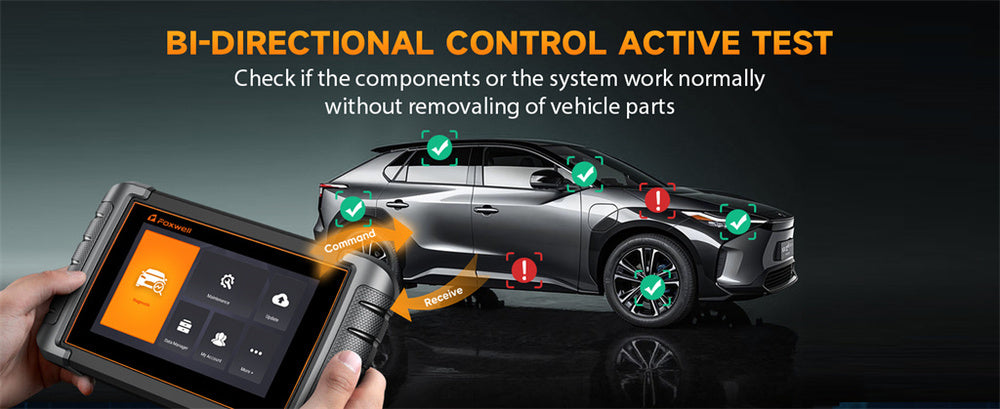
Credit: www.foxwelldiag.com
Start with the system behind the warning
A check-engine lamp, powertrain message, ABS warning and restraint warning can require different coverage. Record the exact warning and symptom before arranging a scan. A generic emissions reader may not answer a question about every other controller.
A code is a diagnostic record
The controller reports a detected condition under its monitoring rules. The code does not independently prove which part failed. Save the exact number and status so the appropriate Ford procedure can distinguish possible causes.
Why a complete report is worth obtaining
An intermittent fault may leave useful information even after the symptom stops. Preserving the original report can make later diagnosis more efficient. Repeated clearing or power interruption can remove context that would otherwise help explain when the event occurred.
Without ownership does not mean without an interface
Borrowing a supported reader, using an appropriate adapter and app or booking a scan can avoid purchasing a dedicated tool. These are legitimate ways to obtain access. They should not be confused with a promise that every Ford exposes codes through its dashboard.
Do not begin with a list of common Ford codes
A familiar code from another vehicle is not evidence about yours. Retrieve the actual report first. Then use the correct application information, including any status or subcode, rather than guessing from symptoms or a model's reputation.
Credit: www.endurancewarranty.com
Define the reason for reading
Write a short question: identify the recorded condition behind a warning, preserve an intermittent event or verify a diagnosed repair. The question determines the needed coverage. It also prevents an unnecessary excursion into active self-tests or programming.
Engine symptoms need context
Record whether roughness, stalling or loss of power occurs cold, warm or under a particular condition. Do not turn the symptom into a parts diagnosis before reading. The scan should support a test plan, not confirm a guess selected in advance.
Economy concerns are broader than code presence
A clean emissions report does not independently establish normal fuel consumption or identify every cause of poor economy. Preserve the actual complaint and relevant operating history. Use the appropriate checks rather than expecting a code list to answer all performance questions.
Follow urgent warning instructions first
The cited Ford owner manual describes a flashing malfunction indicator as a possible misfire warning with potential component damage. Use the instructions for your exact vehicle. Do not continue severe operation merely to see whether another code appears.
Safety-system warnings require their own coverage
An engine-only reader cannot dismiss a brake or airbag concern. Ask whether the scan reaches the relevant Ford module. If the vehicle's symptoms make driving inappropriate, arrange assistance rather than driving to a convenient code-reading location.
Keep records useful for future owners
A dated code report and repair explanation provide more value than a statement that the warning was reset. Retain what was diagnosed and how it was verified. Do not represent an erased code list as proof that the vehicle never had a fault.
Prepare vehicle identification and observations
Have the model year, model, engine and market information ready. Photograph the warning and note recent work without assuming causation. This lets the provider select the correct coverage and helps distinguish the original issue from later changes.
Set up a stationary scan
Use a safe parked location, the prescribed transmission position and parking arrangements. Keep leads clear of controls. Follow the tool and vehicle instructions for ignition state, especially where a start button offers several power modes.
Choose equipment for the required task
A basic compatible reader may be enough for a generic engine report. Manufacturer functions require explicit support. Ask the diagnostic provider which vehicle systems the equipment supports and whether the report includes the controller relevant to your warning. A general claim of Ford compatibility does not answer that specific coverage question.
Why key-cycling claims need exact evidence
Some online instructions combine different Ford generations or other manufacturers' procedures. This guide does not establish a universal key sequence for Ford OBD2 code retrieval. Use a documented procedure for the identified vehicle or obtain a supported scan.
Normal ignition operation is not a hidden code request
Turning the ignition on can produce a normal warning-lamp check. It does not necessarily request fault display. Follow the owner's descriptions of the lamps rather than counting ordinary startup behaviour as a diagnostic sequence.
Cluster test information has a limited scope
Where a documented instrument-cluster test exists, its information concerns that procedure and the systems it addresses. It should not automatically be described as the complete powertrain DTC report. Identify the meaning of each displayed value before using it diagnostically.
Pedal routines can have unrelated purposes
A pedal sequence found online may concern a service reminder, another operating function or a different vehicle entirely. It is not evidence of a universal Ford OBD2 retrieval method. Avoid trying it simply because it is easy to perform.
Do not activate undocumented service modes
A procedure that changes vehicle operation is different from reading a stored report. Do not experiment with pedals, switches or connectors to discover what happens. Obtain the correct service information and suitable equipment for any actual diagnostic test.
Read the real report with its categories
When a supported scan is available, save full codes, status and controller names. Keep freeze frame where supplied.
A code without its category can be misrepresented later as current when it was retained history, or dismissed as old when it needs investigation.
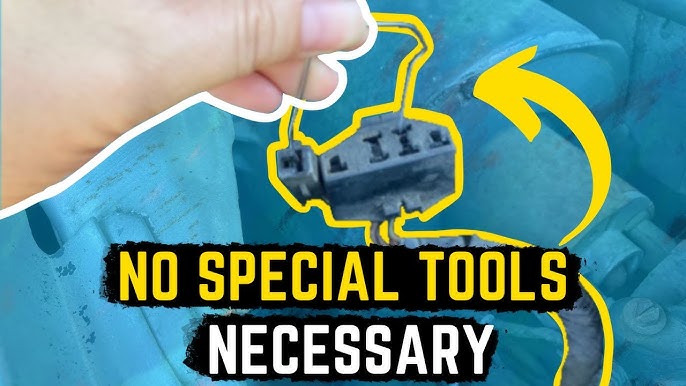
Credit: www.youtube.com
Older Ford self-tests are application-specific
Innova’s Ford OBD1 guidance describes dedicated older-system equipment and different test choices. That reinforces the need to identify the diagnostic generation. It does not justify moving an older connector or flash-code method onto a later OBD2 vehicle.
Do not bridge terminals to force a result
A generic pin diagram may describe another connector or system. This article supplies no jumper recipe. Improvised bridging can damage electronics and does not create a reliable substitute for supported code retrieval.
Do not convert flash numbers into OBD2 codes
A historical short numeric result needs its matching system definition. Adding a letter or zeros does not make it a modern DTC. Keep the original method and vehicle identification attached to any legitimately obtained older-system result.
If a reader fails, separate failure from no codes
A no-link or unsupported message is not a completed no-fault report. Check the documented coverage, ignition state and connection. Preserve the error and seek help if the normal checks fail rather than assuming the Ford controller is damaged.
Check the selected vehicle profile
Automatic identification should still be reviewed. A mismatched profile can produce incomplete coverage or misleading descriptions.
Resolve uncertain vehicle details before making conclusions from manufacturer-specific information or attempting any active function.
When dashboard behaviour is inconsistent
Record exactly what changed and under which power state. Do not reinterpret an intermittent warning as a flash-code sequence without documentation.
Save a photograph or video while stationary if useful.
Then obtain the correct module report and compare the observations with the vehicle's warning instructions.
A focused code read can still save effort
It can identify the relevant diagnostic branch and preserve an event for a technician. Its value comes from accurate evidence, not from avoiding every professional service. A limited but honest report is preferable to a confident conclusion from an undocumented trick.
Clarify what the service includes
Ask whether the provider is retrieving codes or diagnosing their cause. Request a copy before clearing. A basic read does not necessarily include electrical, mechanical or road-condition tests, so a repair recommendation should explain what additional evidence supports it.
Use the report to choose the next test
Ask which measurement distinguishes the leading possibilities and what result would justify a replacement. This is particularly useful when a description names a sensor or circuit. The goal is to avoid replacing functioning parts while a shared cause remains untested.
Recognise when qualified diagnosis is needed
Persistent warnings, severe symptoms, inaccessible modules or tasks requiring active tests deserve suitable equipment and training. The lack of a personal scanner should not lead to improvised electrical methods. Choose assistance appropriate to the actual vehicle condition.
Keep manufacturer definitions with the exact code
A generic online explanation can omit Ford-specific conditions or test steps. Preserve any additional code detail and status from the tool. If a definition is unavailable, obtain the correct reference rather than choosing a similar-looking code with a convenient explanation.
Do not reset repeatedly while a problem remains
Clearing can change readiness and remove useful context without fixing the cause. Save before-and-after reports around a documented repair. If the warning returns, investigate the current evidence instead of treating another erase operation as progress.
The dependable alternative to owning a reader
Identify the Ford and warning, arrange a compatible scan and preserve the full report. Keep older self-tests and cluster functions within their documented scope.
Avoid generic key, pedal and jumper claims. Use the report-reading guide to turn the retrieved evidence into a sensible next diagnostic step.


Automotive reference information. Confirm specifications in the manual for your exact vehicle. Original replacement guides link to their research sources. About us


