
You can obtain OBD2 codes without owning a scanner by borrowing compatible equipment, arranging a diagnostic readout or using a supported phone-and-adapter setup. These options still use a diagnostic interface.
There is no universal paperclip connection, key-turn sequence or phone-only app that retrieves every modern vehicle's OBD2 codes. A manufacturer-documented built-in display may exist on a particular model, but it must be verified for that exact application.
The useful goal is an accurate record of what the vehicle stored, with enough context to decide the next diagnostic step. It is not simply making the check-engine lamp disappear.

Credit: www.insightcentral.net
First identify which information you need
An engine warning, an airbag warning and a service reminder can require different access. Write down the exact symbol and symptom before choosing a service or tool.
A generic engine-code read may be useful, but it does not guarantee coverage of every module. Ask about the system involved rather than requesting a vague full scan.
Keep the complete code identifier
When someone reads the vehicle, request the exact alphanumeric code, module and status. A spoken description such as emissions problem is insufficient for later research. Save a photograph or report. The full identifier lets a technician use the relevant diagnostic information without relying on a remembered paraphrase of the screen.
Status changes the meaning of the result
A stored, pending or permanent entry does not necessarily represent the same stage of detection or verification. Preserve the label the tool reports. Do not simplify every result to a failed part. If the status is unclear, ask the person performing the scan to explain what the equipment actually read and what remains uncertain.
Codes support diagnosis rather than replacing it
The control system records a condition it detects under particular criteria. That condition can have more than one cause. A code description may name a circuit or component without proving that component is defective. Before buying parts, establish which tests distinguish the plausible electrical, mechanical or operating causes on the vehicle.
Credit: www.slashgear.com
Decide whether driving to a scan is appropriate
A code readout is not the first priority when the car has severe symptoms or a serious warning. Follow the owner's instructions for the lamp and stop safely when required. Arrange assistance rather than driving an unsafe vehicle to obtain a convenient scan. The absence of a code number does not reduce the urgency of an obvious problem.
Do not guess a sensor from the lamp alone
The check-engine light cannot identify a particular sensor by appearance. Different faults can illuminate the same symbol. Record the circumstances and arrange a proper readout. Replacing a common sensor because it worked for another owner may leave the actual cause untouched and add unnecessary cost to the later diagnosis.
A simple visible issue still needs context
A loose or damaged cap may be relevant on some vehicles and complaints, but it is not an explanation for every engine warning. Inspect only what the manual allows safely. Record any finding and avoid treating a guessed correction as proof. A proper readout and verification may still be necessary.
A rough-running engine needs more than a code guess
Misfire symptoms can involve ignition, fuel, air or mechanical causes. Continuing to run a severely rough engine can worsen the situation. Follow the vehicle's warning guidance and seek help as needed. A scanner may narrow the investigation, but no scanner-free guess can establish which part is responsible.
Expensive components require stronger evidence
Do not authorize a major replacement solely because a brief description mentions that component. Ask what test confirmed the failure and whether other causes were excluded. A low-cost readout can be a starting point, while a diagnostic appointment may be needed to establish the repair. Those are different services with different purposes.
Record noises and odors separately
A code report cannot capture every physical symptom. Describe unusual sounds, smells, leaks and when they occur. Do not place yourself near moving or hot parts to gather evidence. A clear account from safe observation can help the technician connect electronic information with a condition that is not obvious during a parked scan.
Check for a documented built-in feature
Some vehicles provide limited diagnostic or service displays, but the procedure and scope are model-specific. Use the owner's or service information to verify what the display reports. Do not assume that a dashboard test is equivalent to a scan of all emissions codes or every control module on the car.
Key cycling is not a universal OBD2 method
Instructions copied between brands often omit model and year restrictions. Unless the manufacturer documents the sequence for the exact vehicle, do not rely on it. A lamp flashing during a test or startup can mean something other than a trouble-code readout. Guessing the sequence is not a dependable substitute for compatible equipment.
Do not count normal lamp checks as fault codes
Startup illumination can be part of a normal check. Its timing should not be translated into a code without the correct documentation. If a warning remains on or the vehicle behaves abnormally, preserve that observation and obtain a proper readout. An invented number can misdirect every repair decision that follows.
A phone setup is still scan equipment
The phone provides the display and software, while a supported adapter communicates with the vehicle. Both must be compatible with the intended system. Installing an app alone does not establish a connection to the diagnostic network. Check the adapter, app and operating-system requirements before deciding this is the least expensive route.
Choose an app by evidence of support
Look for the exact vehicle and required function, not only attractive gauges or a broad brand list. Check whether enhanced modules require separate support or payment. Keep a copy of the stated coverage. A successful engine-data connection does not demonstrate access to ABS, airbags or every other system.
Connect through the documented method
Follow the adapter instructions and required ignition state. Keep the car parked and the lead clear of controls.
Pair or connect as directed, then save the readout before selecting erase. If communication fails, record the message rather than changing random settings or assuming that the vehicle's computer is defective.
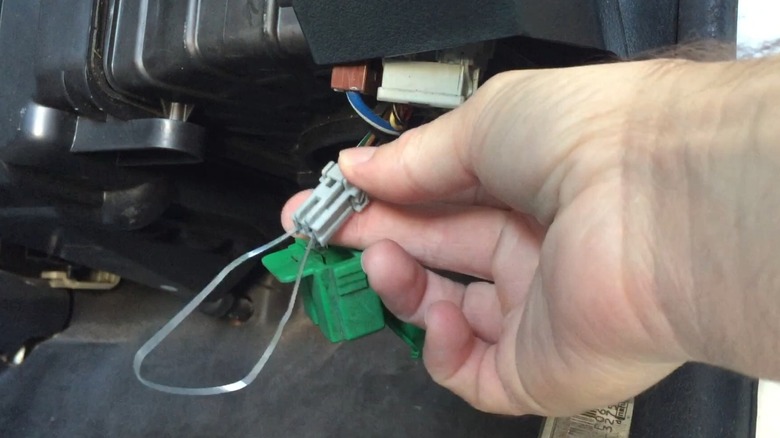
Do not bridge diagnostic pins with a paperclip
A jumper method from an older system is not a general OBD2 procedure. Unknown terminals can include power and communication circuits. Shorting them may create damage while yielding no useful information. Use model-specific documentation and proper equipment if electrical testing is required; do not experiment at the connector to avoid borrowing a reader.
Obtain a readout through a practical access route
Ask a repairer, inspection-related service or equipment owner whether a compatible readout is available. Confirm what is included: exact codes, status and any saved data. Availability and charges vary, so establish those details locally. Do not assume a free code read includes fault diagnosis, all-module coverage or a repair guarantee.
Borrowing requires a compatibility check too
A reader that worked on a friend's car may not support the system on yours. Obtain its manual and inspect the cable. Follow the model's connection instructions. A manufacturer manual such as the AL319 guide illustrates why the equipment's actual functions matter more than its generic scanner label.
Credit: www.endurancewarranty.com
Preserve the information before any reset
Request that the initial codes and available freeze-frame data be saved. Include mileage and symptoms. Tell the operator if the battery was recently disconnected or codes were already cleared. These details prevent an empty or incomplete record from being interpreted as proof that the vehicle never detected a problem.
Use definitions for the exact application
Look up the full code in suitable vehicle information. Generic wording can be abbreviated, while manufacturer-specific information can add important conditions. Keep the reporting module attached to the code in your notes. Do not combine a definition from one vehicle with a procedure for another simply because the last digits match.
Ask what the next test will establish
A good diagnostic plan explains how a measurement or inspection separates possible causes. Ask that question before approving parts replacement. The initial code read may be quick, but establishing the root cause can require more work. Understanding the difference helps compare service offers without expecting a basic readout to provide a complete diagnosis.
Avoid resetting to test a guess
If you make a safe, documented correction, record it and follow the appropriate verification process. Do not repeatedly clear memory to see how long the lamp stays off. Delaware DMV's guidance explains why retained diagnostic information and readiness matter when resolving emissions issues.
Keep records of recent work
Maintenance, battery changes, refueling and repairs may help explain the timing of a complaint. They do not automatically identify the cause, but they provide useful context. Keep receipts and previous scans together. A chronological account is often more helpful than a list of parts suggested by unrelated online discussions.
Seek help when the required test exceeds your tools
A code can point toward a test involving fuel pressure, electrical circuits or mechanical condition. If you lack the equipment or procedure, arrange qualified diagnosis rather than improvising. Obtaining the code is progress, but it does not make every subsequent repair suitable for a roadside or home experiment.
Do not use code absence as a maintenance schedule
Many wear conditions and service needs do not produce an emissions code. Continue the manufacturer's maintenance requirements. A borrowed reader provides a limited snapshot, not a certificate that all fluids, brakes or mechanical components are healthy. Use the result for the specific question it can answer.
Save the outcome of the repair
Keep the initial findings, work performed and verification results in the same record. If the symptom returns, compare the circumstances and code status. A recurrence may be related or may involve a different condition. Good records help establish that distinction without starting again from an unsupported guess.
Inspection readiness is a separate question
A clear code list does not automatically mean an inspection pass. Readiness and permanent-code rules can matter, as described in BAR's OBD reference. Apply the requirements for your own program. Do not disconnect the battery or erase codes merely to prepare for inspection without understanding the consequences.
Choose access that preserves useful evidence
The dependable alternatives to ownership are borrowing compatible equipment, using a supported adapter setup or arranging a readout. Verify the scope and keep the exact results.
Treat undocumented key tricks and jumper advice as unverified, not as a shortcut.
The next step should follow the evidence and the vehicle's diagnostic procedure rather than the desire for an instantly empty code list.


Automotive reference information. Confirm specifications in the manual for your exact vehicle. Original replacement guides link to their research sources. About us


