
Prime a diesel fuel system by following the procedure for the exact engine and the event that introduced air. Some vehicles use an electric supply pump and a specified ignition sequence. Others have a hand primer or require dedicated external equipment. There is no safe universal instruction to crank until it starts. Establish whether the system ran out of fuel, had a filter replaced or was opened for another repair, because the appropriate checks and priming steps can differ.
Priming generally restores fuel to the low-pressure supply route and removes trapped air through the designed path. It is not permission to loosen high-pressure injector lines. Modern common-rail systems can retain hazardous pressure, and opening their lines can introduce contamination as well as injury risk. Keep those connections closed unless the engine's service procedure specifically requires trained personnel to work on them with the necessary precautions.
Before doing anything, confirm the correct fuel has been added and that there is enough for the vehicle's position and tank arrangement. If petrol, water or other contamination is suspected, stop and obtain specialist advice instead of circulating it farther. A no-start caused by contamination is not a simple air-purge problem. This guide helps identify the right path and the signs that priming alone will not resolve the fault.
Credit: goldfarbinc.com
Match the priming method to the engine and recent work
Record the vehicle identification, engine version and model year. Find the owner's manual section covering running out of fuel and the service instructions for any component that was opened. Do not use a procedure solely because its title includes the same engine displacement. Different generations and vehicle installations can use different supply arrangements. A truck and a commercial chassis with a related engine may not share every control or service step. Ford: diesel fuel run-out and air purging provides one specific example: that Ford diesel supplement describes a timed ignition-on air-purge sequence. Its timings belong to the vehicles covered by that document. The useful general lesson is to obtain and follow the actual sequence, including the stated starter limits, rather than inventing a number of key cycles.
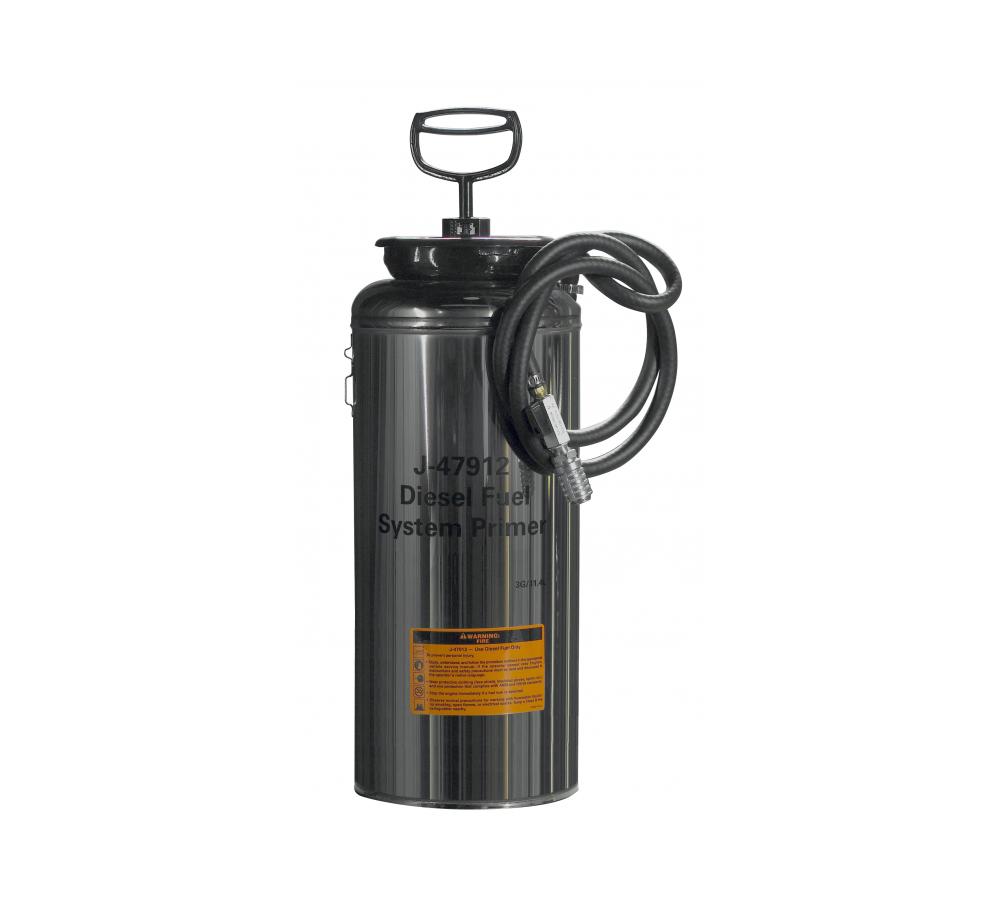
If your manual specifies another method, the example is not a reason to override it. At the other end of the spectrum, Detroit: approved fuel-system priming equipment and procedure describes an approved external priming arrangement and cautions against using prolonged starter and pump operation as a substitute. This demonstrates why a method that works on one diesel cannot be generalized to all of them. Some systems require equipment that an owner does not have. In that situation, recovery to a properly equipped workshop is a more effective response than repeated unsuccessful starting attempts. If a hand primer is fitted, identify it from the engine documentation and follow its stated operation. Do not mistake a drain, sensor or bleed fitting for the primer. The procedure may specify a particular bleed point or a condition that indicates completion.
Use only that documented point and method. A fitting that is convenient to loosen is not necessarily safe or useful for purging the system. After a filter change, review the assembly before blaming trapped air alone. Check that the correct filter and seals were fitted, sealing surfaces were clean and any required drain or housing components are in their specified positions. A seal displaced during installation may allow continued air entry. Priming can appear to work briefly and then be lost again if the underlying connection problem remains. Repeatedly repeating the purge does not correct that defect. Do not prefill a filter unless the engine manufacturer permits it and specifies how.
Uncontrolled filling can introduce unfiltered fuel or dirt to a sensitive part of the system. The fact that another diesel is commonly serviced that way does not establish the method for yours. Use clean fuel-handling equipment and preserve the intended filtration path. If the manual says the system should fill the housing through its priming process, follow that instruction. A low-pressure suction leak may admit air without producing an obvious external fuel drip. This can make visual diagnosis misleading. If the system repeatedly loses prime, a technician may need the specified leak or restriction tests rather than another filter change. Document when the problem occurs: immediately after service, after sitting overnight or only at a particular fuel level.
These details help distinguish assembly errors from other supply-path faults. Do not use starting fluid, ether or gasoline in the intake as a shortcut. The applicable engine may have intake-heating equipment, and uncontrolled assistance can create serious damage or injury risks. The Ford supplement cited here explicitly warns against such starting fluids. The purpose of priming is to restore the intended fuel supply, not to force combustion while the system remains unready. A persistent no-start needs diagnosis, not escalating quantities of an improvised aid. Protect the starter and batteries by following the engine's crank-duration and rest requirements. There is no universal safe cranking interval for every diesel.
A slowing starter changes the conditions and can add another reason for failure to start. Stop if the electrical system cannot sustain the prescribed procedure. Charging or testing the batteries should follow the vehicle's instructions and must not introduce ignition sources near exposed fuel. Keep the fuel system closed except where the documented procedure requires access. Use suitable containment for any specified drain operation and dispose of fuel-contaminated materials correctly. Do not work in an enclosed space with exhaust accumulation, and prevent unintended vehicle movement. If a workshop uses external priming equipment, it should be the correct type for the designated connection and fuel, not a household transfer pump adapted by trial and error.
A pump that can be heard operating does not prove that air has been removed or that delivery meets the requirement. Conversely, the absence of an expected sound needs interpretation according to the control strategy. If priming fails, the next diagnostic question may concern supply voltage, command, a blocked filter, an empty pickup route or an air leak. Motorservice: electric fuel pump designs and damage analysis provides background on fuel-pump operating problems, but engine-specific tests determine which explanation applies. Do not keep opening and closing different connections in search of bubbles. Each opening can add contamination and create another sealing problem. Use the specified observation or test point.
If the procedure has been completed correctly and the engine still does not start, preserve any codes and obtain a diagnosis that checks the required starting conditions. Fuel supply is only one part of diesel starting; a failure elsewhere cannot be repaired by further priming. After a successful start, follow the manual's post-start instructions. Some engines may need time to clear remaining air, but continued rough running, leakage or warnings should not be dismissed as normal indefinitely. Stop if the vehicle behaves unsafely or a fuel leak appears. The relevant manual defines what is expected and when further service is required. Do not adopt another engine's permitted behavior as reassurance for your own.
Credit: otctools.com
Confirm that prime is restored and stays restored
A complete result is more than one successful start. The system should remain leak-free and operate normally under the manufacturer's verification procedure. If the complaint was loss of prime after standing, a later restart may be relevant to the repair check. Record the conditions and any remaining symptoms. An engine that restarts only after repeating a purge each morning still has a problem that needs investigation. If the engine ran out while parked on a slope, tell the technician about its position and the amount of fuel added afterward. Fuel reaching the pickup depends on the actual tank arrangement.
Do not assume that an apparently nonzero gauge reading proves the pickup has a usable supply, or that adding a token amount always establishes the starting condition required by the manual. Keep the filter part number, service date and the priming method used. If a workshop was involved, ask what caused the air entry and whether it was corrected. Running out of fuel explains one event, but a recurring event with fuel in the tank may indicate a different issue. Accurate records help the next technician avoid assuming every no-start is simply air in the system. If the engine has been modified, disclose the added lift pump, filter housing or tank changes. The original manual may no longer describe the whole installation.
The component supplier and a qualified diesel technician should confirm a compatible priming and diagnostic procedure. Adding another pump or a nonstandard bypass to overcome repeated loss of prime can mask the fault and create new operating conditions that were never verified. The correct method is the one documented for the actual engine and service situation. Identify that method, correct obvious assembly or fuel-quality problems first, respect the equipment and starter limits, and verify the outcome. When the method requires professional priming equipment or the system will not retain prime, stop repeating the same attempt and address the cause. That approach protects the injection system while giving the no-start investigation a clear next step.


Automotive reference information. Confirm specifications in the manual for your exact vehicle. Original replacement guides link to their research sources. About us


