
There is no universal ignition-key sequence that makes every OBD2 GMC display its engine trouble codes. If you do not own a scanner, the practical solution is usually access to a compatible reader through a technician, a borrowed tool or a suitable phone adapter.
Dashboard messages can identify a concern but do not necessarily provide the full diagnostic code and context. Start with the GMC's exact model year, model, engine and market.
Older GM diagnostic instructions should not be transferred to a later truck simply because both vehicles carry related badges.

Credit: www.foxwelldiag.com
What you need from the vehicle
The useful result is a complete code report from the relevant controller, not merely confirmation that a warning light is on. Save code numbers, status and any available freeze frame.
Those details help distinguish a current detected condition from a pending or retained entry and give a technician a better starting point than a paraphrased dashboard message.
Identify the GMC accurately
A Sierra, Yukon, Terrain and an older commercial application should not be treated as one diagnostic configuration. Record the model year and engine from reliable vehicle information. Market and vehicle class can also matter, so avoid relying on a broad statement that every vehicle made after a certain date follows identical instructions.
Know which warning you are investigating
A check-engine warning, ABS warning and restraint warning concern different diagnostic coverage. A generic emissions reader may help with the first while being unable to reach the others. Tell the person supplying the scan which warning is present rather than requesting a code read with no system context.
A code records a detected condition
The controller applies its monitoring logic and records information when relevant criteria are met. Reading the resulting code does not prove which part failed. The exact GMC service procedure is needed to distinguish possible causes, especially when several related codes can arise from one shared electrical or operating problem.
Why the original report matters
A warning that disappears before an appointment may still leave useful retained information. Save a report before clearing when possible and record when the symptom occurred. Repeated erasure or power interruption can remove context, making an intermittent issue harder to reproduce and increasing the amount of diagnostic work required later.
Credit: www.youtube.com
Describe symptoms without assigning a cause
Tell the technician whether the engine runs roughly, starts poorly, loses power or behaves normally despite the warning. Include timing such as cold start or after refuelling. These observations help select tests, but they do not establish that a particular sensor or fuel-system part is defective.
A misfire warning is not an injector verdict
If a retrieved code later identifies a cylinder misfire, ignition, fuel and mechanical possibilities may still need to be separated. Do not keep driving a badly misfiring engine merely to see whether more codes appear. Follow the vehicle's warning instructions and arrange assistance when the symptoms make continued operation inappropriate.
A sensor name does not select a replacement
A code mentioning oxygen-sensor behaviour can reflect a circuit problem or another condition affecting the reported signal. Wait for the exact code and diagnostic procedure. Buying the named sensor before obtaining a complete report can replace a functioning component while leaving the actual cause untouched.
Do not assume a fuel-cap explanation
Some vehicles and faults involve evaporative-system conditions, but a check-engine lamp is not automatically a loose-cap reminder. Identify the applicable fuel-filler arrangement and read the code. An obvious owner-level check described in the manual may be reasonable, but it should not erase the need to investigate a persistent warning.
Use system-specific evidence
Airflow, exhaust and recirculation-related descriptions can overlap in their symptoms. A dashboard warning alone cannot separate them. The value of a scan is that it narrows the investigation enough to choose a relevant test, rather than prompting a series of unrelated cleaning or replacement attempts.
Transmission concerns need appropriate coverage
A generic powertrain report may not provide every manufacturer transmission detail. If the complaint involves shifting, mention it when arranging the scan and ask whether the tool covers the required controller. A clear engine-only report should not be presented as proof that the transmission has no recorded faults.
Keep the vehicle configuration in the diagnosis
Engine and drivetrain options influence the applicable service information. Even when a code number looks familiar from another GMC, use the identified vehicle's procedure. A generic web explanation can describe a concept, but it does not supply the exact test conditions, connectors or component locations for your truck.
Find reliable owner information first
The GMC manuals portal lets owners select the year, make and model and points to separate diagnostic service information. Use the owner's manual for warning meanings and basic operation. Use proper service information for diagnostic procedures rather than treating an owner's guide as a complete repair manual.
What to prepare for a borrowed or professional scan
Have the vehicle details, symptom timeline and any recent work available. Bring previous reports if they exist. Ask for the result before codes are cleared, and clarify whether the scan is a basic emissions read or a broader module scan. This makes the service request specific and the result easier to assess.
Keep the vehicle safe while waiting
Follow the manual's response to flashing warnings, severe symptoms or safety-system concerns. Do not assume the absence of a code reader makes continued driving acceptable. If the vehicle cannot be operated safely, arrange recovery or mobile assistance rather than driving to obtain a free scan.
The diagnostic socket is not a jumper test point
Use the documented connector location and a compatible plug. Do not insert a paperclip or bridge terminals based on a generic GM diagram. A connector's pin arrangement and intended procedure must be established for the exact system; guessing can damage electronics and does not provide a reliable OBD2 code-reading method.
Locate the connector through the correct manual
If the socket is not obvious, consult the vehicle documentation rather than dismantling trim at random. Keep any connected tool or cable clear of pedals and steering controls. The initial scan should be performed with the vehicle stationary and in the operating state required by the tool and vehicle.
A powered reader still needs communication
When a borrowed reader lights up, wait for a completed connection and the requested report. A no-link message is different from no codes. Record the message and verify compatibility and ignition state instead of concluding that the vehicle has no faults simply because the screen is blank.
Why key-cycling advice is unreliable
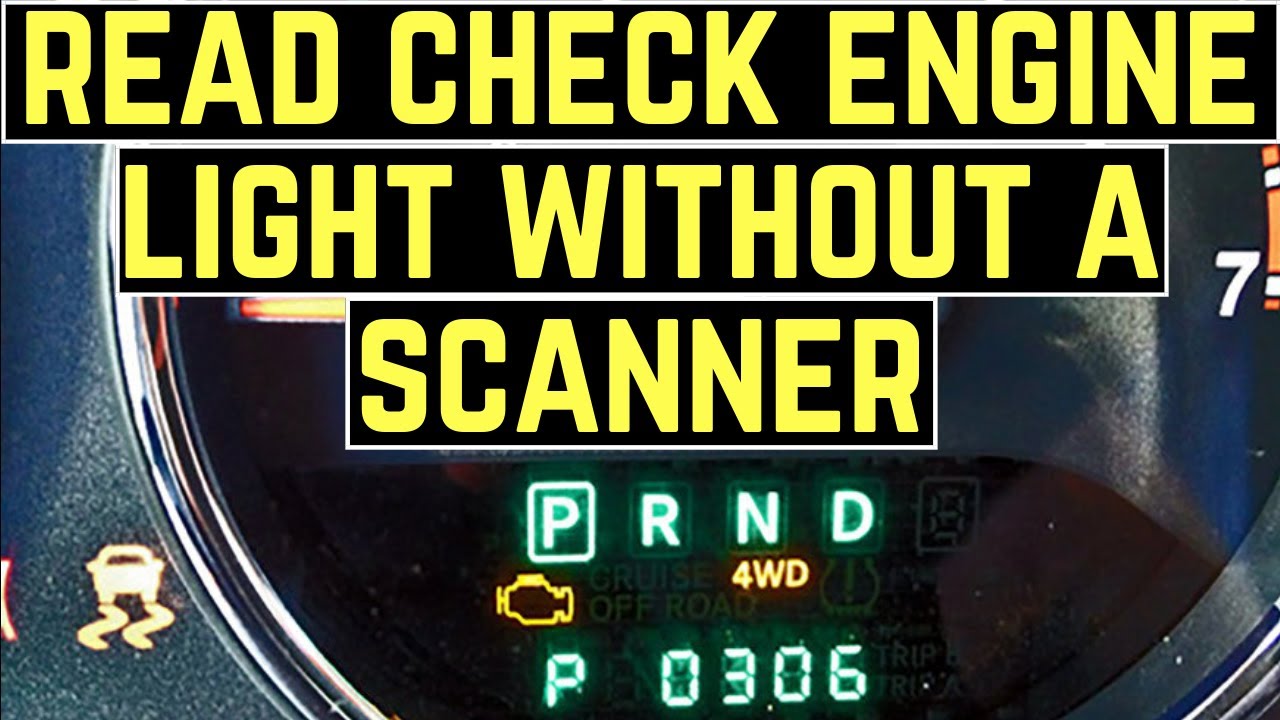
Online key tricks often mix manufacturers, older diagnostic generations and instrument-cluster checks. This article does not authenticate a universal GMC OBD2 code-display sequence because none is established by the sources used here. Follow a documented procedure for the exact vehicle, or use supported diagnostic equipment.
Ignition on is not a code request by itself
Turning the ignition to its operating state allows supported diagnostic communication but does not necessarily command a dashboard code display. Observe the normal warning-lamp check according to the manual. Do not count ordinary startup lamp behaviour as though it were a coded message without model-specific documentation.
A flashing warning may require action
Do not reinterpret a flashing malfunction indicator as a sequence to decode when the owner's manual identifies it as a warning condition. Record the behaviour and follow the prescribed response. The priority is appropriate vehicle handling, not extracting an imagined number from a safety or emissions warning.
Older GM systems are a separate subject
Innova’s GM OBD1 guidance describes vehicle-specific older-system coverage and dedicated adapters. That distinction is evidence against transferring one older connector method to all later GMCs. If your vehicle is an older application, identify its actual diagnostic system before selecting tools or interpreting flash-code instructions.
Do not mix code-number systems
A short historical flash-code number should not be treated as a modern alphanumeric OBD2 code by adding a letter or zeros. Different systems use different definitions. If a legitimate older procedure produces a result, interpret it only with the matching vehicle documentation.
Choose references that identify the application
A useful diagnostic reference names the model, year, engine and system to which its instructions apply. Avoid charts stripped of that context.
When the same word appears in two code descriptions, that does not prove the test procedure or failed component is shared.
A phone still needs a diagnostic interface
An ordinary phone cannot retrieve a controller's OBD2 report merely by being near the vehicle. A compatible adapter and suitable app are still diagnostic equipment. Buying a phone adapter can be an alternative to a handheld reader, but it is not a tool-free dashboard trick.
Check app and adapter coverage together
Verify the transport, supported phone system and vehicle functions before buying. A generic engine app may not cover manufacturer modules. Ask for documented GMC coverage for the specific task instead of assuming that an app listing the brand can perform every diagnosis on every model.
Pairing is only the first connection
A Bluetooth connection between phone and adapter does not establish communication with the truck's controller. Confirm the app's vehicle connection and selected profile. Save any failed-stage message so the problem can be addressed at the correct layer without repeatedly changing unrelated settings.
Credit: www.endurancewarranty.com
When a scan cannot be completed
Use the documented troubleshooting for the tool and vehicle. If compatibility or communication remains unresolved, obtain a qualified scan rather than trying improvised electrical shortcuts. The inability of one reader to connect is not sufficient evidence that the GMC's control module needs replacement.
Do not clear before an inspection assessment
BAR’s OBD reference describes readiness and permanent-code considerations in its inspection context. Clearing is not a way to prove that a vehicle is ready or repaired. Check the rules applicable where the GMC is registered and preserve the initial diagnostic evidence.
Ask for the report, not a parts guess
Request complete codes and status, the controller checked and any limitations of the scan. If someone recommends a replacement immediately, ask what test confirms that component rather than another cause. A proper code read should improve the next decision, not substitute confidence for diagnosis.
The practical route without your own scanner
Use GMC's identified vehicle information, arrange access to a compatible reader and preserve the full report. Avoid key-cycle and paperclip assumptions carried over from unrelated or older systems.
Once codes are available, the guide to reading an OBD2 report explains how to separate status, context and diagnostic conclusions.


Automotive reference information. Confirm specifications in the manual for your exact vehicle. Original replacement guides link to their research sources. About us


