
To recycle an oil filter, first find a collector that accepts your particular filter, then follow its preparation and packaging instructions before delivering it. Keep the filter and its residual oil contained throughout. A metal spin-on filter and an exposed cartridge element may need different destinations. A location that takes used engine oil does not automatically take both kinds of filter. Resolve those details before the oil change if possible, so the removed part has somewhere suitable to go.
This guide covers filters removed while maintaining a personal vehicle in the United States. A repair business, fleet or commercial generator should use the rules for its activity and jurisdiction. The practical household sequence is to identify the waste, confirm acceptance, prepare it as directed, contain it for travel and hand it to the receiving service. Do not put an oily filter into ordinary mixed recycling just because the outside is metal. A specialist collection route must actually accept the complete item.
EPA recommends recycling used oil and properly drained used oil filters. That recommendation does not make every scrap yard, curbside cart or parts counter a collection point. Think about the destination before choosing a draining method: a facility equipped to receive an intact undrained household filter may ask for different preparation from a metal recycler. Keep any instructions you receive with the address and collection hours. If the rules are unclear, leave the filter contained while you clarify them.

Credit: www.wiscon-tech.com
Identify the filter and prepare it for the receiving program
Start by identifying what actually came off the engine. A spin-on filter is normally a sealed metal assembly removed as a unit. With a cartridge system, the replaceable filtering element comes out of a housing that generally stays with the vehicle. Do not throw away a reusable housing, cap or support simply because the new element looks incomplete by itself. Follow the vehicle’s service instructions for which seals and components are replaced. Our explanation of how oil filters work covers the difference between the filter media and its surrounding assembly.
Record the type, approximate size and number of filters you have. Include whether they came from routine engine-oil service or an unknown collection of workshop waste. A paper-like cartridge is not clean recyclable paper after absorbing engine oil. A fuel filter is also not interchangeable with an oil filter for a disposal inquiry. Tell the facility exactly what the item is; do not remove its label or disguise its condition to match a category on an acceptance list.
California DTSC distinguishes metal filters routed for scrap-metal recovery from non-metal cartridge media. Its rules also provide collection routes for household DIY filters, including specified handling of undrained filters. This is a useful example of why material and destination matter, but California’s regulatory details should not be applied nationwide. For your own collection arrangement, ask whether the site accepts the complete can, the exposed element or both. Keep those types separate when the receiver asks for separate waste streams.
Prepare a contained work area before removing the filter. Use a suitable drain pan with enough capacity for the service, keep the setup stable and follow the vehicle’s instructions for safe access. Never work beneath a vehicle held only by a jack. Oil and engine parts can cause burns, so service temperature and protective equipment must follow the applicable procedure. Recycling is the final part of the oil change, not a reason to improvise the removal method or handle a hot part barehanded.
If the collection program asks you to drain the filter, use its prescribed method and collect the oil in an appropriate container. Do not assume that simply placing every filter upside down for the same number of hours produces an acceptable result. The design, retained oil and receiving rule matter. Keep the draining setup protected from rain and accidental disturbance. An open pan left where a child, animal or passing foot can overturn it defeats the purpose of careful preparation.
Avoid treating an industrial processing description as a household instruction. A recycling operator may use equipment to crush filters and recover remaining oil. That does not mean a driver should flatten a filter with a vehicle, cut it open with a power tool or heat it to force oil out. If the requested preparation involves equipment or procedures you cannot perform safely, ask about an authorized facility that accepts the filter as it is. Do not wash it with solvent to make it look clean.
Keep the collected oil separate from coolant, brake cleaner, fuel and other materials unless the receiving facility explicitly instructs otherwise. Label the container for its actual contents. If an accidental mixture has already occurred, disclose that rather than adding it to a clean used-oil collection tank. The filter’s solid parts and the liquid drained from it can have different receiving points. Our used motor-oil disposal guide addresses the liquid stream; completing that handoff does not by itself resolve the filter.
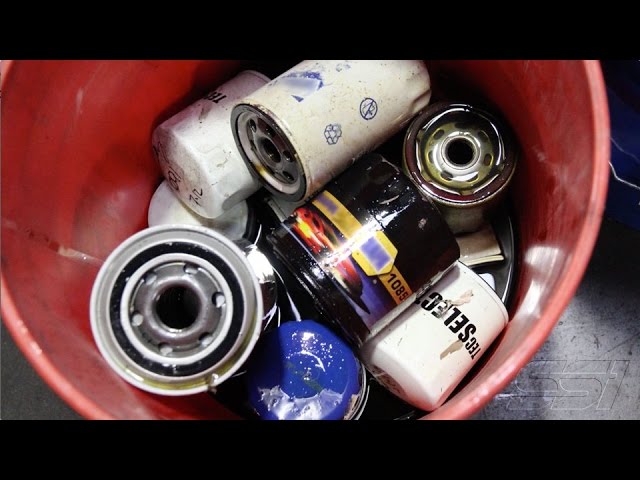
Kalamazoo County provides a concrete household collection example: its instructions call for drained filters in a lidded five-gallon bucket, which the technician empties and returns. This illustrates why asking about the container helps. Another program may use a different package or retain the packaging. Choose a sound, oil-compatible container with a secure closure, and follow the destination’s specific directions. Do not rely on the filter’s original cardboard box to hold residual oil during travel.
Before closing the container, inspect it for splits and make sure its lid actually fits. Wipe oil from the outside using a suitable method, then manage the used wiping material separately under local instructions. Mark the package so nobody mistakes it for fresh parts or ordinary rubbish. Keep it upright in a secure place while awaiting collection. Do not accumulate loose filters in an outdoor pile where rain can spread residue and labels can become unreadable.
Find a collection route and complete the handoff
Start with your city or county’s official recycling or household-waste directory. Search specifically for used oil filters, then read the entry for filter types, household eligibility and preparation. A broad automotive-waste heading may contain separate instructions for batteries, oil, antifreeze and filters. If the list only names motor oil, contact the program before assuming the filter is included. Keep the facility’s exact address; a council office that publishes the directory may not be the collection location.
Parts retailers, repair facilities, transfer stations and specialist recyclers are possible options, but acceptance must be confirmed individually. AutoZone’s recycling page explicitly includes bringing the used filter with the oil; our AutoZone filter-acceptance guide explains what to verify for a particular visit. A nearby repair shop may use a commercial collection service without offering a public drop-off. Ask before arriving with waste, even if you recently bought a replacement filter there.
Describe the proposed delivery precisely: two drained metal engine-oil filters from your own car, for example, or one non-metal cartridge that has not been drained. Ask about quantity limits, fees, residency restrictions, appointments and the time when staff receive the material. A container-volume limit and a filter-count limit answer different questions. Do not assume a limit stated for gallons of oil also authorizes an unlimited bag of filters. Confirm whether other items from the service can travel with them as separately packaged materials.
If the first destination declines, identify the reason before starting another trip. It might not accept that filter material, might serve a different area, or might need you to use a scheduled household collection service. Request the correct category or program name rather than asking staff to waive their handling rules. EPA directs households to local environmental or waste agencies for collection options. Follow the receiving agency’s instructions for an unknown or contaminated item instead of presenting it as a routine drained filter.
For transport, close each package, place it upright in a leak-retaining carrier and secure it against tipping. Keep it separate from groceries, passenger belongings and clean maintenance supplies. Do not overload a bucket until it is difficult to lift safely; the collector’s permitted quantity is not a target you must reach. Arrange the journey around the actual receiving hours. A store being open for sales does not establish that its recycling area is available for every material at that moment.
On arrival, tell a staff member what you brought before unloading. Follow the designated traffic and handoff process. Do not pour anything into a tank, open a collection drum or leave a package outside a closed door without authorization. If staff reject an item, retain it securely and obtain an alternative route. A filter left beside a recycling bin has not necessarily entered an approved collection system. Finish the visit by checking whether your bucket, tote or jug should return home with you.
EPA describes recovering oil and recycling suitable filters as scrap metal. The collected metal and drained oil can therefore follow different processing paths. Do not assume every non-metal component becomes another automotive filter or that a household needs to separate all internal components itself. That work belongs to the receiving process when it is required. If you want to understand the destination’s recovery method, ask the operator how it manages the filter type you delivered rather than relying on a generic recycling symbol.

Credit: www.enerpatrecycling.com
Resolve unusual filters before the next service
An old filter found in a shed deserves a different description from one just removed from a known engine. Leave any unidentified liquid with the item in suitable containment and tell the collection service that its history is uncertain. Do not drain unknown contents into a batch of known used motor oil. If the can is damaged or leaking, ask about suitable overpacking before moving it. A photograph and readable part number can help staff identify the item, but cannot prove the contents are uncontaminated.
For a larger accumulation, count the filters and identify whether they are household or business waste before arranging a pickup or drop-off. Do not divide commercial waste among household deliveries to avoid a program’s restrictions. Ask the relevant regulator or licensed waste service about the appropriate route. If your question is specifically whether ordinary trash is allowed, use our guide to filter disposal rules; recycling preparation and legal disposal eligibility are related but separate decisions.
After a successful visit, save the collector’s name, accepted filter type and preparation instructions with your service records. Recheck them when the program changes or you replace the vehicle with one using a different filter design. Restock any absorbent and inspect the reusable carrier before putting it away. The process is complete when the filter and its drained oil have reached accepted destinations, any rejected packaging is accounted for, and the work area is free of loose oily material.


Automotive reference information. Confirm specifications in the manual for your exact vehicle. Original replacement guides link to their research sources. About us