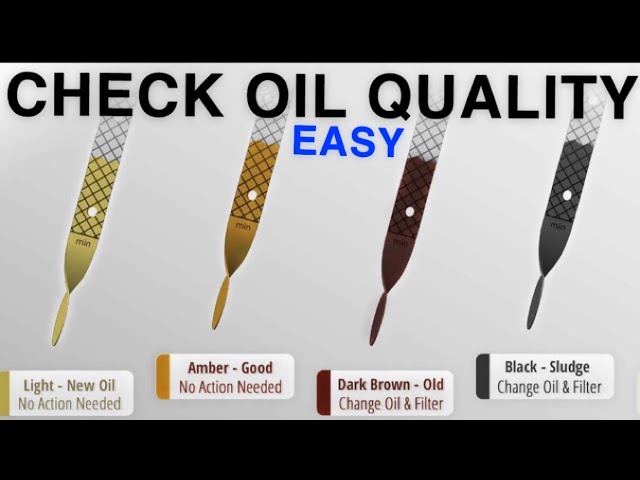

You cannot reliably decide that motor oil is bad from its color alone. Start with the correct oil specification, the time and distance since service, the vehicle's maintenance requirements and any abnormal change in level or engine behavior. If a low-oil-pressure warning appears, stop according to the owner's manual rather than inspecting the oil's color while the engine continues running.
Oil condition, oil quantity and oil pressure are different questions. This guide focuses on oil already in an engine. Storage life in a sealed bottle is a separate issue.
A visual check can identify reasons to investigate, but it cannot measure all the properties needed to judge serviceability. Where contamination or unusual wear is suspected, a suitable laboratory analysis can add evidence, provided the sample and vehicle history are recorded correctly.

Credit: zenithmotorcycles.co.uk
Begin with what changed
Write down the observation that prompted concern: overdue service, a rising level, rapid consumption, visible contamination, a warning or a new mechanical symptom. Note whether it followed an oil change, overheating event or another repair. These are different starting points. Do not combine them into a generic bad-oil diagnosis. The workshop needs the sequence and the actual condition. If there is a serious warning or abnormal engine noise, do not continue operating the engine merely to collect a more detailed history.
Darkness is not an oil-life measurement
ExxonMobil: limitations of oil-color assessment discusses why a color change does not necessarily establish a loss of lubricant performance. That industrial-lubricant explanation supports the limited point that appearance alone is insufficient; it is not a passenger-car change-interval recommendation. Different formulations and service conditions can produce different appearances. Do not use a color chart as a universal pass-or-fail test. Equally, light-looking oil is not proof that it still meets every requirement or that the correct product was installed.
Treat an unusual odor as an observation
An unfamiliar fuel-like or burned odor deserves attention in context, but smelling oil is not a quantitative contamination test. Do not inhale closely or handle hot oil to investigate it. Record the observation together with any level change, operating symptom and service history. If fuel dilution or overheating is suspected, ask for appropriate diagnosis rather than declaring a cause from odor alone. The relevant question is what changed and which evidence can confirm or exclude the suspected condition.
Visible debris or abnormal appearance needs investigation
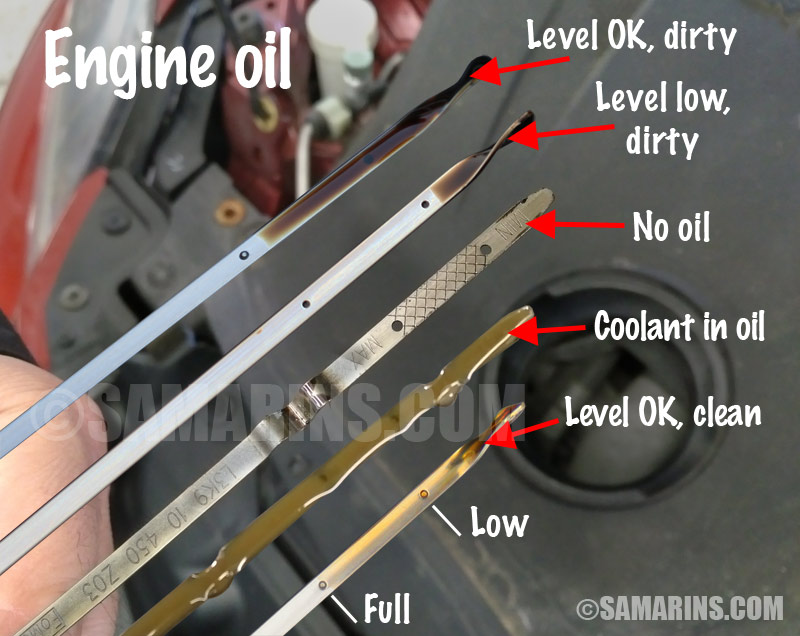
If visible material, an unusual emulsion or particles appear, document the observation safely and seek assessment. Do not rub used oil between bare fingers to measure its viscosity or use a home flame test. A deposit near a filler cap and a representative sump sample are not necessarily the same evidence. Avoid declaring a major engine failure from one photograph. A qualified inspection and, where appropriate, analysis can establish what is present and what needs to be checked next.
Separate the lubricant from the engine system
An oil-related symptom can involve the product, the amount in the engine, contamination or a mechanical lubrication-system problem. Replacing the oil may be necessary but may not correct the underlying cause. For example, a recurrent abnormal level trend requires an explanation even after fresh oil restores the starting level. Keep the observations separate in the repair record. This prevents a normal-looking refill from being mistaken for proof that every related problem has been resolved.
Performance symptoms do not diagnose oil quality
Rough running, reduced power or a new noise can have several causes. Do not assume an oil change will fix them solely because the oil is dark. Check the vehicle's warnings and arrange diagnosis appropriate to the symptom. If the concern began immediately after service, verify the documented product, fill quantity and completed work. An incorrect specification or level should be corrected, but that correction and diagnosis of the original symptom remain distinct tasks.
Assess wear with evidence and trends
Blackstone Laboratories: interpreting an oil analysis report explains the information available in an oil-analysis report, including measured properties and indicators that require interpretation. A single result needs the engine, oil type, service interval and sample history to make sense. Do not compare two engines with different use and sampling conditions as though their numbers should match. A trend from consistently collected samples can be more informative than an isolated value. Ask the laboratory what its result does and does not establish.
Do not delay action on an oil-pressure warning
A pressure warning is not an oil-change reminder. Follow the specific owner's manual promptly and stop the engine when instructed. Honda: low-oil-pressure warning guidance is one manufacturer example warning of rapid mechanical damage from low pressure; use the instructions for your own vehicle. A correct dipstick level does not prove that pressure is adequate.
If a warning persists or the cause is uncertain, arrange recovery or professional assessment. Do not keep driving because the oil still looks clean. Do not add extra oil above the specified range as a substitute for diagnosis.
Check the level using the prescribed method
Use the vehicle's method for engine temperature, waiting time, parking surface and dipstick or electronic display. Different procedures can produce different readings, so consistency matters when evaluating a trend. Record the actual reading and any oil added. Do not infer contamination from a level measured using inconsistent conditions. If the level is unexpectedly high or dropping rapidly, investigate the cause rather than repeatedly adjusting it without a record. Avoid opening hot components or working around moving parts.
Keep a useful service history
Record the service date, odometer, oil product and grade, required approval, filter and any top-ups. If a workshop performed the change, retain its invoice. The receipt helps establish what was installed instead of relying on the current bottle in the garage. A reset maintenance display does not prove that the physical work occurred. If the history is unknown, establish a sensible service baseline using the manufacturer's requirements and a qualified assessment of the engine's condition.
Choose an analysis question before buying a kit
Ask whether you want to investigate contamination, check an abnormal wear trend or document lubricant condition. Blackstone Laboratories: sample oil reports shows that laboratory reports can address different concerns, but no single sample is a complete engine inspection. Follow the selected laboratory's sampling instructions and record the engine and oil mileage separately. Include top-up quantities and recent repairs. A poorly identified sample makes interpretation harder. Do not collect from a dirty drain pan and assume the result represents the engine alone.
Give the mechanic the observations and records
Provide the symptom sequence, service documents, level readings and any laboratory report. Ask which finding supports the proposed repair and whether the suspected cause could recur after an oil change. If a test is recommended, ask what question it will answer. A clear explanation is more useful than replacing several parts on the assumption that dark oil proves wear. Keep the final diagnosis and any limitations with the vehicle record, especially if the concern was intermittent.
Use the maintenance schedule as the starting point
Follow the vehicle's specified time, distance, monitoring system and operating-condition requirements. Do not extend service solely because the oil looks clean or a bottle advertises long life. Where the manual distinguishes demanding service, evaluate your actual use against its definition. A period of very little driving does not automatically cancel a time-based requirement. If you want to change an interval, obtain advice grounded in the vehicle requirements and appropriate evidence rather than a generic internet mileage.
Avoid contamination during topping up
Use the correct product and a clean, suitable container or funnel. Keep the cap and surrounding area clean so debris is not introduced. Do not pour an unidentified leftover liquid into the engine because it resembles oil. Retain labeled packaging when storing unused lubricant. If the wrong fluid has been added, stop and obtain vehicle-specific advice before operating the engine. The response depends on what was added and how the system has been used since, not on appearance alone.
An oil change should include the cause when necessary
Routine replacement refreshes the lubricant but does not repair an ongoing source of fuel, coolant or other contamination. If a problem is confirmed, the repair plan should address its origin and include verification. Ask whether follow-up inspection or sampling is appropriate. Do not assume repeated short changes are a permanent substitute for correcting a fault. Record why the oil was changed and whether it was routine maintenance or part of a diagnostic repair.
Match more than the viscosity label
API: engine-oil licensing and specifications describes engine-oil licensing and quality marks. The viscosity grade is only one part of selection; the vehicle may also require particular performance specifications or approvals. Use the exact manual requirements and current product documentation. A higher price or a synthetic label does not automatically establish suitability. If a substitute is proposed, ask how it meets the required specification. Keep the product details so later analysis can be interpreted against the oil actually used.
Do not treat feel as a laboratory result
Oil feels slippery by design, and a finger test cannot determine whether it meets its viscosity or contamination limits. Temperature changes also affect how readily it moves. Avoid conclusions based on a drip seen on a warm dipstick compared with oil from a cold bottle. If viscosity is the concern, a properly specified measurement is the relevant evidence. Home observations are useful for identifying questions, not for inventing numerical serviceability limits.
There is no universal bad-oil mileage
The service interval depends on the vehicle and its use, and oil condition depends on what has happened during that interval. A generic mileage cannot account for every engine, formulation and fault. Follow the applicable schedule and investigate abnormal observations even if service is not yet due.
Conversely, do not replace oil prematurely only because it darkened if no other evidence or schedule requirement supports the decision. Ask for a reason tied to the vehicle rather than a color-based sales pitch.
Synthetic oil still needs correct use and maintenance
A synthetic product is not immune to contamination, incorrect application or an unresolved engine fault. It still needs to meet the required specification and be serviced appropriately. Do not assume switching product categories repairs mechanical wear or permits an arbitrary interval extension.
If a change of oil is recommended as part of a repair, ask which specification and problem the recommendation addresses. Record the change so future observations or analysis are not compared without acknowledging the different product.

Credit: www.youtube.com
Credit: www.samarins.com
A practical decision from the evidence
Treat a serious warning or rapid abnormal change as a reason for prompt assessment. For routine service timing, use the vehicle requirements and history. For a suspected condition that appearance cannot establish, use a suitable inspection or analysis with a well-documented sample.
Keep color, level, pressure and measured condition separate rather than calling all of them bad oil. That approach helps you decide whether the next step is scheduled service, a correct top-up, targeted diagnosis or stopping the engine. It also avoids assuming that fresh-looking oil proves a healthy lubrication system.


Automotive reference information. Confirm specifications in the manual for your exact vehicle. Original replacement guides link to their research sources. About us


