
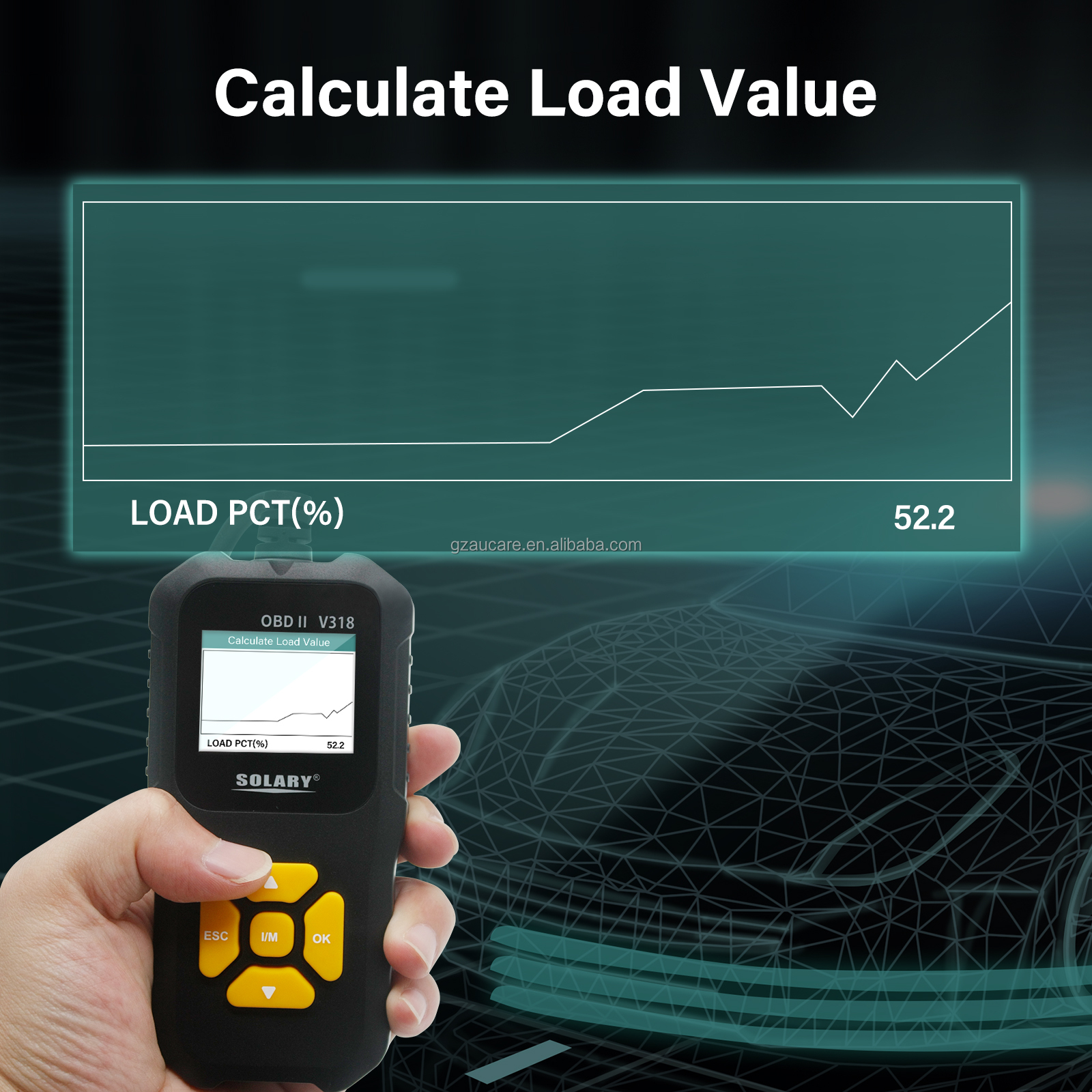
LOAD PCT usually labels calculated engine load on an OBD2 scanner. It is a controller-reported percentage, not a direct measurement of throttle opening, pedal travel or how close the engine is to failure.
Before interpreting it, identify the full parameter name and PID because scanners may also display absolute load or manufacturer-specific load fields. A percentage becomes useful only when its definition and operating conditions are known.
Record engine speed, temperature and the circumstances of the reading, then use the appropriate vehicle information to decide whether it supports a diagnostic concern.
Confirm which load field is displayed
Abbreviated labels can conceal different parameters. The OBD Auto Doctor reference lists PID 04 as calculated load and PID 43 as absolute load, separately from throttle and accelerator-pedal fields. If the scanner exposes the PID identifier, save it. If it does not, consult the tool documentation rather than assuming two gauges labelled load represent the same quantity.
Calculated means interpreted by the controller
Physically, calculated load describes current engine demand relative to the available capacity at the current engine speed. In an airflow-based spark-ignition implementation, current airflow is compared with a peak-airflow reference with atmospheric corrections; it is not simply throttle opening. Emtron’s ECU documentation explains that RPM-referenced relationship. The displayed value comes from the vehicle's calculation and reporting strategy. The scanner is not attaching a mechanical load gauge to the crankshaft. That distinction matters when deciding what an unusual value proves: it may help describe an operating point, but it does not independently identify the physical cause of a complaint. Keep the calculation's application and the surrounding evidence in view. If a service instruction uses a manufacturer load parameter, do not silently substitute the generic field merely because both labels contain the word load; establish that the intended comparison is valid.
Why load can still be useful
A load field can help compare the conditions under which a symptom appears. For example, a complaint may occur at a particular combination of speed and reported load rather than at idle. That relationship can guide a controlled diagnostic investigation. It should not be transformed into a universal rule that any engine showing a particular percentage needs a specific repair. Imagine two saved captures: one taken immediately after starting, and another taken after the engine has warmed with additional accessories operating. If the percentages differ, the records do not yet isolate a fault because several conditions changed together. A useful follow-up would document a repeatable stationary condition and compare like-for-like captures, provided the vehicle can be operated safely. The point of this example is experimental control, not a predicted direction or size of change.
The scanner displays a response, not a verdict
The tool requests supported data and presents the controller's reply with a label and units. Check that the field is supported and actively updating.
A default, unsupported or stale display is not a valid basis for diagnosis. If two tools disagree, first establish that they requested the same parameter and used the same operating conditions before blaming a vehicle component.
Separate load from throttle position
Throttle position describes a different quantity and reference than calculated load. Accelerator-pedal position is different again.
Equal-looking percentages are not necessarily expected to match, and a mismatch alone does not prove a throttle fault. Use the throttle-position explanation when the uncertainty concerns TP labels.
Keep the two fields in a comparison only when the diagnostic question explains why their relationship matters.
Separate calculated load from absolute load
Absolute load normalises the air mass entering during an intake stroke to a fixed reference based on cylinder displacement and standard-condition air density. Unlike calculated load’s speed-dependent available-capacity reference, this is a cylinder-filling reference. The SAE definitions reproduced in GM’s NHTSA submission distinguish the fields; absolute load can exceed 100 percent on a boosted engine, so that number is not inherently a fault.
These standard fields have distinct definitions and should retain their full names in a log. Do not compare one from a screenshot with the other from a service note and call the difference abnormal.
A tool's shortened label may be the source of confusion. Resolve the identity before choosing a reference range or interpreting a change between sessions.
Operating conditions are part of the reading
An engine at cold idle, a warmed engine supporting accessory demand and an engine accelerating are operating under different conditions. The percentage should be recorded with those circumstances. If you want to compare two readings, make the conditions meaningfully comparable instead of isolating the number and discarding the information that gives it context.
Do not judge efficiency from load alone
Engine efficiency involves more than one reported field. A higher load percentage in one situation is not automatically worse, and a lower percentage is not automatically evidence of healthier operation. Different speed, gearing and operating conditions can make a simple comparison misleading. Use the field to describe the test point rather than assigning an efficiency grade without an appropriate measurement method.
Fuel economy requires its own evidence
A load value is not a fuel-consumption measurement. If fuel economy is the concern, record the actual complaint and investigate it with the relevant vehicle data and service procedure. Do not replace a sensor solely because a load percentage seems high compared with an unrelated online example. The observation can support a question, but it cannot supply the entire answer.

Credit: www.aliexpress.com
An unusual value needs validation first
Check the parameter identity, units, session state and operating conditions before treating a reading as a fault. Then review applicable service information and bulletins. This sequence can prevent a display or interpretation issue from becoming an unnecessary repair. It also preserves the original observation clearly enough for someone else to assess it without reconstructing the missing context.
A primary-source example of scaling limits
Audi bulletin 2052834/1 documents calculated-load scaling that reads low on specified 2017–2019 applications. It explains that the consistent value can still help reproduce conditions and identifies absolute load as another useful field. This is a specific historical application, not a diagnosis for every Audi or every low reading. It demonstrates why application-specific information can matter more than a generic internet threshold.
Do not diagnose an intake restriction from one percentage
A reported load value may be relevant to a broader airflow investigation, but it cannot independently identify a restricted filter, faulty meter or exhaust problem. Determine what additional measurement would distinguish those possibilities.
If a diagnostic procedure specifies a load-related test, follow its conditions and acceptance criteria instead of substituting a casual stationary screenshot for the required test.
Build a repeatable comparison
Choose a safe operating condition and record it precisely. Save engine speed, temperature, relevant accessory state and the exact load field. Repeat the capture without changing several variables at once. A repeatable difference is more useful than an isolated surprising number, and it makes the limitations of the observation visible when discussing it with a technician. A practical log note might identify the tool version, full PID label, vehicle configuration, engine state and whether the capture was live or freeze frame. Include the symptom that prompted the check and whether it occurred during the capture. If the symptom was absent, say so. That prevents a normal-condition record from being presented as though it documents the actual complaint. Keep any comparison value attached to its source and test conditions, so a later reader can assess whether the reference is applicable.
Use a baseline from the same application
A known-good comparison is most useful when it genuinely matches the engine, software context and operating conditions. Another vehicle with the same displacement is not automatically equivalent.
If no suitable reference exists, state that limitation. Do not invent a normal percentage to make the report look complete; the next step may be obtaining the correct service information.
Avoid unsupported predictive-maintenance claims
A trend in reported load does not, by itself, predict when a component will fail. Changes in driving conditions or configuration can alter the comparison.
Keep the raw records and investigate a consistent symptom or validated abnormality.
Do not sell the reader a promise that watching one gauge will reliably forecast engine damage or eliminate the need for ordinary maintenance.

Credit: www.aliexpress.com
Select a focused group of parameters
Choose fields that help answer the diagnostic question, such as speed and the relevant load definition, rather than every available PID. A large selection can make timing harder to interpret. The Innova live-data reference is useful for identifying labels, but vehicle-specific testing still determines what values and relationships matter in the current investigation.
Check recording and display behaviour
Confirm whether the tool records timestamps, units and full names in its export. A screenshot can document a steady observation, while a log may be better for a changing condition.
Check that playback is not mistaken for a current session.
Keep the original file unchanged and add explanatory notes separately so later analysis does not alter the evidence.
Use graphs without creating false precision
Read the axis scale and update timing before drawing conclusions from a graph.
Two traces may be sampled at different moments or displayed on different scales.
Avoid claiming that one event caused another merely because the lines appear close together.
If timing is central to the diagnosis, choose equipment and a procedure capable of supporting that timing claim safely.
Credit: www.alibaba.com
Interpret LOAD PCT as context, not a parts list
Identify the PID, preserve operating conditions and compare the same quantity under a defined test. Distinguish it from throttle and absolute load, and consult application-specific information when the value seems unusual.
A defensible conclusion says what was observed and what further test it supports. It does not diagnose an engine or recommend a replacement from a percentage viewed in isolation.


Automotive reference information. Confirm specifications in the manual for your exact vehicle. Original replacement guides link to their research sources. About us


