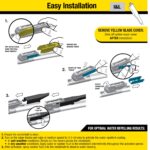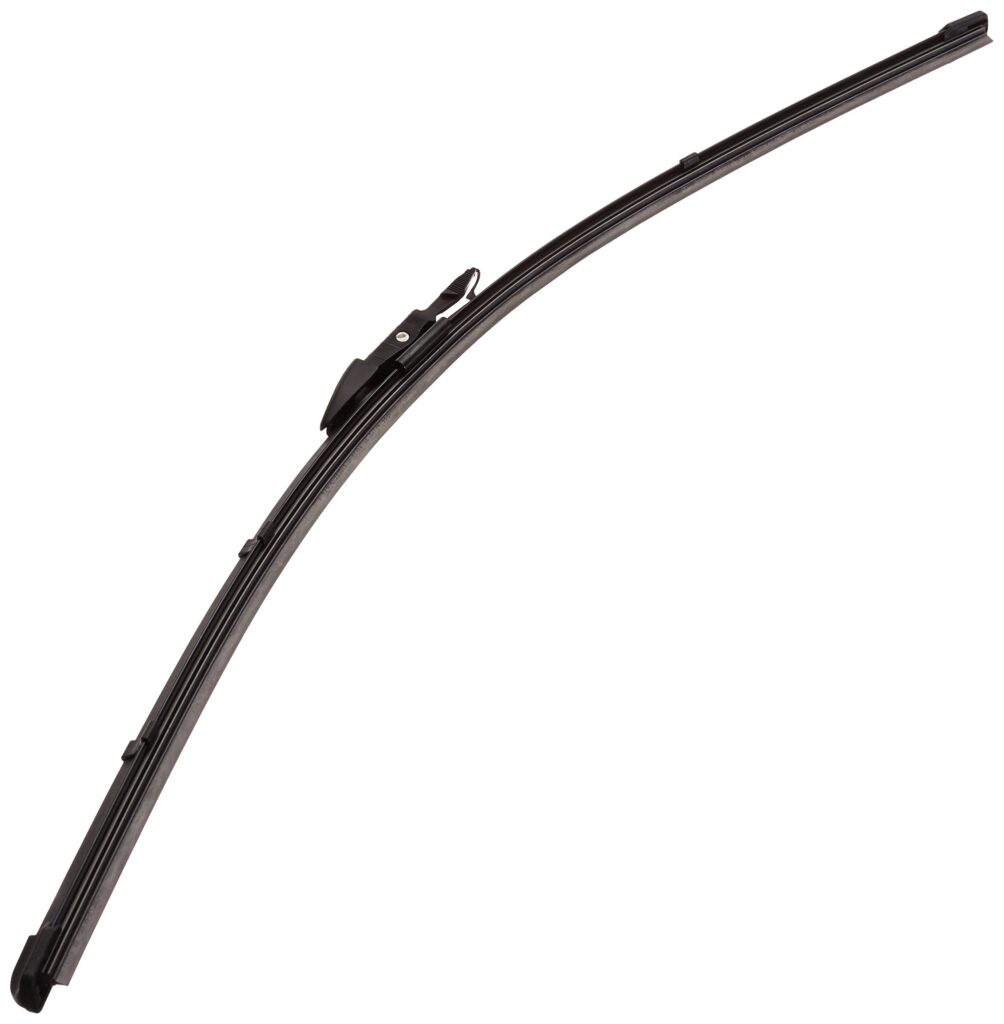

DENSO is a documented original-equipment wiper supplier to Toyota. That is a supported answer, but it does not establish one manufacturer for every Toyota blade sold in every country or year. A factory-installed assembly, a Toyota Genuine service replacement, a SightLine blade and an independently branded aftermarket alternative are different products to investigate. NWB is relevant too: Nippon Wiper Blade became part of the DENSO Wiper Systems business through a documented merger. For a specific blade, its full reference and supply history matter more than a blanket brand claim.
Credit: www.toyotadirect.com
The strongest evidence for a Toyota supplier
DENSO’s November 2022 wiper-catalog announcement includes Toyota among the customers for its original-equipment wipers. This is the manufacturer describing an OE relationship, rather than a retailer merely listing a blade that fits a Toyota. It supports identifying DENSO as a supplier. It does not provide a model-by-model factory allocation, name every service-part producer or prove that all Toyota wipers originate from the same plant. Those narrower questions still require evidence for the item involved.
What Toyota Genuine tells you—and what it does not
Toyota Genuine identifies a Toyota parts offering, not necessarily a component manufactured inside a Toyota-owned factory. The genuine-parts definition on Toyota’s C475 wiper-insert page includes parts made by Toyota or specifically approved by it and supplied through the authorized channel. That distinction explains how a supplier-built component can be a genuine Toyota part. It also prevents the opposite mistake: treating any independently sold product from a Toyota supplier as automatically identical to the genuine reference. Approval, product identity and factory ownership are separate facts.
How DENSO and NWB fit into the answer
The two names are connected by corporate history. That history is useful when an owner encounters NWB on an older component or in a replacement-parts discussion. It should not be used as a shortcut around checking fitment or as proof that two differently numbered items are interchangeable. A company relationship is broader than a technical cross-reference.
Nippon Wiper Blade became part of DENSO Wiper Systems
DENSO’s July 2019 announcement said its subsidiaries Nippon Wiper Blade and Asahi Manufacturing would merge on October 1, 2019, under the name DENSO Wiper Systems. The official NWB website also identifies that business connection. Consequently, finding references to NWB and DENSO does not necessarily indicate two unrelated rival suppliers. Keep the date attached to the corporate explanation; it does not establish when an individual blade was produced or identify its assembly plant.
Why an aftermarket listing proves less than an OE statement
A blade advertised for a Corolla or RAV4 may be a suitable replacement without being the part Toyota installed when that vehicle was built. Compatibility catalogs answer whether a specified service product is suitable for an application. They do not automatically disclose the original vehicle supplier. The reviewed primary evidence supports the DENSO relationship; it does not justify presenting a fixed DENSO-and-Bosch list as the manufacturers of every Toyota blade. An unsupported universal supplier list is less useful than a precise, limited answer.
Identify which Toyota wiper product you mean
Before asking who manufactured a blade, establish what is actually being discussed. An owner may say “the Toyota wiper” about an untouched factory assembly, a recent dealer replacement or an aftermarket blade on a Toyota vehicle. Those descriptions cannot be treated as the same product. The following distinctions also help prevent ordering an insert when a complete blade is needed.
- Factory assembly: This is the blade originally installed during vehicle production, if it has genuinely remained on the car. A supplier mark on that component may be informative, but confirm its service history before calling it original. Ownership changes can leave replacement history uncertain.
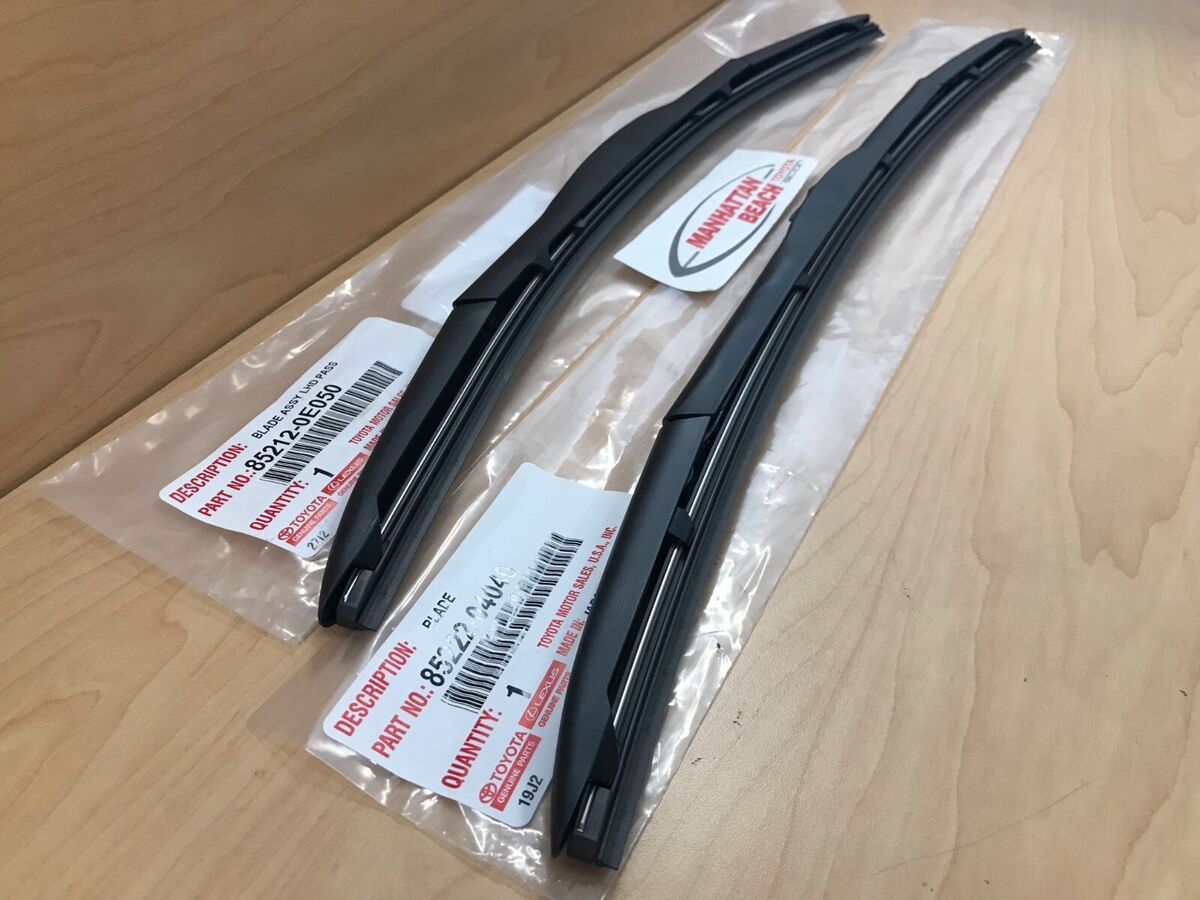
- Toyota service blade: A complete replacement offered through Toyota can have its own service reference and product family. Its suitability for a vehicle does not mean its construction must exactly reproduce the blade removed from a new example of that model.
- Rubber insert: This replaces the wiping element within a compatible retained assembly. Toyota lists part 85214-YZZB7 as a C475 rubber insert. It is an example of an available insert, not a recommendation for every Toyota or every blade previously fitted to one.
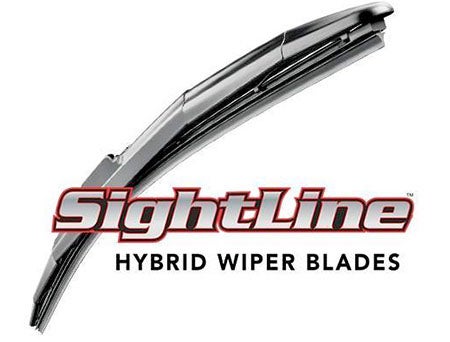
Credit: www.ebay.com
SightLine and rubber refills need separate checks
The Toyota 2022 wiper service catalog illustrates why the product family matters. Its 2002–2006 Camry rows include both SightLine and U-hook replacement options. The catalog also states that replacement inserts were unavailable for the blades in that listed range and directs complete-blade replacement. This is a dated statement about those catalog products, not proof that Toyota has never sold refills. Toyota’s separate C475 insert listing demonstrates why both the assembly and replacement item must be identified.
- Read the assembly reference first: If a previous owner changed the whole blade, the vehicle’s original insert listing may no longer apply. Inspect the current assembly’s identification or have the parts counter identify it. Do not assume a refill will fit merely because the car has always been serviced by a dealer.
- Confirm present availability: A historical catalog can explain a product distinction, but it cannot settle current stock, superseded references or availability in another country. Obtain today’s applicable listing before purchasing; preserve the old reference when asking about a replacement number.
- Match the kind of repair: A compatible insert is useful only when the retained structure remains serviceable and the maker supports the repair. A damaged connector or distorted blade requires a different decision. Our rubber-only replacement guide explains the checks without assuming every Toyota assembly is refillable.
How to verify a part for your Toyota
Supplier identity and replacement selection should meet at a documented part reference. You do not need to solve the history of the global wiper supply chain to buy the correct replacement. You do need enough vehicle and product information to avoid buying a plausible-looking item for a different position or market. Use the following sequence at a dealer parts counter or with an official application catalog.
- Identify the vehicle precisely: Use the model year, market and vehicle identification number when the catalog accepts it. Toyota’s parts site provides a VIN lookup. State whether the request concerns the driver-side front blade, passenger-side blade or rear blade; “a set for a Toyota” leaves too much unspecified.
- Identify what is fitted now: Tell the supplier whether you are retaining the existing assembly and changing an insert or replacing the complete blade. Include any readable reference and photographs of the connection when asking for help. Avoid dismantling a serviceable arm merely to search for an inaccessible mark.
- Request the proposed reference: Have the seller specify the complete product number, position and whether it is Toyota Genuine, SightLine or another brand. Ask whether the lookup depends on the original arm and blade remaining fitted. This makes substitutions visible before a purchase is made.
- Check the package against the lookup: Compare the supplied reference with the order, then use the vehicle and blade instructions for installation. A familiar logo does not resolve a wrong connector. The explanation of why wiper fit is vehicle-specific covers the separate roles of dimensions, connection and application.
Does DENSO mean every Toyota blade is made in Japan?
No. A supplier’s Japanese headquarters cannot establish the manufacturing origin of every item it supplies. DENSO’s February 2025 flat-blade announcement specifically describes new Japan-made references for selected right-hand-drive Lexus NX, Toyota C-HR and Toyota Prius applications in Europe. Both the manufacturing statement and application limits belong to those additions. They should not be expanded to every Toyota blade, every DENSO reference or the left-hand-drive versions of those vehicles. Read the origin marking for the actual product when that detail matters.
- Ask about the exact product: A useful origin inquiry includes the full service reference and available package markings. A general response about the company’s home country cannot answer where that identified item was manufactured. Keep a photograph rather than relying on a remembered description.
- Keep compatibility separate from origin: A Japan-made blade still needs the correct application. Conversely, a different stated manufacturing country does not by itself demonstrate incompatibility or a defect. Judge the specified part and its support rather than substituting a country label for the fitment check.
- Do not infer quality equivalence: Two products associated with one supplier may have different references, connectors or service arrangements. A manufacturer name alone cannot establish identical rubber formulation, useful life or warranty coverage. The wiper price comparison guide separates documented features from assumptions about premium pricing.
For aftermarket alternatives, DENSO’s wiper range information provides product categories and a route to application selection. Use that evidence for a replacement choice, rather than treating the whole range as a catalog of Toyota factory parts. If identifying the original producer remains important, ask the Toyota parts department for confirmation tied to the reference and vehicle. A reply that identifies only Toyota Genuine settles the service brand but may leave the actual manufacturer unconfirmed. It is reasonable to record that limit without guessing.
A supported supplier answer, followed by a part-specific decision
DENSO has a documented Toyota OE wiper relationship, and the NWB name has a documented connection to DENSO Wiper Systems. Neither fact makes every Toyota-branded blade interchangeable or proves a single worldwide source for all factory and replacement products. For an owner, the decisive next step is identifying the present assembly, the required position and the current approved replacement. That approach answers the practical question while preserving the distinction between verified supplier history and the still-unconfirmed origin of an individual blade.


Automotive reference information. Confirm specifications in the manual for your exact vehicle. Original replacement guides link to their research sources. About us