
A pop heard while turning the steering wheel does not identify a failed steering rack. The sound may come from a suspension component releasing load, a joint or mounting with movement, or a part inside the cabin. Sound can travel through the body and column, making its apparent location misleading.
The useful question is whether it occurs while stationary, only while moving, once at a particular steering position or repeatedly with wheel rotation. If the noise comes with looseness, binding, a sudden change in steering effort, a displaced wheel or instability, stop driving and arrange inspection. Do not keep making tight turns to reproduce a potentially unsafe fault.
This guide focuses on a distinct pop or clunk during steering, rather than a continuous squeak or normal turn-signal click. The next step should be localization and verification against the vehicle's service information, not spraying lubricant into every moving part.
Start with when the pop happens
Write down whether the vehicle is stationary or moving and whether the sound follows a change in steering direction. Include recent suspension work, a curb strike or a pothole impact. A single pop after reversing direction is different from a rhythmic series that follows vehicle speed. Neither pattern proves one component, but the distinction helps the technician choose a relevant inspection instead of replacing parts based on the word popping.
A rotating-joint noise needs movement context
A joint associated with a driven wheel belongs in a different diagnostic branch from a noise reproduced with the car stationary. Do not label every turn-related sound a CV joint failure without checking that context. Report whether the noise depends on vehicle movement and acceleration during ordinary use. Avoid deliberately accelerating on full lock as a home test. A workshop can inspect the relevant driveline and suspension components using the correct method.
Steering-joint play must be demonstrated
A tie-rod or other steering-joint concern requires inspection for the applicable type of wear or movement. The sound alone does not establish excessive play. If there is a delay between wheel movement and steering response, describe it explicitly and have control-related components assessed. Do not tighten an adjuster to remove a noise. Adjustment can alter alignment without repairing a worn joint and may conceal the original evidence.
A spring or strut can release load with a pop
On some suspensions, steering involves movement through a strut-bearing and spring assembly. Binding or incorrect component seating can produce a sudden release of load. Nissan NTB24-023: specific Pathfinder front-suspension popping diagnosis addresses a narrowly specified example: certain 2022–2024 Pathfinders built on or before September 27, 2023. It requires confirmation of the sound's source before its repair applies. This demonstrates a diagnostic possibility, not a finding that your vehicle needs the bulletin's parts.
Do not condemn the rack from the sound location
A pop felt through the steering wheel can originate elsewhere in the steering or suspension structure. A rack recommendation should be supported by inspection or testing that identifies the fault. Ask how the repairer separated rack movement, mountings and neighboring components. An expensive assembly is not a better diagnosis simply because it sits in the same system. If the source remains uncertain, further localization is more useful than a speculative replacement.
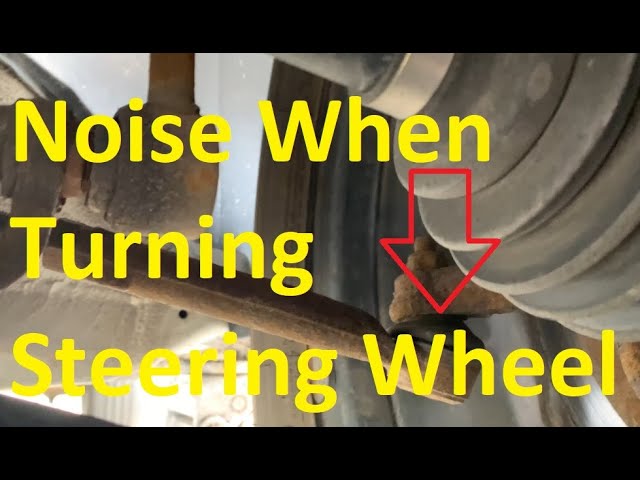
Credit: www.youtube.com
What a useful noise description contains
Give the repairer a repeatable description without creating dangerous conditions. For example, say that the noise occurs once during ordinary low-speed parking after reversing steering direction, rather than saying the front end always pops. Include the perceived side, whether it happens hot or cold and whether the wheel feels different. These are observations, not proof of a cause. A safely recorded sound may help, but a recording cannot establish component play or structural condition.
Separate a pop from other steering sounds
A continuous rubbing squeak, a repetitive click and a single spring-like pop can lead to different checks. The steering squeak guide addresses sustained friction-type noises. Here, pay attention to whether something seems to release suddenly rather than scrape throughout the movement. Do not assume that a louder sound is necessarily a more dangerous fault or that a quiet sound is harmless. Accompanying control symptoms matter.
Limit a home inspection to safe observations
With the vehicle parked and secured, look for obvious damage, a visibly displaced component or evidence of a recent impact without reaching into moving parts. Do not put your hands near a spring, joint or tire while someone turns the wheel. Do not crawl under a vehicle supported only by a jack. A visual check can identify a reason to stop driving, but a normal appearance does not clear the suspension of faults.
A workshop should localize the source under safe conditions
Professional noise diagnosis may compare the sound at several locations and inspect components in the correct loaded or unloaded condition. The Nissan bulletin uses a specific localization process before authorizing its repair. That detail matters because replacing a strut simply because a pop occurs while turning skips the confirmation step. The correct method varies by suspension design. Spring disassembly and testing around loaded components require suitable equipment and training.
Choose the next action by control symptoms
If steering binds, becomes loose or changes effort suddenly, arrange assessment before further driving. A pop without those symptoms still deserves diagnosis, particularly after an impact or recent repair, but this article cannot determine roadworthiness remotely. Tell the workshop if the sound is worsening or now occurs during braking or bumps. Do not use the absence of a warning light as evidence that a mechanical problem is safe to ignore.
Do not tighten random fasteners
A loose fastener can be important, but identifying and correcting it requires the specified procedure and tightening requirements. Some hardware has replacement rules or installation conditions that a casual extra turn does not satisfy. Do not tighten the visible top nut of a strut or disturb a spring assembly to chase a noise. Ask the technician to document the affected attachment and verify why it became loose, especially after recent work.
Lubrication is not a universal popping repair
Spraying lubricant around the column or suspension can contaminate nearby parts and obscure the source. Many joints are sealed, and products suitable for one material may be unsuitable for another. A temporary reduction in sound does not prove the underlying condition is repaired. Use lubrication only where the manufacturer specifies a serviceable interface and approved product. Do not inject grease through a boot or apply chemicals to restraint-system components.
An applicable bulletin still requires a matching diagnosis
GM 15-NA-088: 2015 City Express strut noise concerns front-strut noise on the 2015 Chevrolet City Express and describes a specific professional repair. It is not a general spacer recommendation for any noisy suspension. The existence of two different manufacturer procedures for similar-sounding complaints shows why the symptom cannot determine the repair by itself. A bulletin should match the vehicle and confirmed condition; it should not be treated as a recall or a guaranteed free repair.

Credit: www.reddit.com
Use service history to prevent repeated guessing
Keep records of suspension, alignment and steering work, including when the noise first appeared. A newly installed component can still be incorrectly specified or assembled, while a new sound can also be unrelated to the recent job. The chronology guides inspection without establishing blame. Ask the repairer to compare the installed parts and procedure with the vehicle's requirements before recommending another complete assembly.
Report changes in steering feel as well as sound
A noise-only complaint and a noise accompanied by wandering, looseness or binding should not be described identically. Note whether the car tracks normally and whether the steering returns as it usually does during ordinary operation. Do not perform a hands-off road test. If control feels abnormal, stop safely and arrange help. That information can change the urgency and scope of inspection more than the loudness of the recording.
Suspension work must include completion checks
After a confirmed repair, the workshop should verify the original symptom and any required alignment or calibration checks for the work performed. A replaced component is not the same as a completed diagnosis. If the sound persists, return with the original description and repair record. Do not compensate with an aftermarket brace, spacer or stiffer part unless it is a documented appropriate repair for that application.
Schedule an inspection around the actual complaint
When booking, explain the conditions that make the sound occur and whether the vehicle has any control symptoms. An appointment described only as an alignment may not include the diagnostic work needed for a pop. Ask whether the shop can inspect steering and suspension noises and access model-specific information. If the car may be unsafe to drive, discuss recovery rather than driving it merely to keep the appointment.
Know when a normal-use observation is enough
You do not need to reproduce the sound dozens of times before seeking help. A clear description of a recent event, especially after a substantial impact, is enough to justify inspection. Stop testing if the symptom becomes severe. Never have a helper lie beneath the car while you turn the wheel or move it. The risk of that experiment outweighs the value of another sound sample.
If the first diagnosis does not resolve the pop
Ask which evidence supported the repair and whether the original symptom was reproduced afterward. An unresolved sound may require a different localization approach rather than another part from the same list. Keep the discussion specific to conditions and findings. A second opinion can be useful when the proposed repair is expensive but the source remains unconfirmed. Do not treat a confident component name as a substitute for demonstrated evidence.
Evaluate the quote by scope, not a generic price
Costs depend on the confirmed component, vehicle, labor access and any required follow-up work. A universal popping-noise price would be misleading before diagnosis. Request separate entries for diagnostic time, parts, labor and applicable alignment or calibration. Clarify whether the quote covers one confirmed fault or several possible parts. That makes competing estimates easier to compare without rewarding the cheapest incomplete repair.
Ask for an explanation you can verify
A useful repair explanation identifies the source, the evidence and the completion check. It may include measured play, a localized noise or an applicable service procedure. Ask to see relevant damage when practical, while staying clear of workshop hazards. You do not need to perform the repair yourself to ask why it is appropriate. The goal is a traceable diagnosis rather than a list of common causes.
Credit: www.highlinewarren.com
Localize first, then repair the confirmed condition
A steering-related pop is a symptom shared by several components. Its timing, movement conditions and accompanying changes in control guide the investigation.
Manufacturer examples show why a strut or spring issue can sound like a steering fault, but they do not establish your vehicle's diagnosis. Avoid blind tightening, spraying and repeated aggressive tests.
Have abnormal control symptoms assessed promptly, and require a repair that addresses the demonstrated source.


Automotive reference information. Confirm specifications in the manual for your exact vehicle. Original replacement guides link to their research sources. About us


