

Motor oil can be expensive because the price covers a formulated, packaged and distributed product, not simply a quantity of crude oil. Different specifications, package sizes, sales channels and service inclusions also make apparently similar prices hard to compare.
The highest-priced bottle is not automatically the best choice for your engine, and the cheapest is not a saving if it lacks the required specification. Start by identifying the correct oil, then compare the cost of buying and using that exact type.
This guide is a purchasing framework, not a current price survey or a claim about a particular brand's production margin. No live market increase is inferred from a single shop quote.
Separate the bottle from the oil-change service
A shelf price normally covers the packaged lubricant. A workshop quote may include a filter, labor, inspection, disposal and taxes. Ask what is included before deciding that the same oil costs several times more at the workshop.
Compare an identical required specification
Write the viscosity grade and performance requirements from the vehicle manual. Products that share one number on the label may not meet the same complete specification. Compare suitable candidates first; price comparison comes after compatibility is established.
Check the container quantity
A small top-up bottle and a large service container can have very different prices per unit. Read the actual volume rather than judging the size of the package. Keep liters and quarts separate unless you deliberately convert them.
Calculate the price per unit
Divide the price by the stated volume. As a hypothetical example, a five-liter container costing 30 currency units is six units per liter. That arithmetic is a comparison tool, not a claim about today's market price.
Then calculate the quantity you actually need
Use the vehicle's service-fill requirement, including the relevant filter condition. A lower unit price is not the whole purchase cost if the package leaves an unusable surplus for your circumstances.
Do not overfill the engine to finish a container.
A formulated lubricant is more than base oil
The finished product is designed to meet stated performance requirements. Base stocks and additive systems contribute to that formulation, but a bottle label does not disclose a manufacturer's complete cost breakdown. Avoid attributing an exact share of price to one ingredient without evidence.
Read the engine requirements before comparing claims
A modern engine can require a specific oil performance level or manufacturer approval in addition to viscosity. Shell: viscosity grades and manufacturer requirements emphasizes matching the engine manufacturer's recommendations. A general premium label does not replace those requirements.
Do not rank products by additive slogans
More additives is not a complete measure of suitability. The formulated oil must function as a system and meet the relevant requirements. Adding an aftermarket treatment is not a substitute for buying the specified oil and can change the intended formulation.
Distinguish performance standards from advertising
API: engine-oil licensing and quality marks explains its licensing system and quality marks. These provide defined information that can be checked. A dramatic image or a vague protection claim is a different type of statement and should not determine compatibility.
Evaluate a claimed longer interval carefully
A product's marketing interval does not automatically supersede your vehicle's maintenance requirements. Calculate service cost using an interval actually applicable to the vehicle. Do not create a projected saving by assuming an unsupported extension.
Value means suitable oil at a fair complete cost
A correctly specified product from a reliable source can be a sensible choice without being the most expensive option. Keep the decision tied to documented requirements, quantity and service rather than treating price itself as proof of technical superiority.
Retail price includes a route to the customer
Packaging, storage, transport and retail operations are part of getting a product to you. Their contribution varies. This explains why a retail price is not a direct crude-price conversion, but does not establish the reason for any specific recent increase.
Do not assume a shortage from one empty shelf
A missing local product could reflect that retailer's stock decisions. Check other legitimate sources before inferring a general supply shortage. If the required oil is unavailable, ask about a documented suitable alternative rather than choosing only by viscosity.
Include delivery charges in online comparisons
A low listed price can be offset by delivery, minimum-order requirements or other charges. Compare the delivered total for the quantity you need. Keep any subscription or membership condition visible in the calculation.
Check availability before planning service
Confirm that the quoted product and quantity can actually be supplied when needed. An unavailable bargain should not delay required maintenance indefinitely. Ask the workshop which suitable product it will use if the originally quoted one is unavailable.
Currency and location affect comparisons
A price in another country may include different taxes, package quantities and distribution costs. Do not compare the headline figures without those details. An overseas listing is also not automatically an appropriate product for your market's vehicle specification.
A standards change needs a specific explanation
If a seller says a new requirement raised the price, ask which requirement and which product changed. A general reference to regulations is not a quantified explanation. Verify applicability to your engine before paying for a claimed upgrade.
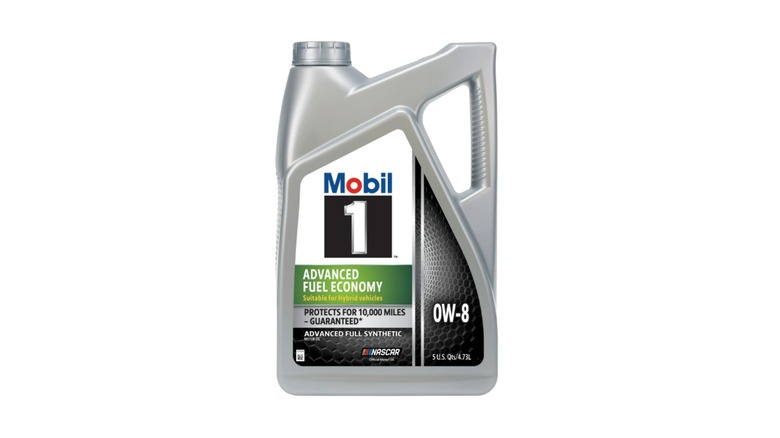
Credit: www.slashgear.com
Testing and licensing are real activities
API: licensing application and program fees documents an application and fee structure for API licensing. That supports the existence of program costs, not a calculation of how many cents every bottle must cost. Avoid presenting licensing fees as the whole retail-price explanation.
Verify the actual quality mark and product
Check the complete brand, product name and grade against the relevant licensing or approval information. Similar packaging does not prove identical status. Keep a photograph of the label and the receipt if authenticity or specification is a concern.
Do not confuse environmental claims with fitment
A product may make claims about packaging, production or environmental benefits. Those claims should be evaluated on their own evidence. They do not establish that the lubricant meets the performance requirements of your particular engine.
Ask what an approval statement means
A formal approval, a licensed quality mark and a marketer's recommendation are not necessarily the same statement. Read the exact wording and verify what the vehicle requires. Do not pay a premium for a label you have misunderstood.
Use current product documentation
Product names and formulations can change. Check the documentation for the exact product now offered rather than relying on an old forum photograph. Keep the package code when comparing apparently similar versions or asking the manufacturer for clarification.
Buy the required performance, not the longest claim list
A long list of applications can be useful, but only the requirements relevant to your engine establish suitability. More printed claims do not automatically produce better value. Focus on confirmed compliance with the specification you need.
Compare the whole maintenance decision
An appropriate oil, correct filter and proper service are a combined maintenance task. Saving a small amount on an unsuitable lubricant is poor value. Paying more without a relevant specification or service benefit is not automatically justified either.
Technology can change the product without proving a price
Formulation developments can enable different performance targets. That does not let an observer infer the manufacturer's cost or margin from the word advanced. Ask what documented requirement the product meets and whether that requirement matters for your vehicle.
Do not buy an additive package separately by guesswork
The finished lubricant is evaluated as a formulation. Adding an unrelated treatment to a cheaper oil does not demonstrate equivalent performance to another product. Follow the vehicle and lubricant manufacturer's guidance rather than constructing your own substitute.
Synthetic is a category description, not the complete answer
Synthetic oils still differ in viscosity, specifications and application. Compare exact products rather than all synthetics against all other oils. A synthetic label alone does not establish that an oil is correct for the engine or permits a longer interval.
Aftertreatment compatibility belongs in the specification check
Where the vehicle requires an oil suitable for its emissions equipment, retain that requirement in the comparison. Do not trade it away for a lower price. The owner's manual and documented approvals are more useful than a generic clean-engine slogan.
Treat fuel-economy claims as conditional
An advertised efficiency benefit depends on the stated test and comparison. Do not assume the same saving for your vehicle or multiply it into a precise payback without evidence. Use the specified grade rather than changing viscosity solely to chase a claim.
An interval extension needs authorization and evidence
If you are considering changing service intervals, consult the applicable vehicle requirements and a qualified service adviser. A larger bottle or premium price does not itself justify extending the interval. Include time-based limits and operating conditions in the decision.

Credit: arrowheadimports.com
Consider waste without neglecting maintenance
Buy sensible quantities and store unused oil correctly in its labeled container. Avoid unnecessary disposal, but do not postpone required service simply to use an old leftover product. Suitability and condition remain the first checks.
Do not infer a regulation-driven price rise
A price increase may have multiple causes. Without a dated explanation and comparable product data, attributing it to one regulation is speculation. This article does not claim that any particular rule caused your current quote.
Ask how used oil and filters are handled
A workshop may include a disposal or environmental fee. Ask what it covers and include it in the total comparison. If servicing the vehicle yourself, arrange an appropriate local collection route rather than treating disposal as a cost-free afterthought.
Specialty descriptions require application confirmation
Terms such as biodegradable or renewable describe particular aspects of a product. They are not universal substitutes for the vehicle's engine-oil requirements. Verify the intended use before treating an environmentally described lubricant as an equivalent service fill.
Packaging choices are a separate consideration
A different container or refill arrangement may reduce packaging or change the unit price. Confirm the product identity and contamination controls, especially with bulk supply. An unlabeled container makes later specification and service verification unnecessarily difficult.
Branding can influence willingness to pay
A familiar brand may be easier to recognize and obtain, but recognition is not a technical specification. Compare documented suitability and the complete cost. Do not assume all price differences are either marketing alone or superior engineering alone.
A premium label is not a measurement
Words such as ultimate or professional do not supply a test result by themselves. Look for the defined performance claims and application information behind them. Ask what practical benefit is relevant to your engine before paying extra.
Consistency can be useful without becoming blind loyalty
Using a known suitable product simplifies records and future purchases. That convenience has value, but another correctly specified product may also be suitable. Evaluate a change with documentation rather than a blanket claim that switching brands harms engines.
Separate advertising examples from your use
A racing image or heavy-duty demonstration may concern conditions unlike your road vehicle. Do not infer that the featured product is required for ordinary service. Match the intended application and required approvals rather than the advertising setting.
Special packaging does not change the maintenance requirement
A promotional edition or branded container can cost differently without changing the specification you need. Read the actual product details. If the formulation is claimed to differ, request its documentation rather than assuming the package explains the benefit.
Sponsorship is not application approval
A team or manufacturer partnership may be genuine, but it does not automatically approve every product from that brand for every vehicle. Look for the exact required oil specification and the product's documented status.
A useful comparison needs several comparable offers
If you want to know whether a local price is high, collect current offers for the same product or genuinely suitable alternatives. Record the date, quantity and conditions. One unusually expensive listing cannot establish the whole market.
Compare available products, not hypothetical averages
A national average may not reflect the package, specification or location relevant to you. For a practical purchase, use actual available offers with matching requirements. Keep unavailable or promotional-only prices separate so the comparison remains actionable.
High-performance claims need an engine-specific reason
A product intended for a particular performance application may have different priorities. Do not assume it is the best ordinary-service choice solely because it is expensive. Confirm the vehicle requirements and intended use first.
Keep technical and legal questions distinct
The right lubricant must satisfy the applicable engine requirements. Separate that technical selection from any local rules affecting sale, labeling or disposal. A statement about one country does not automatically explain a price or requirement in another.
Convenience can be priced explicitly
A nearby retailer, fast delivery or a workshop supplying the correct product can save time. Decide whether that convenience is worth the difference to you. It is clearer to identify the service benefit than to invent a technical advantage for the oil.
Avoid unsupported market predictions
Crude prices, exchange rates and supply conditions can change, but this guide does not forecast them. Do not delay required maintenance because someone predicts a coming price drop. Compare current suitable options when the service is due.
Check the seller as well as the price
Use a reliable supplier, inspect seals and retain the invoice. An unusually cheap listing deserves verification of product identity and quantity. Do not pour an unidentified or suspicious product into the engine merely because the package resembles a familiar brand.
Build a simple service-cost record
Record the oil quantity and price, filter, labor, taxes and additional fees. Use the same categories for each quote. FTC: auto repair estimates and service decisions recommends understanding repair estimates and service decisions; that approach helps make oil-change comparisons meaningful.
Use a hypothetical comparison honestly
For example, two offers at the same total price may include different quantities or filters. Calculate what each actually supplies before choosing. Label your own estimates as estimates and do not present a hypothetical calculation as a measured local market price.
Include required extras rather than surprises
Ask about charges for additional oil beyond a package allowance, a specific filter or access work. A low advertised starting price may not match your engine's complete service. Request the total for the exact vehicle before authorizing the work.
Avoid false precision in projected savings
A small unit-price difference does not establish a precise lifetime engine saving. Future use, prices and maintenance needs are uncertain. Compare the immediate suitable purchase and service cost without inventing a long-term financial return.
Keep promotions separate from normal pricing
A rebate, subscription or limited offer can be useful if its conditions suit you. Include the steps and eligibility in the comparison. Do not treat an unclaimed rebate as money already saved or compare its net price with another offer's tax-inclusive total.
Bulk buying needs a storage plan
A large quantity can reduce unit cost, but only if you can store and use the correct product appropriately. Keep it sealed and identified according to manufacturer guidance. Do not buy more than you can manage just to obtain a lower displayed unit price.
Different engines can need different products
If a household has several vehicles, check each requirement before assuming one bulk oil suits them all. Matching viscosity alone may not be sufficient. Separate correctly labeled stock is preferable to an unsupported universal substitution.

Credit: www.slashgear.com
Make the purchase decision from verified requirements
Choose a documented suitable oil from a reliable source, calculate the amount needed and compare complete costs. Ask a workshop to explain any premium in terms of the product or included service.
Motor oil's price is not simply crude oil's price, but neither is a high price proof of a better choice. Keep the receipt and specification with the service record so the next comparison starts from confirmed information rather than a remembered brand or bottle color.


Automotive reference information. Confirm specifications in the manual for your exact vehicle. Original replacement guides link to their research sources. About us


