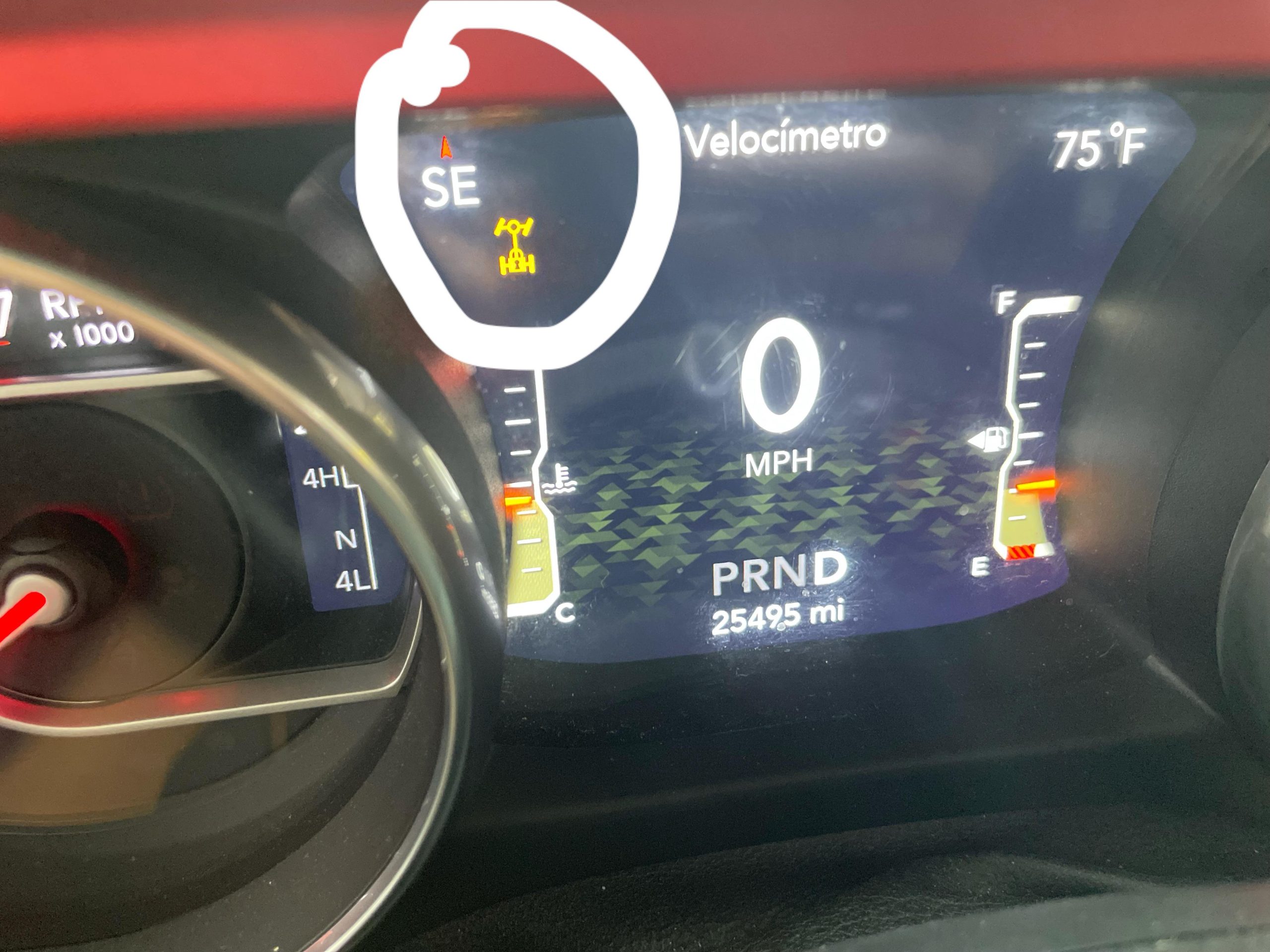

A flashing sway-bar light can mean that an electronic disconnect has not completed its requested change, that operating conditions are not satisfied, or that the system needs diagnosis. It does not, by itself, identify a failed sensor or motor. First identify the vehicle, model year, equipment and exact warning shown. A sway-bar disconnect indication is not the same as a stability-control light or a trailer-sway message.
If the bar will not reconnect for road use, do not assume the vehicle is safe for normal-speed driving just because it still steers. Follow the vehicle's warning and arrange assistance when its status cannot be confirmed. This guide uses documented Jeep examples to explain the distinction between a request, a transition and a fault.
The examples are not operating instructions for every vehicle fitted with an active suspension system. Your manual's conditions and warnings take priority over a general online explanation. Before pressing the switch repeatedly, take a photograph of the display and note what happened immediately beforehand.
Credit: www.jlwranglerforums.com
Separate an operating transition from a persistent problem
For the 2018 Wrangler JL, Jeep: 2018 Wrangler JL owner manual, electronic sway-bar disconnect explains that flashing can occur during a transition or when activation conditions are not met. Its electronic disconnect can also be held by suspension loading that prevents the mechanism from aligning. Those documented conditions explain why flashing does not automatically mean the assembly is broken.
The same manual separately describes a sway-bar fault warning. Compare the exact icon and message, not simply the word sway. A light that briefly flashes during a documented change and then reaches the expected state presents a different question from one that flashes continuously despite correct conditions.
Jeep: 2024 Wrangler owner manual, sway-bar indications is a separate model-year reference; use the manual matching your own vehicle rather than assuming the switch logic stayed identical. Do not use a remembered speed threshold or four-wheel-drive setting from another model as a substitute for checking. If a lift, replacement disconnect or other suspension modification is installed, record it because the original operating description may no longer tell the whole story.
Create an observation record before a reset
Write down whether you requested disconnect or reconnect, whether the engine was running, which drive mode was selected and whether the vehicle was on uneven ground. Record whether the light started after a trail obstacle, battery problem or recent repair. Include other warnings visible at the same time. This sequence helps a workshop distinguish an unmet operating condition from a fault that occurred without any switch request. Do not erase codes or disconnect the battery just to make the dashboard look normal. A cleared display may remove evidence without establishing the mechanism's actual state. If the indication changes after restarting, record that fact rather than calling it a completed repair.
Choose diagnostic equipment that reaches the right system
A basic emissions-code reader may report no powertrain codes while a chassis or disconnect module has relevant information. Check the scanner's exact coverage for your vehicle and system. Autel: diagnostic vehicle and function coverage illustrates the kind of function-specific coverage lookup available from diagnostic-tool manufacturers. Brand coverage alone is insufficient. Ask the technician to save the original fault report before clearing anything and to identify which module stored each code. A communication fault, supply fault and position-related fault lead to different checks. Code text names a monitored condition; it does not independently prove that the component mentioned must be replaced. Supported live data can help compare requested and reported states, but only if the parameter definitions and test conditions are understood.
Keep the initial inspection non-invasive
From a safe standing position, look for obvious impact damage, a hanging harness or evidence of recent work near the disconnect assembly. Do not crawl beneath an unsupported vehicle or place fingers around a mechanism that may move. Do not unplug connectors or apply external power while someone is operating the switch. Photograph visible damage without trying to force the linkage. A clean exterior does not rule out an internal electrical or mechanical fault, and dirt around the assembly does not prove it caused the warning. If safe access requires lifting the vehicle, use a properly equipped workshop. The objective of an initial visual check is to provide useful observations, not to turn a dashboard warning into an improvised under-vehicle experiment.
Resolve the condition before choosing a replacement part
Start with the manual's procedure for the exact equipment. Where its documented operating conditions are not met, correct only those conditions in a safe setting. If the bar remains in an uncertain state, stop the attempt and seek diagnosis instead of repeatedly cycling the switch. For the cited Jeep example, the manual discusses alignment and suspension loading, but that does not authorize pushing or rocking a vehicle in an unsafe location. Never use speed as an experiment to see whether an automatic reconnect function will rescue the situation.
A workshop should verify the relevant power supply, ground, communications and mechanism condition before replacing an expensive assembly. The test plan should explain what evidence separates an electrical problem from a mechanical restriction. If a connector repair is proposed, ask what defect was found and how the completed repair will be verified. If an actuator or module is proposed, ask whether the part requires configuration or a specific confirmation procedure. A successful repair includes the expected operation and status feedback, not merely the absence of a warning immediately after a reset.

Credit: forum.aev-conversions.com
Preserve the system after off-road use or modifications
Keep the owner manual and any accessory instructions available with the vehicle. Record installed suspension parts and the date of work, including whether the disconnect or its wiring was moved. This gives a future technician a useful starting point. Follow manufacturer cleaning and inspection directions rather than aiming a pressure washer directly into connectors or adding lubricant to an electrical housing. After a significant underbody impact, have damage assessed before treating a flashing light as a nuisance. If a modification changes the disconnect arrangement, the installer should explain how on-road stability and status indication are maintained. An unexplained warning that has been coded out is not evidence that the modified system works correctly.
Check the repair record, not just the dashboard
A useful invoice identifies the diagnosed cause, the work performed and the verification carried out. Ask for the original and final fault reports when available. If there was a supply-voltage issue, the record should distinguish that from a failed disconnect mechanism. If water or connector damage was found, the repair should address the route of damage as well as the immediate symptom.
Keep photographs and part numbers with the vehicle history. This is especially valuable for an intermittent concern that may recur under a particular combination of terrain and temperature. Do not repeatedly replace the same part without reviewing whether the original cause was established.
Interpret position information within its limits
A reported connected or disconnected state is one piece of evidence, and its meaning depends on how that vehicle senses and communicates position. Do not assume a generic app's label is a direct physical inspection. A technician should compare the requested state, reported state, relevant fault information and actual system behavior using the manufacturer procedure.
If the display and test results disagree, record the disagreement rather than choosing whichever result seems reassuring. An intermittent signal may need a controlled harness or electrical assessment, but that work should not expose anyone to moving components. Avoid attempts to simulate a sensor output to silence a warning; doing so can hide the very information the driver needs.
When professional assistance is the next step
Seek assistance if the bar cannot be confirmed in the required on-road state, the fault indication persists, the vehicle handles abnormally or there is visible damage. A warning combined with altered handling deserves prompt attention even if a generic scanner has no codes. Explain to roadside assistance that the concern involves suspension or sway-bar status so the recovery plan can account for it. Do not treat a manual's emergency speed restriction as a recommendation to make a long trip with an unresolved fault.
Ask the workshop whether the vehicle can be moved safely and under what conditions before attempting travel. Provide the photographs, operating sequence and modification history you recorded. Those details can shorten diagnosis without prejudging the failed part. If a seller says a flashing light is normal on a used modified vehicle, request documentation of the configuration and its intended status behavior before relying on that assurance.
Credit: www.jeepgladiatorforum.com
What the flashing light can and cannot tell you
The useful first question is whether the light describes a documented transition, an unmet condition or a persistent fault indication on your exact vehicle. The light alone cannot identify the repair. Confirm the relevant manual, preserve evidence and make the on-road state the priority. Do not replace a sensor based solely on a generic list of possible causes, and do not disable the warning to conceal an unresolved disconnect.
A sound outcome is a system that completes the documented change and reports the correct state, with any fault cause addressed and the repair recorded. If that outcome cannot be confirmed, get the vehicle assessed before normal road use. The same approach applies when an intermittent problem appears to disappear: keep the event record and investigate recurring behavior instead of repeatedly clearing it.


Automotive reference information. Confirm specifications in the manual for your exact vehicle. Original replacement guides link to their research sources. About us


