
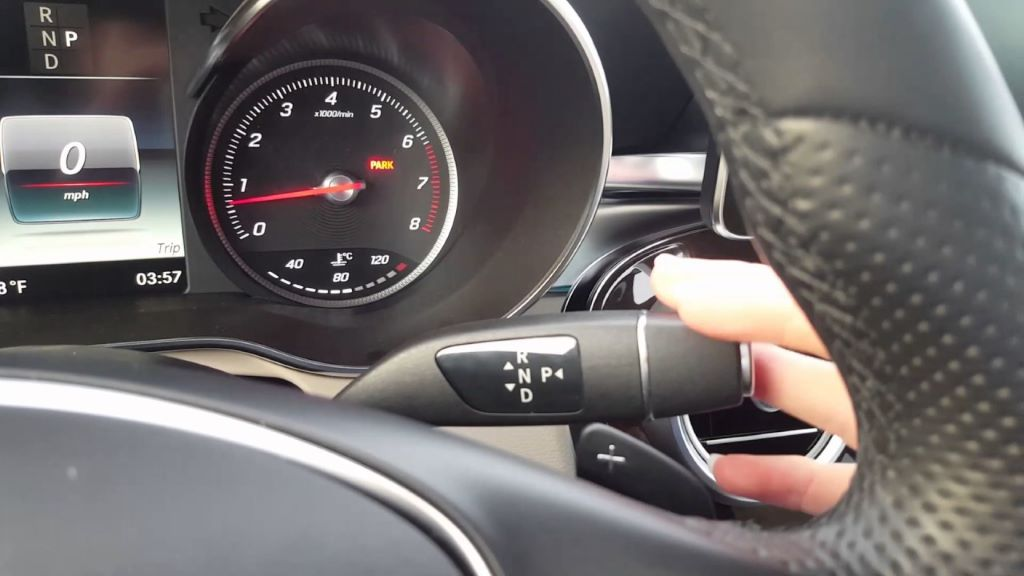
On many Mercedes-Benz models, the control beside the steering wheel is a DIRECT SELECT transmission selector mounted on the steering column. It is not the same thing as the gearshift paddles behind the rim.
The selector chooses a transmission position such as drive or reverse; paddles serve a different shifting function where fitted. The column location changes the cabin control layout and leaves the console without a conventional floor selector.
It does not mean every Mercedes uses the same arrangement. Identify the exact model and year before operating an unfamiliar car.

Credit: www.torquenews.com
The question is about two different controls
Owners often call both the column lever and the paddles a gear shift on the steering wheel. Start by identifying which one you mean. A lever extending from the column is a selector control. A paddle behind the rim is a separate input. Confusing them can lead to incorrect operating advice, especially when a driver is moving from a vehicle with a console-mounted lever.
What the manufacturer documentation confirms
Mercedes-Benz: 2022 C-Class Sedan owner manual labels the DIRECT SELECT lever and the steering-wheel gearshift paddles separately in the cockpit overview. That distinction is the reliable starting point. It confirms the control arrangement for the described vehicle; it does not prove that all models or generations have identical controls. Use the appropriate manual rather than a generic Mercedes interior photograph.
Why the column position changes cabin layout
Placing the selector on the column removes the need for a conventional selector in the same console location. That is a practical layout consequence, not proof of a single universal marketing or engineering motive. The space can be organized around other controls or storage depending on the model. Avoid claims that this arrangement alone improves acceleration, fuel economy or crash safety without specific supporting evidence.
The console still has other important controls
Mercedes-Benz: C-Class Estate cockpit and console layout illustrates a particular C-Class Estate console layout with storage and operating controls associated with its configuration. It is an example of how the cabin is arranged, not a template for every Mercedes. Learn where the parking brake, hazard switch and other essential controls are located before driving. Do not assume the absence of a floor shifter means the console has no driving-related functions.
The lever location does not describe the whole transmission
A column selector tells you where the driver requests a transmission position. It does not, by itself, identify the transmission's internal design, number of ratios or service requirements. Two vehicles can have similar-looking controls and different drivetrains. Use the model information and manual to establish the actual equipment rather than inferring mechanical specifications from the lever's appearance.
Paddles are not substitutes for selecting drive or reverse
Where fitted, paddles provide the shifting function described by the vehicle manual. They should not be treated as a universal way to choose parking or reverse. Their behavior can depend on drive mode and vehicle configuration. Read that section before using them. A plus or minus marking does not justify guessing how long a selection remains active or how the system returns to automatic operation.
Credit: en.mercedesassistance.com
Learn the controls before the first maneuver
When collecting a rental, borrowed or newly purchased vehicle, remain safely parked while identifying the selector and display. Ask the handover staff to demonstrate the correct procedure for that exact car. Do not experiment with an unfamiliar lever while entering traffic. Familiarity with another Mercedes or another column-shift vehicle is useful background, but it is not a substitute for checking the installed arrangement.
Confirm the selected position on the display
The lever movement is a request, while the vehicle's display provides the confirmation described in its instructions. Make checking that indication part of learning the car.
If the display or vehicle response does not match the requested state, stop and follow the warning guidance. Do not repeatedly move the lever or apply throttle to force an uncertain selection.
Use the brake and starting sequence specified for the car
Interlocks and operating requirements are model-dependent. Follow the manual's sequence for starting and selecting a transmission position.
Do not generalize a button press, lever direction or release procedure from another generation.
If the required action does not work, check the displayed message and obtain assistance rather than bypassing an interlock or opening trim to access a mechanism.
Parking position and the parking brake are different
Learn both controls and follow the manufacturer's parking procedure. Do not assume selecting a displayed parking position removes every requirement to secure the vehicle. The correct sequence may depend on the model and operating condition.
When uncertain, remain with the vehicle secured and consult the instructions. Do not leave children or other untrained occupants to operate the controls while the vehicle is unattended.
Automatic parking behavior must not be guessed
Some vehicles have automatic actions linked to stopping, switching off or opening a door. The exact conditions belong to the particular manual.
Do not test such behavior by leaving a vehicle unsecured to see what happens. Learn the documented procedure in advance.
If an automatic action does not occur as expected, follow the indicated warning and secure the vehicle rather than assuming the lever has mechanically locked it.
Neutral may have special instructions
Do not select neutral for towing, a car wash or recovery based on general column-shift advice. The vehicle may have specific requirements for remaining in that state.
Consult the correct manual. Tell a recovery operator the exact vehicle.
Do not improvise a release.
A wrong assumption can allow unexpected movement or damage the drivetrain.
If instructions are unclear, ask Mercedes-Benz service or the recovery provider before proceeding.
Avoid confusing the selector with another stalk
Drivers changing vehicles can reach for a familiar location out of habit. Before moving, identify the functions on each side of the column and the controls on the wheel. Do not assume a stalk operates wipers or lights because it did so in a previous car. A brief stationary orientation is especially useful when several drivers share vehicles with different layouts.
A different feel does not establish a malfunction
A selector may not move or remain in position like an older mechanical floor lever. That alone does not prove something is wrong. Compare its operation with the correct instructions and display. However, a warning, an inability to select the required position or unexpected vehicle movement needs assessment. Do not dismiss a functional problem as merely unfamiliar design.
What to record if selection is unreliable
Note the requested position, displayed position, warning text and operating state when the problem occurred. Include recent battery or electrical work if relevant. Do not clear diagnostic information or disconnect the battery repeatedly before service. A technician needs the actual symptom sequence. Avoid diagnosing the transmission itself solely because a selector request was not accepted; the correct investigation may involve several systems.
Do not dismantle the column as an owner check
The column area contains safety-related components and electrical connections. An unfamiliar selector problem does not justify removing covers or probing wiring without the appropriate procedure. Do not try to bridge a switch or bypass an interlock to make the car move. If the vehicle cannot be operated normally, arrange qualified assistance and explain its current displayed state.
Model year matters when reading online instructions
A guide for an older saloon may not describe a newer electric model, AMG variant or market configuration. The same name can span different generations. Use the VIN and model year to select documentation through Mercedes-Benz: official model and year manuals. Check that the illustrations match the controls in the car before following an operating sequence. If they do not, resolve that mismatch first.
A retrofit is more than moving a lever
Do not assume that converting between console and column controls is a simple cosmetic change. Compatibility, electronics, mounting and safety-related requirements would need professional evaluation for the exact vehicle. This article does not provide a conversion procedure. If you dislike the layout, learn its intended operation rather than modifying controls without a supported engineering and service basis.

Credit: www.youtube.com
What the arrangement does not guarantee
The location of a selector does not guarantee easier operation for every driver. Comfort and familiarity depend on the individual and vehicle layout. It also does not establish a particular reliability advantage without relevant evidence. When comparing cars, assess the actual control sequence, visibility of the indication and your ability to use the system correctly during a supervised handover or test drive.
Questions worth asking at handover
Ask how to select and confirm the normal driving positions, how to secure the car when parked and which procedure applies to recovery or an automatic car wash. Ask how the paddles behave if fitted.
Confirm where to find the correct digital or printed manual. Do not rely only on a fast demonstration; take time to identify the controls yourself while the vehicle remains safely secured.
If more than one person drives the car
Explain the selector arrangement before handing over the keys to someone unfamiliar with it. Show the display confirmation and parking procedure in the actual vehicle.
Avoid shorthand such as push the stalk, because that leaves the direction and conditions unclear. Encourage the next driver to consult the correct manual rather than copying habits from a different car.
A clear handover reduces avoidable confusion.
The practical answer
Mercedes-Benz uses a column-mounted DIRECT SELECT arrangement on many models, placing transmission-position selection near the steering wheel and changing how the console can be organized. That describes the layout without inventing a universal performance benefit. The important ownership distinction is between the selector, the paddles and the parking brake.
Learn each from the manual for the exact vehicle and confirm requested states on its display. If operation is inconsistent or a warning appears, stop guessing and obtain qualified guidance. Correct use depends on the actual configuration, not merely the badge on the steering wheel.


Automotive reference information. Confirm specifications in the manual for your exact vehicle. Original replacement guides link to their research sources. About us


