
If your steering wheel will not turn, first establish whether the vehicle is parked with its security lock engaged or whether steering became difficult during operation. These are different situations.
A designed parked lock may release through the exact starting procedure in the owner's manual. Heavy, binding or unpredictable steering while driving requires a safe stop and assessment; do not treat it as an ordinary parked lock.
Never force the wheel, strike the column or bypass a security device to make the vehicle usable.

Credit: www.reddit.com
Start with the vehicle state
Write down whether the engine is running or the electric vehicle is ready to drive, whether the key turns, and which warnings appear. A dashboard that lights up does not necessarily mean assistance is operating. This basic distinction prevents a normal ignition-state observation from being mistaken for a failed steering rack. It also helps roadside assistance choose the appropriate response.
A parked security lock may be normal
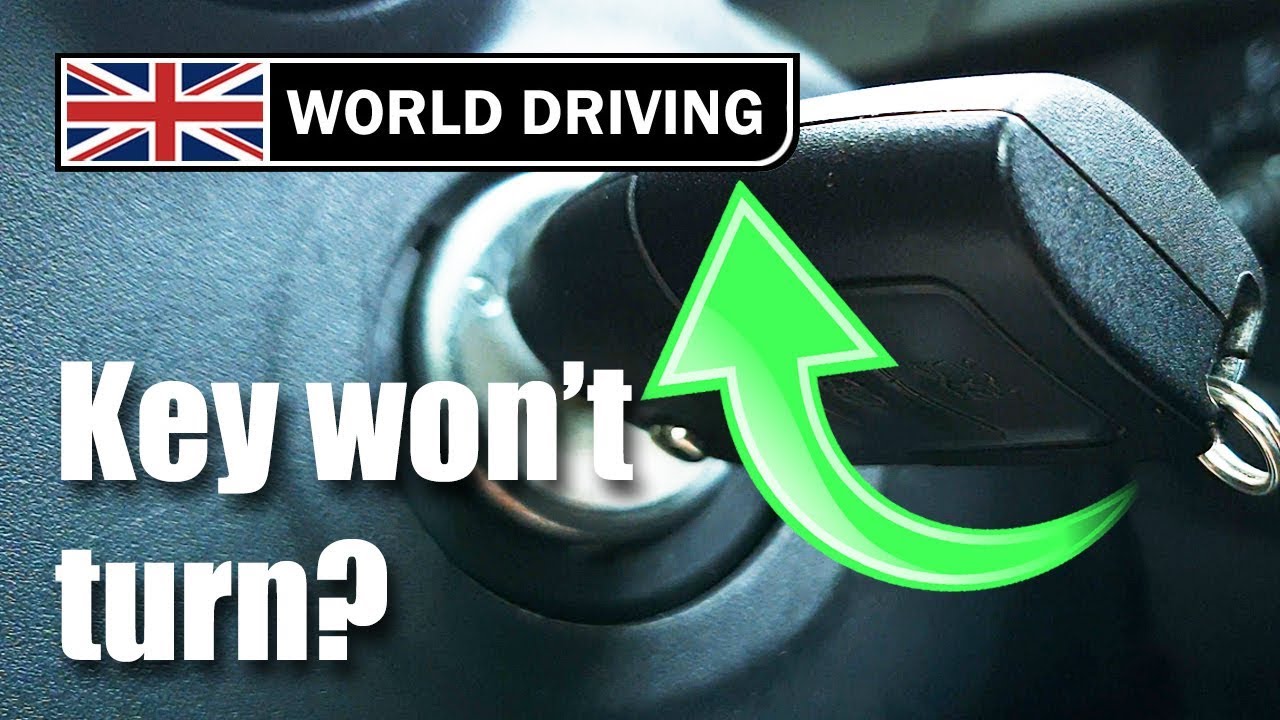
Some keyed vehicles lock the column when switched off. The Kia Seltos: keyed ignition and steering lock describes its applicable keyed system and relieving tension while operating the key. Follow the manual for your exact vehicle rather than assuming every car uses that mechanism.
Do not pull hard against the stop. A key that will not operate normally or a lock-system warning needs a different assessment.
Keyless starting changes the checks
A push-button vehicle may use different steering-lock and authorization arrangements. Confirm the owner's specified start conditions and read the actual displayed message.
Do not repeatedly cycle controls or disconnect the battery as a universal reset. If the vehicle does not recognize its key or cannot release a fitted lock, roadside assistance can investigate authorization and power supply without dismantling the column.
Heavy steering is not the same as a locked wheel
When assistance is unavailable, a driver may describe the wheel as locked because the effort rises sharply. Mechanical binding is another possibility.
Do not test the distinction in traffic or assume that being able to force some movement makes driving safe.
Record whether resistance was constant, intermittent or one-sided, then let a repairer establish the cause under controlled conditions.
Treat a change while moving as urgent
Maintain control as far as possible, reduce speed safely and stop away from traffic. Do not turn the ignition to a lock position while moving. Once stopped, arrange assistance if steering remains abnormal or the vehicle displays a stop-driving warning. A momentary return to normal does not prove the fault has cleared. Tell recovery personnel that steering movement may be restricted.
Look for interference without reaching into mechanisms
While safely parked, check whether an obvious loose object, displaced floor mat or personal accessory obstructs the driver's controls. Remove only accessible objects that are clearly unrelated to the mechanism.
Do not reach behind trim or into a moving linkage. A collision, road impact or visible displaced part changes the situation from a convenience problem to a safety inspection.
Do not dismantle the column
The steering column contains safety-critical connections and may share space with restraint-system wiring. Removing covers or probing connectors is not a suitable way to investigate an immovable wheel.
Do not lubricate an unknown opening. Explain any recent column, dashboard or steering-wheel work to the workshop because assembly history can guide an inspection without proving which part is at fault.
Road-wheel obstruction needs recovery judgment
A tire pressed against a curb can load the steering differently from a vehicle parked on a clear surface. A damaged wheel or suspension component can create another kind of restriction.
Do not drive over an obstacle or use the engine to force the vehicle free as a diagnostic exercise.
Recovery staff need to know the parking position and available clearance.
Identify the assistance system
Electric assistance and hydraulic assistance require different checks. The Ford: electric power steering precautions specifically explains an electric system without a fluid reservoir. Searching for a nonexistent reservoir wastes time and can lead to opening unrelated containers. Use the vehicle identification and owner's information to establish the system before considering maintenance or interpreting a warning about steering effort.
Hydraulic fluid is not a universal answer
If the vehicle has a hydraulic system, follow its specified level-check and fluid requirements. A low level is a finding to investigate, not permission to pour in a general-purpose product and continue.
Do not identify a puddle solely by color. A leak, noise or sudden change in effort warrants a repair assessment, especially when steering behavior is already abnormal.
Electric warnings require the actual message
Photograph the warning only when stationary and record its wording. A steering-related alert can require checks beyond the steering gear itself, so guessing a replacement from the symbol is unreliable.
Do not erase diagnostic information before the workshop has an opportunity to assess it. The operating instructions and professional diagnosis determine whether the vehicle can be moved safely.
Power supply and communication are diagnostic branches
An electric-assist complaint may lead a technician to examine supply, connections and recorded faults as well as the assisted steering assembly. That is different from assuming a weak battery caused every steering symptom.
Report starting difficulties or other simultaneous warnings.
Leave electrical probing and connector work to someone using the correct circuit information and safety procedures.

Credit: www.reddit.com
Conditions help reproduce the problem
Describe ambient conditions, parking duration and what happened immediately before the wheel became difficult to move. These details are useful because an intermittent complaint may disappear before the vehicle reaches the workshop. They do not justify naming a failed component from weather alone. A short factual timeline is more valuable than a long list of parts suggested by unrelated forum reports.
Repeated full-lock operation can complicate observations
Some electric systems can limit assistance under specific demanding conditions described by their manufacturer. That possibility is not a blanket explanation for all heavy steering. Avoid repeatedly holding the wheel at an end stop to reproduce a problem. Let the repairer assess the original complaint and any associated warning rather than creating an additional operating condition during driveway testing.
After an impact, assess the whole corner
If the symptom followed a pothole strike, curb impact or collision, record the side involved and any wheel or tire damage you can see safely. A steering-system inspection may need to include suspension and mounting condition. Do not use an alignment appointment as a substitute for checking damage. An impact-related restriction should be evaluated before normal road use resumes.
Corrosion is not diagnosed by age alone
An older vehicle can have many different reasons for stiff or restricted steering. Visible corrosion may justify closer inspection, but it does not establish which joint or assembly is responsible.
Do not apply penetrating spray across the system to see what changes. A technician should identify the affected interface and the appropriate repair, including any surrounding components that influence movement.
Recent repairs deserve a careful timeline
Tell the workshop exactly when the restriction began relative to tire, alignment, suspension or steering work. Include any change in warning lights or steering-wheel position. A temporal connection makes the work relevant to inspection but is not proof of negligence or a particular error. The useful next step is a documented recheck of the affected systems and installation requirements.
Keep inspection evidence available
Bring the invoice, vehicle identification, warning photographs and a description of the conditions. If recovery was needed, include what the operator observed without asking them to perform a diagnosis outside their role. These records help the repairer distinguish an authorization problem from assistance loss or mechanical restriction. They also reduce the risk of an intermittent symptom being dismissed as unreproducible.
Do not wait for a louder warning
Difficulty turning is itself relevant even when no warning light is present. Mechanical faults do not need to generate an electronic message. Likewise, a quiet system is not necessarily a healthy one. If control is compromised, arrange assessment rather than waiting for a noise, leak or dashboard warning to make the concern seem more definite.
A restart is not a repair record
If steering returns after restarting, report that sequence accurately. Do not conclude that the vehicle merely needed resetting. An intermittent electrical or mechanical concern may still require diagnosis, and repeated restarts can obscure the circumstances that produced it. Ask what was checked and what evidence supports continued use instead of relying solely on the absence of a warning at collection.
Credit: www.youtube.com
What a useful diagnosis should establish
The repairer should distinguish the commanded operating state, availability of assistance and freedom of the mechanical system. It should identify any confirmed defect and explain the relevant correction. Ask whether an applicable manufacturer procedure or bulletin was consulted. A technical bulletin must match the vehicle and symptoms; its existence for another model does not establish a remedy for yours.
Decide how the vehicle reaches the workshop
If the wheel remains locked, steering is unpredictable or the manual instructs you to stop, request recovery. Tell the operator about drivetrain type and steering restriction so they can choose appropriate equipment. Do not improvise a tow using another car and a rope. The safe movement method depends on the vehicle and condition, not merely the distance to the garage.
Ask for a symptom-specific verification
After repair, the workshop should confirm the original complaint has been addressed under suitable conditions. If the issue was a parked lock, verification differs from a road-related assist concern. Ask whether additional alignment or calibration was required by the repair procedure and completed. Do not accept a generic statement that steering feels fine without understanding what was found and corrected.
Reduce avoidable uncertainty
Use the correct owner information, maintain the vehicle as specified and report changes promptly. These habits help keep a steering complaint interpretable; they cannot guarantee a failure will never occur. Avoid aftermarket accessories that interfere with controls. Keep service records available so a future technician can understand recent work without having to infer it from the installed parts.
Tires remain relevant to effort and handling
Pressure and tire condition influence the vehicle's behavior, although they do not explain every immovable-wheel complaint. Michelin: identifying changed handling discusses tire-related handling symptoms. Check pressures using the vehicle placard and proper procedure when the car is safe to inspect. Do not let a tire correction replace investigation of a sudden lock, warning or pronounced mechanical restriction.
Use maintenance instructions for the installed system
A hydraulic-fluid schedule cannot be transferred to an electric steering assembly. Nor does a general lubricant belong inside a steering wheel or column simply because the system sounds dry. Follow the relevant manufacturer maintenance information. If a proposed service does not identify the component, specified material and reason, ask for clarification before treating it as a solution.
Replace parts on findings, not fear
A nonturning wheel is serious, but seriousness does not make every suggested replacement necessary. The repair plan should connect each part or procedure to a confirmed observation. Ask which findings explain the symptom and which items are separate maintenance recommendations. This keeps an urgent safety concern focused without encouraging continued driving while the diagnosis remains unresolved.
The practical decision
A parked security lock can be normal when it behaves exactly as the owner's manual describes. Steering that becomes unusually heavy, binds or changes unpredictably during operation needs assessment before further normal use.
Establish the vehicle state, record warnings and avoid force or improvised dismantling.
If the correct starting procedure does not restore normal operation, or control is uncertain, arrange professional assistance rather than trying to drive through the problem.


Automotive reference information. Confirm specifications in the manual for your exact vehicle. Original replacement guides link to their research sources. About us


