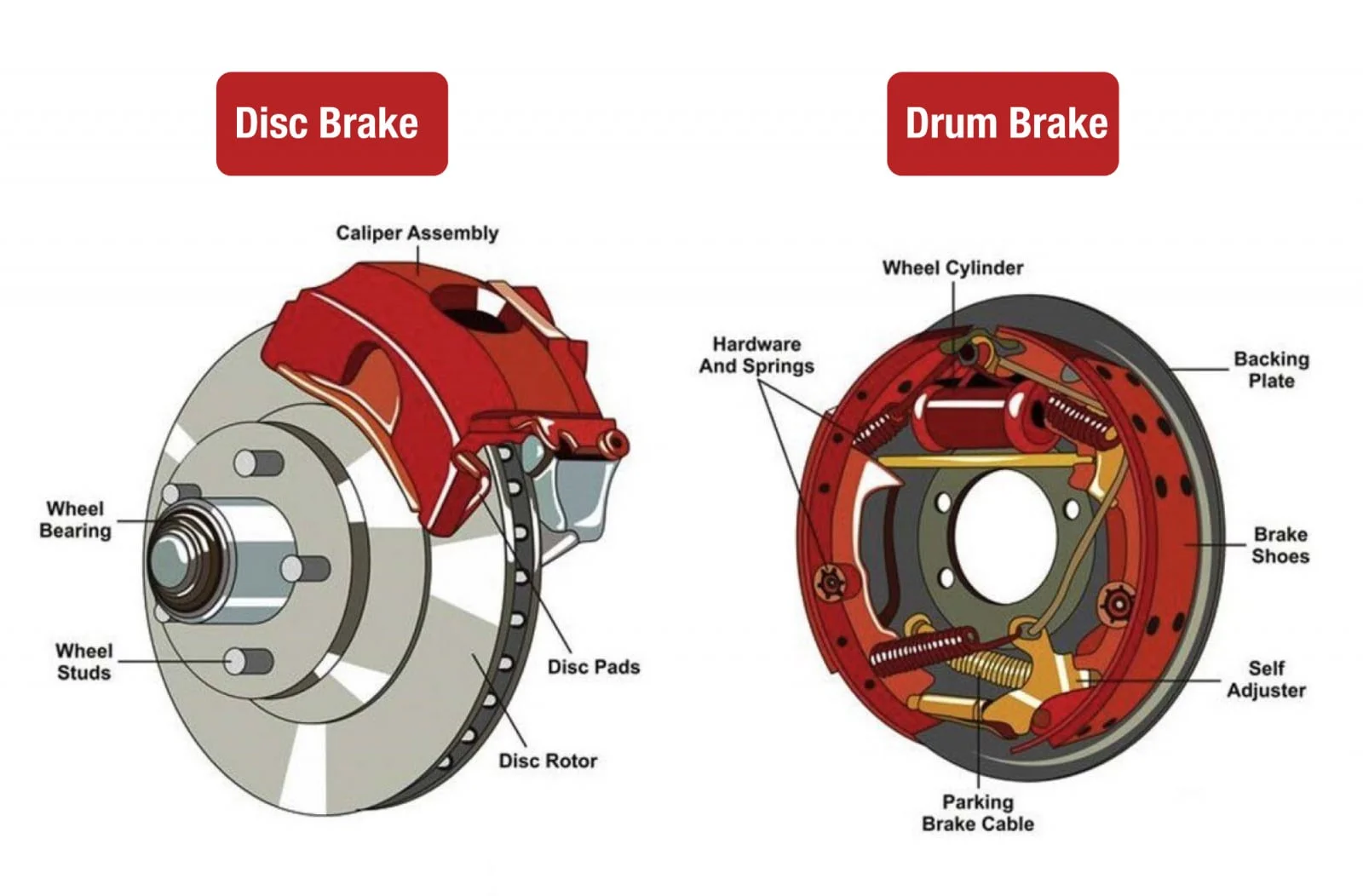

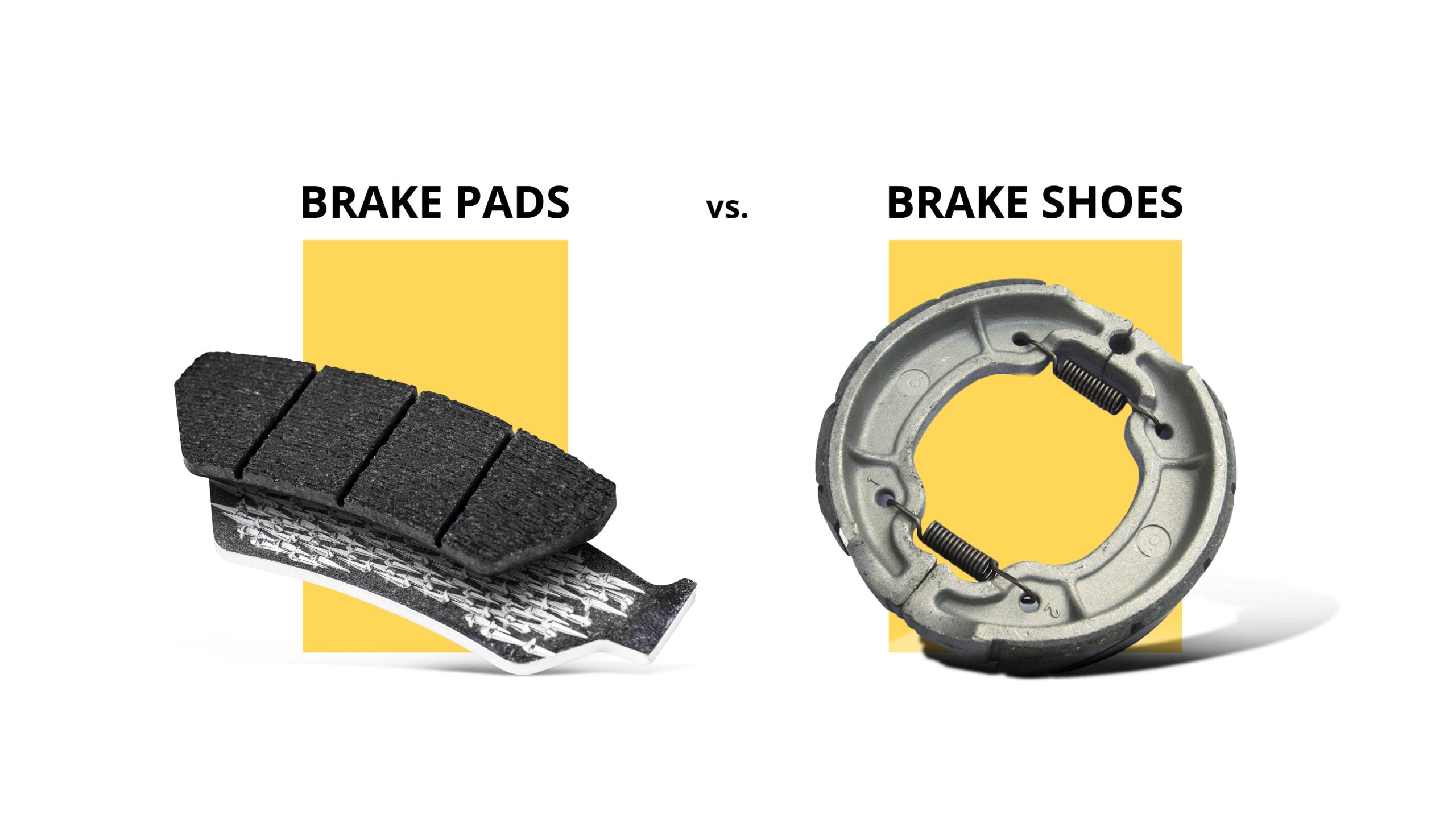
Brake shoes and brake pads are not the same component. Pads work against a brake disc, or rotor, while shoes carry friction lining that works against a drum. Both help slow or hold a vehicle, but their shape, mounting and associated hardware are different.
The distinction affects parts ordering and repair scope. Asking for “rear pads” does not establish that the rear service brakes use pads, and having disc brakes at all four wheels does not always mean the vehicle has no parking-brake shoes. Identify the actual system before purchasing components.
How a disc-brake pad works
Credit: www.championautoparts.com
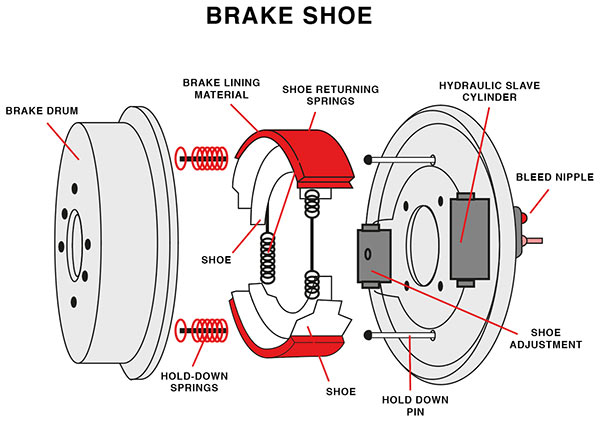
In a disc-brake assembly, the caliper applies pads against the rotating disc. The pad’s friction material is supported by a backing plate, and the design includes the specified locating and supporting features. Wear sensors, shims and retention hardware depend on the application.
Disc pads are selected for the particular caliper, axle and brake specification. They are not interchangeable simply because two sets have similar friction-material shapes. The catalogue and vehicle service information must agree about the application.
How a drum-brake shoe differs
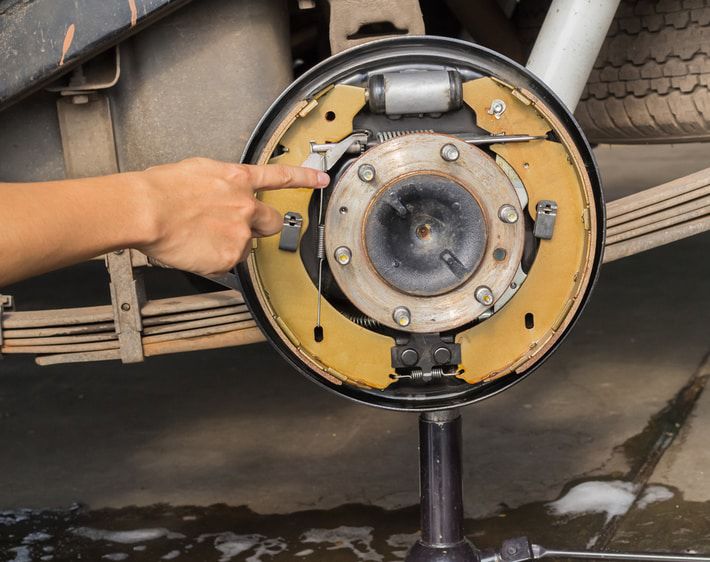
A drum-brake shoe is shaped to work against the inside surface of its drum. The assembly uses its specified supports, actuating mechanism and retaining or return hardware. A shoe set cannot be substituted for disc pads, and a drum-service procedure is not a pad-change procedure.
Credit: www.firestonecompleteautocare.com
Bendix maintains a separate brake-shoe product range, while Brembo’s parts catalogue distinguishes pads, shoes and drums. The separate categories reflect different components and applications, not merely different names for a friction block.
A vehicle can use more than one arrangement
Some vehicles combine front disc brakes with rear drum brakes. Others use rear service discs while a separate parking-brake mechanism operates within the rear assembly. The visible disc alone may therefore be insufficient to identify every friction component involved in a parking-brake complaint.
Check the vehicle’s design and the function of the part being replaced. Ask whether the proposed work concerns the service brake, the parking brake or both. That question prevents ordering ordinary rear pads for a fault involving separate parking-brake shoes.
Why the repair estimate may look different
A disc-pad service can involve the rotor, caliper and related pad hardware. A drum-shoe service can involve the drum, wheel cylinder, adjuster and the appropriate retaining or return components. Those are possible inspection areas, not a claim that all must be replaced whenever friction material wears.
Ask the repairer to identify which parts failed inspection and the criteria used. A quote for a drum assembly should not be compared with a disc-pad advertisement as if both cover the same job. Compare the actual axle and work scope.
Similar symptoms do not make the parts equivalent
Noise, dragging, pulling or reduced braking can occur with different systems. The symptom does not tell you whether the repair needs shoes, pads or another component. Inspection must establish the affected assembly and cause.
A remaining-material measurement is also meaningful only in its correct context. Follow the manufacturer’s criteria for the installed components rather than applying a pad-thickness rule to a shoe lining. Do not treat a generic online wear limit as a specification for every brake system.
How to avoid ordering the wrong part
Supply the VIN, model year, axle and brake configuration, then verify the part number and included hardware. If the request is for parking-brake repair, say so explicitly. Keep any catalogue notes about dimensions, brake packages or application exclusions.
Credit: nrsbrakes.com
For a useful related distinction, see how pad counts depend on the vehicle. A drum-equipped axle does not gain “pads” merely because a seller uses that word casually. Correct naming makes the estimate, parts order and service record easier to understand.


Automotive reference information. Confirm specifications in the manual for your exact vehicle. Original replacement guides link to their research sources. About us


