
Ceramic brake pads are a family of composite friction products described by their formulation. They are not solid pieces of household ceramic, and the label does not mean they require ceramic rotors. The exact recipe and application depend on the manufacturer.
For a replacement decision, the useful information is the part’s approved fitment and intended behavior. The material name alone is not a complete specification.
A brake pad is an assembly
The working friction material is supported by a backing plate and may be supplied with shims, sensors or other features. Calling the product ceramic describes its friction formulation rather than every component in the box.
Different manufacturers and product ranges can use different recipes. Do not infer an exact ingredient percentage from a generic category name or assume all ceramic pads have identical operating characteristics.
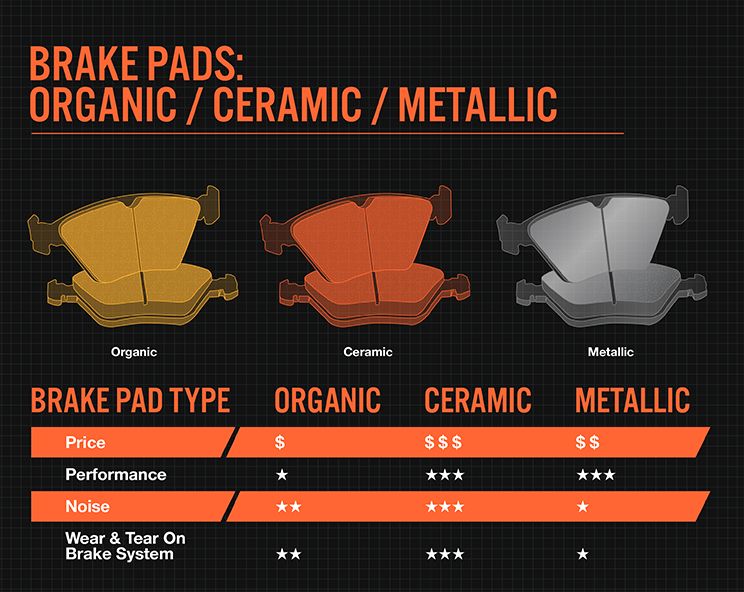
Credit: www.bridgestonetire.ca
Ceramic pads are not carbon-ceramic rotors
Pad formulation and rotor construction are separate subjects. A car with ordinary metal rotors may have an application-approved ceramic pad option. Conversely, a specialized rotor system requires its own approved friction combination.
Do not fit a pad merely because its material name resembles the name of a rotor technology. Verify the manufacturer’s compatibility information for the actual brake system.
Why manufacturers offer them
Some ceramic ranges target everyday comfort and low visible dust. The Brembo product-selection guide distinguishes its ceramic offerings from other ranges. Those stated aims should be read within the product’s specified application.
They do not establish that every ceramic pad is quieter, lasts longer or stops shorter than every alternative. Such comparisons require the actual products, test conditions and vehicle, not just a broad material label.
What the label does not tell you
It does not identify the required pad shape, axle position, sensor arrangement or correct hardware. It also does not establish suitability for heavy towing, repeated demanding braking or competition use.
Use a catalog application and service recommendation before comparing comfort features. If the original brakes had a specialized specification, resolve that requirement with a knowledgeable supplier rather than substituting by price.
Installation still determines the result
Correct fitment does not remove the need to inspect rotors, hardware and caliper function. A ceramic pad will not repair binding slides, a damaged rotor or hydraulic trouble.

Credit: www.samaterials.com
Follow the product’s bedding instructions and any shim or lubrication restrictions. For lubricant selection, see where brake lubricant belongs. The friction surface itself must remain free of grease.
Questions that make the term useful
Ask the supplier which ceramic part is approved for your vehicle, what service it is designed for, what hardware it includes and what behavior it aims to change. If the answer is only that ceramic is premium, ask for the actual specification.
For choosing between suitable formulations, use the ceramic-versus-metallic buying guide. The definition explains the category; the application decides whether it belongs on your car.


Automotive reference information. Confirm specifications in the manual for your exact vehicle. Original replacement guides link to their research sources. About us


