
Organic brake pads are made from a bonded mixture of reinforcing fibers, friction modifiers and other ingredients, commonly held together with resin. In automotive catalogs, the relevant term is usually non-asbestos organic, or NAO. The word organic does not mean the pad is made only from plants, contains no minerals or metals, or produces harmless dust. The exact formula varies by manufacturer and application, so there is no single ingredient list that describes every organic pad.
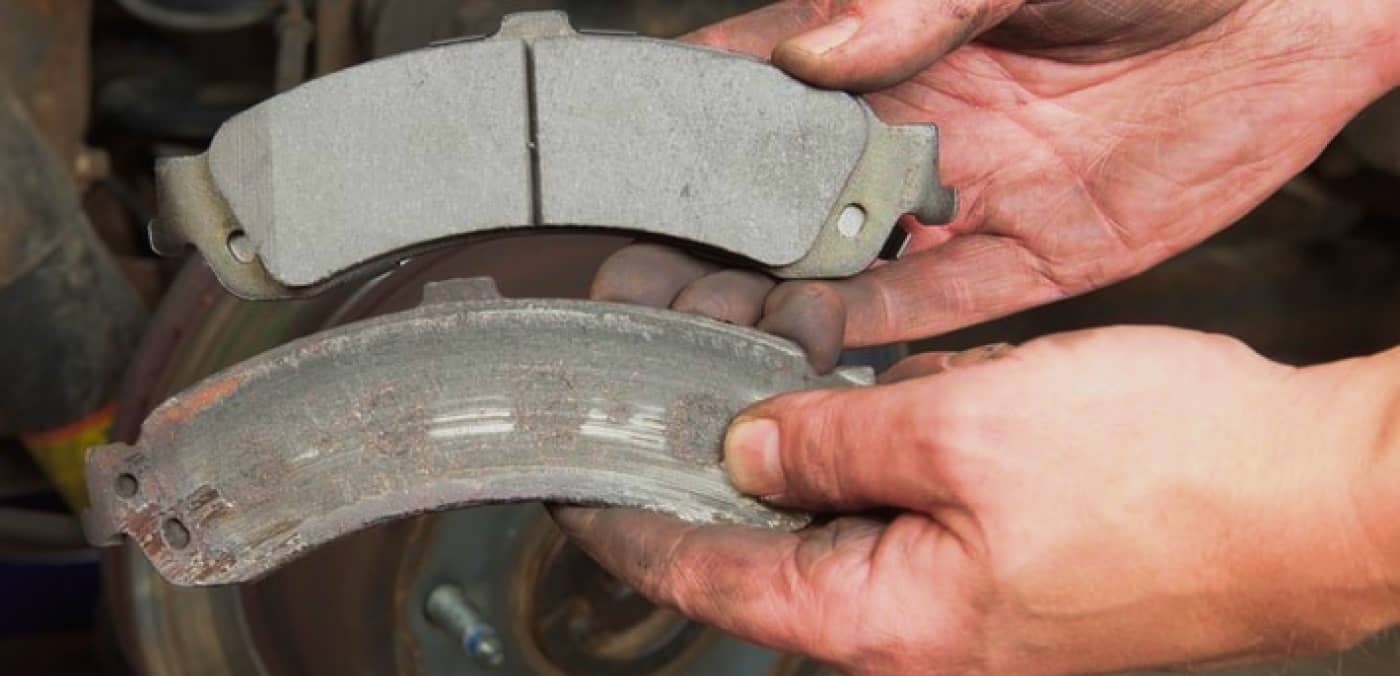
Start by separating the friction lining from the complete pad. The lining is the material that contacts the rotor. A finished disc pad also has a backing plate and may include application-specific shims or other features. A description of organic friction material does not mean those structural components are organic too. This distinction helps when a product photo shows a metal backing plate: that is not evidence that the manufacturer mislabeled its friction compound.
The most useful ingredient explanation describes jobs rather than a secret recipe. Something must hold the mixture together, something must reinforce it, and the combined ingredients must provide suitable friction and wear behavior. This article explains those functions and how to interpret a product listing. For an actual purchase, first verify which brake pads fit your car; understanding the material cannot compensate for the wrong axle, brake package or part number.
Credit: www.bridgestonetire.com
The main ingredient groups inside an NAO friction lining
Binder: the material that joins the mixture. Resin commonly performs this function in automotive organic friction materials. It allows the ingredients to become a coherent lining rather than a loose collection of fibers and powders. Akebono's explanation of friction materials identifies phenolic resin as a commonly used bonding material. That does not disclose the binder specification in an unidentified aftermarket pad.
For shoppers, the useful implication is that mentioning one premium fiber tells only part of the story. The surrounding matrix and manufacturing quality still matter. A product description that lists resin is not admitting that a pad is merely ordinary plastic, just as mentioning a mineral does not make the whole lining a solid stone. The finished composite must be evaluated for the brake application in which it will operate.
Reinforcing fibers: structural contributors. Different formulations can use different fiber systems. Aramid is a synthetic fiber family associated with friction applications; DuPont's materials information includes brake pads among uses for its aramid technology. A generic NAO label, however, does not certify that a particular brand of fiber is present.
Read specific claims literally. “Uses aramid reinforcement” is an ingredient claim. “Suitable for this brake assembly” is an application claim. “Lasts longer than another pad” is a comparative performance claim. One does not automatically prove the other two. If a seller moves directly from a familiar fiber name to a guaranteed mileage number without explaining the test or application, treat the promised result as unverified. Ask for information about the actual product rather than extrapolating from the raw material.
Friction modifiers and fillers: tuning the contact. An organic pad is not simply fiber and glue. Manufacturers combine other ingredients to adjust how the lining interacts with the rotor. In Bendix's account of its formulations, examples include abrasives, mineral fillers, graphite and petroleum coke, alongside fibers and resin. The formula changes for different vehicle requirements.
A lubricant in that ingredient list does not mean the working brake surface should be coated with grease. A solid ingredient engineered into friction material has a different role from contamination applied during servicing. Keep oils and grease off the friction faces, and follow the applicable fitting instructions. This is a useful distinction when reading technical descriptions: the word lubricant inside a factory formulation is not permission to lubricate the pad surface at home.
Why there is no universal percentage recipe. Retail categories are broad. Two products can both be NAO while using different combinations, proportions and processing methods. Textar's description of its development work emphasizes formulations tailored to the braking system, load and purpose. You therefore cannot reconstruct an unidentified pad's composition from its color, price or category alone.
A safety data sheet may help answer a particular handling or substance question, but do not assume it is a complete public manufacturing recipe. If your question concerns a named material, ask the maker about the exact part number and current formulation. Also distinguish a statement about one product family from a statement about every product sold by the brand. A broad web page can be useful background while still leaving the specific part's chemistry undisclosed. In a workshop inquiry, distinguish the friction lining from the entire assembly when asking about a substance. A backing plate, shim or coating can have a different composition. State which component your question concerns so the supplier does not answer a lining question with information about another part of the product.
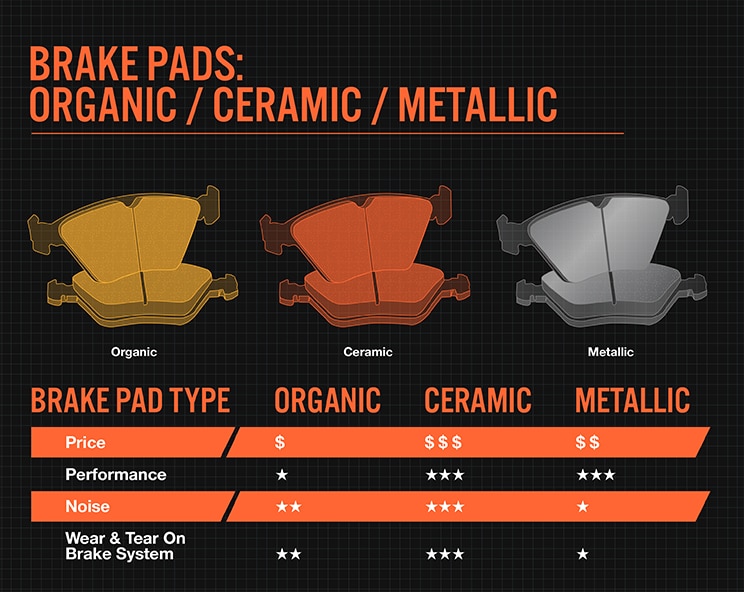
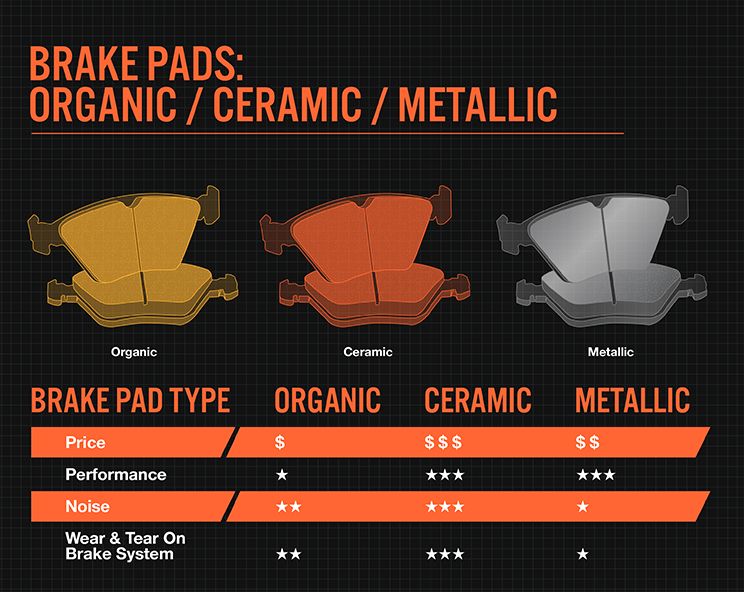
Organic and ceramic are not always mutually exclusive labels. Bendix groups ceramic and NAO together in its compound guide. That is a concrete example of why a universal organic-versus-ceramic table can mislead. A seller might use ceramic as a more specific description within its organic family, while another divides its retail range differently.
Ask what the manufacturer means for the actual product. Do not infer that one box contains no resin simply because ceramic appears in large letters, or that a box labeled organic must lack mineral ingredients. Compare the intended vehicle, rotor pairing, operating use and product documentation. These checks give you a meaningful comparison even when marketing categories do not line up neatly between brands. Our history of asbestos replacement in brake pads explains why the industry developed several formulation families instead of a single replacement substance.
Non-asbestos does not necessarily mean copper-free. These describe different composition questions. A pad's NAO label says nothing by itself about meeting a particular copper threshold. Likewise, a copper-related environmental mark does not reveal every other ingredient. Ferodo's discussion of copper reformulation describes replacing copper's functions with a combination of materials rather than a single universal alternative.
If copper content matters for a purchase, use the manufacturer's specific compliance information for the part and market. Do not treat an old generic recipe showing copper as proof that the current version contains it, and do not assume that every ceramic formula is copper-free. Product development changes over time. Keeping the part number, packaging details and purchase date gives a later inquiry a clear reference instead of relying on the wording of a retailer's cached description.
What the ingredients cannot promise on their own. NAO does not guarantee a particular stopping distance, service life, wheel-dust level or noise result on every car. Each of those is a different outcome that depends on the finished brake application and its condition. A manufacturer may publish evidence for its own product; keep that evidence attached to the named product and test conditions.
Consider an original shopping example. One seller offers a verified replacement with a clear vehicle application but little chemistry detail. Another offers a long ingredient list without a firm fitment match. The extra chemistry does not resolve the second product's missing compatibility information. First eliminate products that cannot be confirmed for the car. Then compare useful evidence about the remaining suitable options. If neither seller can explain the exact application, obtain the manufacturer's catalog support before buying.
Credit: www.bridgestonetire.ca
How to use material information when choosing pads
Make a short record with four entries: exact vehicle and axle; confirmed part number; manufacturer's material description; and the evidence behind any performance or environmental claim you care about. Keep uncertain items marked unknown rather than filling gaps from another product's brochure. Akebono's low-copper page, for example, describes named product lines and environmental markings; it is useful for those claims without supplying a complete recipe for every organic pad.
Then describe your driving use to the supplier or workshop. If it includes a special requirement such as frequent heavy loading, ask whether the selected product is intended for that use. A material nickname is an incomplete answer. Likewise, ask how any comparison was made before paying extra for claimed longer life or lower dust. An unsupported ranking of all organic pads below all ceramic pads is too broad to make the decision for you.
Remember that changing pad material is not a diagnosis for a dragging caliper, contamination or irregular wear. If the existing pads have worn differently across the axle, have the cause checked. Our guide to uneven pad wear explains how to record the pattern for inspection. New friction material should follow a condition assessment, rather than being used to conceal an unresolved mechanical problem.
An accurate answer to the ingredient question is therefore a resin-bonded friction composite with application-specific reinforcement and modifiers. “Organic” does not provide a complete shopping specification, a safety certificate for its dust or proof of environmental superiority in every respect. Keep those claims separate.
Before installation, retain the box label and invoice, check the supplier's exact application listing, and follow the fitting and initial-use instructions for the selected parts. If you want a substance-specific answer, contact the manufacturer with the complete part number. If you want a performance comparison, look for evidence about suitable finished products under relevant conditions. These are different questions, and asking them separately produces a much clearer answer than trying to choose brakes from a generic list of raw materials.


Automotive reference information. Confirm specifications in the manual for your exact vehicle. Original replacement guides link to their research sources. About us