
Brake pads can wear unevenly when a pad, caliper or guide does not move as intended, when hydraulic pressure does not release normally, or when fitment and rotor condition produce uneven contact. The pattern is a clue, not a diagnosis by itself. Before buying another set of pads, have the individual linings measured and the relevant components checked. Replacing friction material without finding an underlying problem can leave the new set exposed to the same fault.
First define what uneven means in this case. Is one pad thinner than the pad across the same rotor? Are both pads at one wheel thinner than those at the opposite wheel? Is one end of a single pad thinner than the other? Or are you comparing the front axle with the rear? These observations point to different questions. A statement such as the left brake is worn tells a technician less than measurements tied to each pad's original position.
If the vehicle pulls strongly during braking, braking performance has changed, there is a serious warning, smoke or a grinding sound, stop safely and arrange professional assistance. Do not conduct a high-speed braking test to confirm a suspicion. Brake components can also be too hot to touch. For a non-urgent discovery during routine service, ask the workshop to retain the wear measurements and explain the next inspection steps before assuming that a single component must be replaced.

Credit: www.frontechchina.com
Establish the pattern before naming a cause
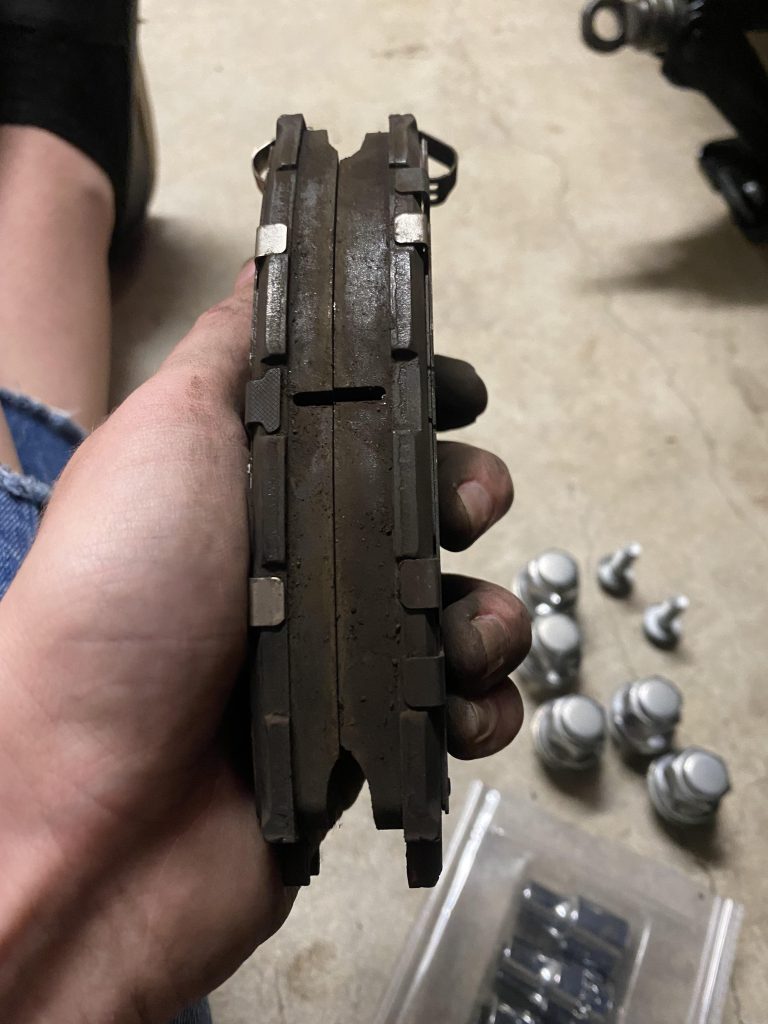
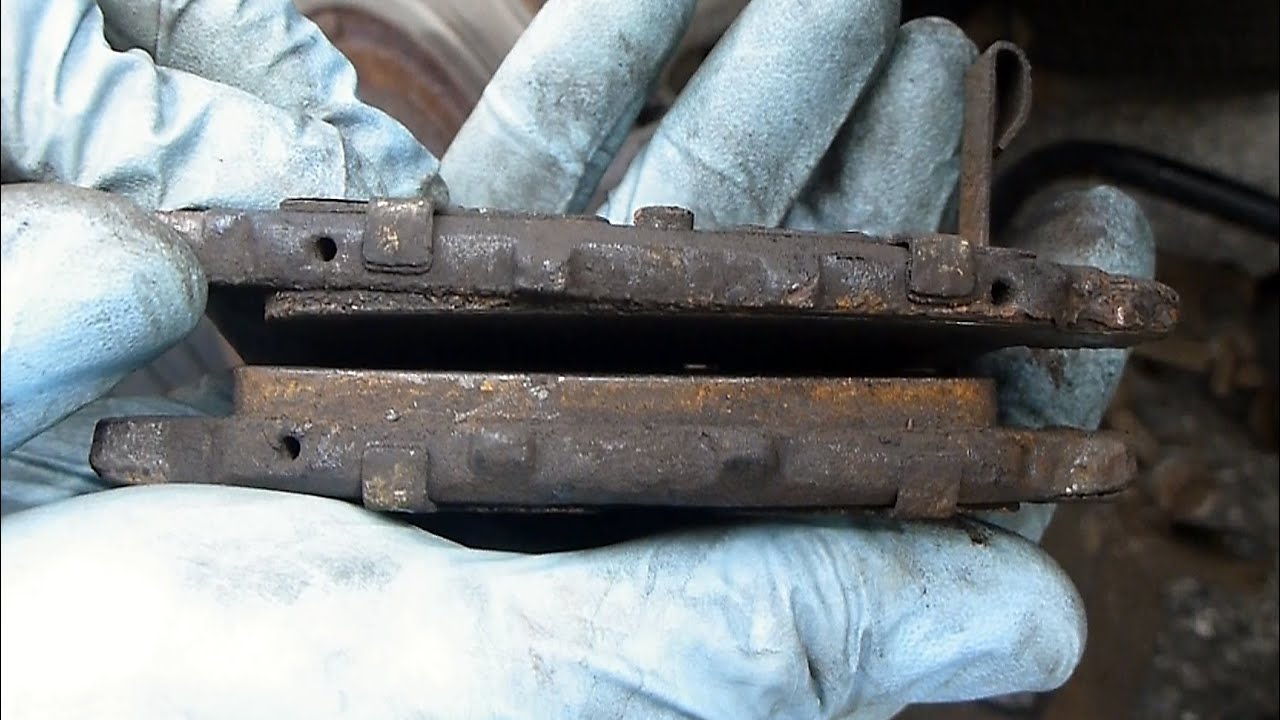
Measure remaining friction material, not the metal backing plate, and retain the identity of each pad. Bendix recommends measuring at several locations and considering differences along and across a pad. Our thickness inspection guide covers the reporting method. Do not average a thin area together with a thick area and call the assembly acceptable. Also distinguish a worn taper from a manufactured chamfer. A photograph of the exposed edge may leave the most important part of the lining hidden.
Check pad movement and caliper operation
A floating caliper must move on its guides as designed, and its pads must be able to move in their intended locations. Binding can leave a pad contacting the rotor when it should release. Ferodo identifies sticking guide pins or pistons among the causes of uneven wear within a set. That makes movement a relevant inspection, but the wear photograph does not tell you which part is sticking. A technician needs to check the actual mechanism and its condition using the vehicle's service procedure.
Ask whether the inspection covered pad seats, guides, protective boots and piston operation, and what specifically failed the check. A rusty-looking caliper exterior is not proof that the piston is seized; a clean exterior is not proof that its moving parts are healthy. The diagnosis should connect the observed wear with an actual defect or out-of-specification condition. Merely washing the outside cannot verify the hidden movement, so exterior cleaning should not be sold as a complete remedy for abnormal pad wear.
Separate rotor contact from a guessed warped-disc diagnosis
A pad with grooves or an uneven contact surface needs a rotor assessment as well. Ferodo's diagnostic guide describes wear associated with irregular disc surfaces and wear lips. Ask for the rotor's measured condition rather than a conclusion based only on its appearance. The workshop may need to inspect thickness, surface condition and other dimensions specified for the brake. A new pad cannot be assumed to correct an unsuitable contact surface just by wearing itself to match it.
Raybestos bulletin BPI 13-10 discusses uneven friction-material transfer, rotor runout and related component faults. Those subjects are not interchangeable with every casual use of the word warped. If the complaint includes pedal pulsation or steering vibration, report it separately from the wear measurements. A technician can then test the relevant possibilities. Do not prescribe rotor machining from a photograph; whether a rotor can be reused, serviced or replaced depends on its specification, measurements and condition.
Consider a release problem in the hydraulic circuit
Persistent brake drag can result from several faults. For the vehicles it covers, General Motors bulletin 19-NA-116 identifies brake-hose restriction, piston binding, and binding pads or guide pins as possibilities to investigate. Replacing the caliper solely because a brake remains applied can therefore miss another cause. Ask the technician to explain what the diagnosis established before approving parts replacement. The bulletin is an application-specific example of diagnostic reasoning; it does not establish which fault your vehicle has or provide a universal repair procedure.
Hydraulic testing is workshop work requiring the correct equipment and procedure. Do not crack open a bleeder or hose connection as an experiment before a journey, clamp a hose with an improvised tool, or drive with a circuit isolated. If the workshop recommends a hose, ask what test or visible defect supports that recommendation. If it recommends a caliper, ask whether the release behavior and related circuit were assessed. The objective is an explained repair, not a shopping list of every plausible component.
Apply the correct tolerance and vehicle-specific information
Not every visible difference has the same meaning on every brake. Service information can define what counts as abnormal for a particular configuration and use. General Motors bulletin 19-NA-116 from June 2019 is one example: it addresses specified GM truck and SUV applications with particular uneven front-pad wear concerns, and directs normal diagnosis before an application-specific parts remedy. It excludes Police Pursuit Tahoe applications and is not a universal wear standard. Its numerical criteria should not be transferred to unrelated cars.
When a technician calls a difference normal, ask for the applicable reference and confirm that the thinnest pad remains serviceable. A tolerance for a difference is not permission to use a pad below its replacement limit. Similarly, front and rear readings do not have to match merely because the pads were installed together. Identify which comparison is relevant before treating all variation as a failure. If the brake package or service history is unknown, resolve that uncertainty before using a specification.
Credit: www.youtube.com
Verify the fitted parts and the previous work
Check the pad part number and the installation details, especially after a recent repair. Ferodo explains that directional pads and certain backing-plate designs require specific positioning. An incorrect pad, misplaced hardware or an installation problem can interfere with intended operation. Our brake pad fitment guide explains how to verify the application. Do not modify a pad by filing it until it appears to fit; first establish why the supplied component or assembly differs from the required arrangement.
Bring the previous invoice and describe whether rotors, calipers, hoses or hardware were changed with the pads. If this is a repeat problem at the same wheel, that history is especially useful. Record the distance since the repair without turning it into a warranty conclusion. A photograph of the removed parts, labelled by position, may help document the complaint. Do not swap worn pads between positions to equalize them or erase the pattern before the technician has had an opportunity to inspect it.
Avoid blaming driving style before checking the brake
Towing, repeated stops and other demanding use are relevant history, but they do not by themselves establish why only one lining is markedly thinner. Tell the workshop about a change in route, load or use while still requesting a component assessment. A wear pattern can have more than one contributing factor. The sensible question is whether the system works as intended under the vehicle's conditions, rather than whether the owner can make a mechanical problem disappear by braking differently.
Likewise, wheel alignment and brake diagnosis are different jobs. A recommendation for alignment should identify the measured alignment issue or related finding. It should not replace the brake inspection simply because the car pulls. Describe whether the pull occurs only while braking, whether it existed before the pad work, and whether there are tire or steering symptoms as well. These observations guide testing; none remotely proves that alignment, a tire or a caliper is the sole cause.

Credit: www.youtube.com
Account for corrosion and maintenance history
Road salt, storage and missed service can be relevant to the condition of brake components. Follow the requirements for the actual vehicle. For example, Tesla specifies periodic caliper cleaning and lubrication for Model 3 vehicles used where roads are salted in winter. That is a vehicle-specific maintenance instruction, not a promise that washing a caliper will repair a fault. Give the workshop the environmental history and let it distinguish routine maintenance from parts that have already become damaged or seized.
A coating of dust or superficial discoloration should not distract from an important finding such as a torn boot, leakage, restricted movement or contaminated friction material. Ask the technician to identify each observed defect and its consequence. If cleaning is part of the repair, ask which working surfaces were serviced and how operation was checked afterward. Our mounted-caliper cleaning guide explains the limited scope of exterior cleaning; it does not provide a shortcut around a brake fault diagnosis.
Repair the cause and keep a comparison record
Before authorizing work, obtain a description of the wear pattern, the applicable limits, the diagnosed cause and the required repairs. Ask whether the rotors and other parts are acceptable and what verifies correct operation afterward. If no cause has yet been found, that uncertainty should remain explicit. A further inspection may be more useful than claiming certainty from one photograph. Brake repairs should follow the manufacturer's service instructions, including the specified replacement scope, hardware and post-repair checks.
Keep the final report with the new pad measurements, date, distance and parts used. Agree on a sensible recheck if the previous wear was abnormal. The next inspection can then compare the same wheel and pad positions rather than starting again from a vague description. If a warning, altered braking or persistent noise appears before that appointment, address it promptly. The purpose of investigating uneven wear is to restore correct operation and prevent repetition, not merely to make all the visible linings look equally thick.


Automotive reference information. Confirm specifications in the manual for your exact vehicle. Original replacement guides link to their research sources. About us