
Spark-plug wires deteriorate because they operate around heat, vibration, contaminants and high ignition voltage. Their insulation, end boots and internal connections can fail in different ways. A wire may also be damaged during plug replacement or routed against a hot or sharp component afterward. The useful repair question is therefore not just whether the lead is old, but why it failed and whether a replacement would encounter the same condition. This article focuses on those causes and on preventing repeat damage. For the separate decision of whether a wire is actually faulty, use the guide to checking suspected bad spark-plug wires. Symptoms alone do not identify a failed lead.
A rough idle or misfire can have several causes, and some engines have individual coils instead of conventional ignition cables. Confirm the ignition layout before ordering a wire set. A wiring harness connected to a coil is not the same component as a high-voltage spark-plug lead. Keep that distinction clear when describing the repair or comparing parts. The rubber boot, terminal and cable body also deserve separate descriptions. A scorched cable beside an exhaust component suggests a different corrective action from a terminal pulled out during service. Photograph the damage and its installed location before removing evidence of the route.
If the fault appeared immediately after maintenance, include everything that was moved to reach the plugs. Do not assume a part failed naturally just because it was already several years old. Nor should an old wire automatically be blamed when testing has not established a problem. Work with the engine off and sufficiently cool, following the service instructions. Do not handle high-voltage leads during cranking or running, and do not create exposed sparks to see where current goes. A severe misfire or flashing warning requires stopping according to the vehicle's instructions, not continuing a drive to make the symptom easier to observe. The aim is to identify a credible failure mechanism, correct the surrounding condition and use the right replacement where one is needed.

Credit: www.youtube.com
The main failure mechanisms and how to prevent recurrence
Heat exposure. Champion describes heat, vibration and abrasion as wire-damage mechanisms. A visibly scorched lead should prompt an inspection of its route and heat protection, not just replacement with another cable in the same position. Compare the installed routing with the exact engine's diagram and mounting points. A missing bracket or an incorrectly placed boot can leave the replacement exposed to the same environment. Do not invent a new route simply because it looks tidier. Clearance has to remain appropriate when the engine moves and surrounding parts reach operating temperature. Rubbing and sharp edges. Look at the location of a damaged section as well as the damage itself. If the cable touches a bracket, fastener or nearby assembly, determine whether a retainer is missing or the wrong lead has been fitted. A new cable pulled tightly across the same point can wear again. Do not wrap tape around visible damage and call the insulation restored. The repair must address the affected lead and the reason it contacted the obstruction. Ask the shop to show where the original route should run if the present arrangement is uncertain. Vibration and connection problems. A terminal that does not engage correctly can produce an intermittent complaint that is hard to identify from a stationary visual check.
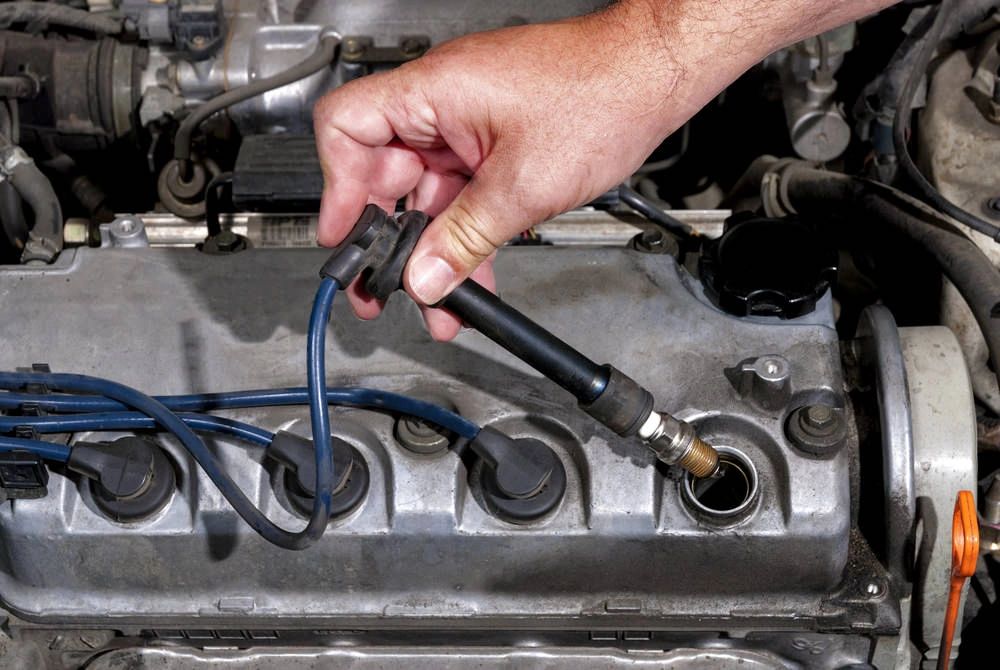
Inspect the boot and connection according to the component instructions. A cable that appears seated from above may still need closer examination, particularly after a difficult plug service. Do not pull on the cable body to prove the terminal is attached. If it was stretched or separated during removal, record that history. A damaged internal connection may not leave an obvious cut in the exterior jacket. Contamination around the boots. Oil, coolant or water in the area deserves an investigation of its entry path. Cleaning a boot without addressing a recurring leak can leave the replacement in the same condition. Do not assume every contaminant requires replacing every ignition component; assess the actual damage and the relevant manufacturer guidance. Equally, do not assume a component is serviceable merely because its outside can be wiped clean. If oil is found in a plug well, distinguish that external leakage from oil on the firing tip before choosing an engine diagnosis. Damage during removal. A boot that has been in place for a long time may not release easily. Follow the approved removal method and use a suitable tool where specified. Yanking the flexible cable to free a stuck boot can turn a maintenance job into a connection failure.
Keep a note of any difficult removal, torn boot or displaced contact. If a misfire begins immediately afterward, that observation is relevant; concealing it behind the statement that the plugs are new makes diagnosis harder. A repairer needs an accurate sequence rather than a guess about which brand failed. Incorrect routing after replacement. Champion warns against tightly clamping, bundling or rerouting ignition leads away from the original arrangement. Use the correct separators and attachment points. Match each lead to its intended cylinder and connection; a similar length is not a substitute for the engine's layout. If several wires have already been removed without labels, obtain the correct diagram before restarting. Do not guess from the order in which the terminals appear. A wrong connection can create a running problem that resembles a failed part even though the newly fitted wire is intact. The wrong application. A replacement must suit the engine's ignition system, terminal arrangement and routing requirements. More expensive or thicker does not automatically mean more appropriate. A set selected only because it reaches all the plugs may still be unsuitable. Keep the catalog reference and part number with the repair record, especially where several engines were available for the vehicle.
If the new set differs visibly from the removed one, resolve the fitment question before forcing boots or stretching leads to make them reach. Electrical demand and the rest of the ignition system. DENSO explains that gap, electrode condition and cylinder conditions influence firing-voltage demand. That is a reason to inspect the system as a whole when a wire fails repeatedly, not an instruction to close the plug gaps arbitrarily. Verify the specified plugs and their condition. Replacing a damaged lead while ignoring an incorrect or worn plug can leave part of the underlying problem unresolved. Conversely, an ordinary coolant-temperature complaint should not be blamed on leads simply because ignition components can misfire. Engine cooling and ignition diagnosis require their own evidence. Age without a universal deadline. There is no single mileage that proves every wire set is good before it or bad after it. Follow any replacement or inspection requirement for the vehicle and the component, and consider the actual environment and findings. Record a confirmed failure and its location so future checks have a useful reference. Preventive replacement can be a maintenance decision, but it should not be presented as a measured diagnosis when no fault was demonstrated. The stronger repair explanation connects the observed damage to a plausible exposure or installation problem and shows how that condition was corrected.
Credit: bhadraelectronics.com
Choose a repair that addresses the cause
Ask for the evidence behind the recommendation: visible damage, a connection defect, an application-specific test result or another confirmed finding. Champion notes that lead-failure symptoms overlap other engine faults and that resistance checks must use the relevant manufacturer's limits. A single generic resistance number is not a reliable rule for every cable construction and length. This article does not ask you to perform a live high-voltage test; use the separate diagnostic guide and professional help where appropriate. If a wire is confirmed faulty, ask whether replacing one lead or the complete set is appropriate for its condition, availability and the vehicle's service guidance. The decision should also include any damaged retainers, boots or associated parts that would otherwise reproduce the failure. Do not replace unrelated components merely to make the invoice look comprehensive. After the repair, verify that the original symptom is resolved under safe, relevant conditions and that the routing remains correct. Keep the original diagnosis and new part numbers. If the same location fails again, that record directs attention to a recurring exposure or connection problem instead of another unsupported parts guess.
Two hypothetical examples show the difference. A cable found melted where it touched a hot component needs the routing or protection corrected as well as a sound replacement. A lead damaged by pulling during recent service needs proper handling and connection inspection, even if its original route was correct. Both can cause a similar complaint, but their preventive actions are different. An estimate that merely says replace wires does not describe that distinction. Request the specific reason for failure and the correction that accompanies the replacement. If the cause remains uncertain, have that uncertainty recorded explicitly along with the planned follow-up. An honest unresolved question is more useful than a confident explanation that no inspection or test supports. Reliable ignition depends on compatible parts, intact connections and an appropriate installation environment. Finding which of those failed is more useful than treating every misfire as proof that spark-plug wires have reached an arbitrary age limit.


Automotive reference information. Confirm specifications in the manual for your exact vehicle. Original replacement guides link to their research sources. About us


