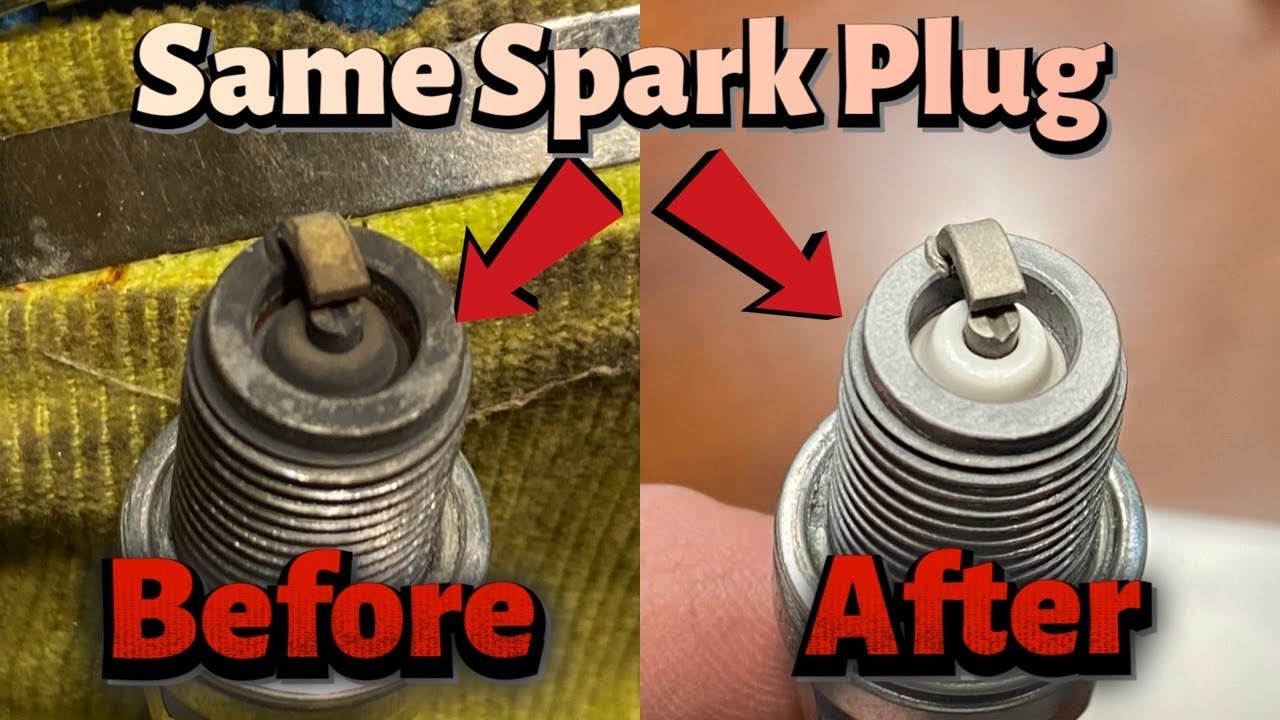

Do not treat brake cleaner as a universally approved spark-plug cleaner. The answer depends on the exact plug, its condition and the cleaner formulation. A solvent may remove some surface contamination, but it cannot restore a worn electrode, repair cracked ceramic or correct the fault that caused fouling.
For a modern fine-wire plug that is worn or damaged, replacement with the specified part is the useful repair decision. Before spraying anything, check the plug manufacturer’s maintenance guidance and the cleaner label for compatibility and handling requirements. If neither supports the proposed use, do not experiment.
This guide explains how to decide whether cleaning has any purpose, what information it destroys and why an engine that runs better briefly after cleaning may still need diagnosis. It does not recommend spraying solvent into an installed plug well or through the plug hole.
Credit: www.ngk.com
Clean appearance is not the same as a serviceable plug
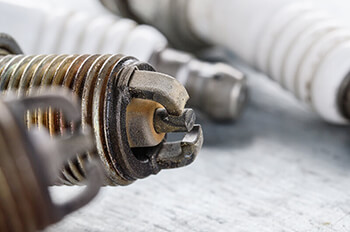
A bright-looking plug can still have an excessive gap, a damaged insulator or a fault that appears under cylinder pressure. A dirty-looking plug may carry useful evidence about oil, fuel or combustion conditions. Cleaning changes its appearance without proving its electrical performance. Start by recording the part number, cylinder location and reason for removal. Photograph the firing end and exterior before disturbing deposits.
Compare the condition with the other plugs when they are being removed for a justified service procedure. Do not assume a visible improvement after solvent is evidence that a replacement is unnecessary. The decision should include wear, damage, correct specification, service history and the condition that brought the vehicle in for repair. A plug is a working ignition component, not simply a surface that needs polishing.

Credit: www.wikihow.com
Identify the deposit before deciding what to do
Oil, dry carbon and fuel wetting point toward different investigations, and a mixture of deposits can make visual interpretation uncertain. DENSO’s diagnostic guide distinguishes these appearances while also listing wear and physical damage. Use the chart as a starting point, not a diagnosis from color alone. Oil outside the firing chamber may have entered the well from above, whereas oil on the firing end needs another explanation.
Fuel on a removed plug does not automatically prove that its injector leaks. Preserve when and how the plug was removed, especially after repeated starting attempts. If several plugs differ sharply, retain their cylinder labels. That evidence is more useful than cleaning them all and discovering later that the misfire persists.
Why a brake-cleaner label needs to be read literally
Brake cleaner describes a category of products, not one chemical formula with universal material compatibility. CRC’s Non-Chlorinated 50-State product page identifies that particular product as extremely flammable and not plastic-safe. Those specifications should not be generalized to every can with a similar name, but they show why the exact product matters. A spray intended to remove grease from brake components is not automatically approved for coil boots, electrical connectors or a plug assembly.
Do not use the presence of a dielectric-strength specification as permission to soak an energized ignition system. Look up the precise product number and read both the instructions and the safety information. If the label does not establish suitability for the intended cleaning task, choose another documented approach or replace the plug as appropriate.
A decision process instead of a spray-and-reinstall recipe
First decide whether the plug is physically serviceable and whether its manufacturer permits a suitable cleaning method. If it is worn, cracked, distorted or due for replacement, cleaning is unlikely to be a sensible detour. Next identify the contamination and record it before treatment. Then check the exact cleaner’s compatibility and handling instructions. Only a supported method for that plug and product combination should be considered.
Do not assume that soaking longer improves the result or that visible evaporation proves the whole assembly is ready for use. Follow the documented preparation and drying requirements rather than a guessed time. Keep the removed plug away from open engine holes and protect nearby components from overspray. If any part of the process is uncertain, replacement and diagnosis are clearer choices than an improvised chemical test.
Keep cleaning separate from the engine
Do not spray cleaner into a running engine, onto energized ignition parts or through an open spark-plug hole as a general cleaning method. An installed plug is not a safe way to contain a solvent experiment. If liquid has already entered the cylinder in an unknown amount, do not crank the engine to clear it; obtain application-specific advice. Keep the ignition isolated as required and prevent someone else from starting the car while parts are removed. A workshop cleaning operation also needs a suitable place to capture contaminated liquid and prevent contact with unrelated components. The fact that a solvent evaporates quickly does not remove the need to control where it goes.
Use the product’s protection requirements
Consult the exact CRC safety data sheet or the equivalent document from the product manufacturer for protective equipment, exposure and disposal requirements. Choose eye and skin protection appropriate to that formulation; do not assume any glove material resists every solvent. Avoid breathing spray or using the can in a position that directs rebound toward your face. Keep the container label available rather than transferring an unidentified liquid into another bottle. If an exposure occurs, follow the label’s first-aid directions and obtain appropriate assistance. Do not mix products or attempt to neutralize them with another workshop chemical. Those actions create uncertainty beyond the original maintenance task.
Ventilation does not cancel ignition hazards
Use a location consistent with the product’s ventilation instructions, away from ignition sources and hot surfaces. An open garage door is not proof that vapor cannot collect around the work. Do not use a flame, heat gun or engine heat to speed drying. Non-chlorinated does not mean nonflammable, and a product described as nonflammable still requires its own exposure precautions. Keep cleaning away from welding or other hot work and follow the specific label restrictions. If a suitable workspace is unavailable, do not proceed simply because the cleaning job appears small. The right alternative may be to replace the plug and have the underlying fault checked without adding chemical exposure.
What the plug manufacturer actually says about cleaning
DENSO’s spark-plug FAQ illustrates why product guidance needs context. It discusses cleaning contamination in one maintenance answer but also cautions against wire-brushing delicate iridium electrodes and recommends treating worn plugs as replaceable parts. That is not blanket approval for every brake-cleaner formulation. It also does not mean that restoring an electrode’s gap restores its original shape or performance. Read the guidance for the plug type actually installed. If a specialist offers cleaning as part of a diagnostic process, ask what it can establish and what it cannot. A temporary change in running quality may help an investigation, but it is not a guarantee of dependable service or proof that the original fouling cause has disappeared.
Avoid abrasive shortcuts on fine electrodes
Do not file, sand or aggressively wire-brush a fine-wire electrode to make it look new. Removing deposits and removing electrode material are not equivalent operations, and damage can be difficult to judge afterward. A rounded, eroded tip is not repaired by reshaping its appearance. Similarly, bending a ground electrode to conceal wear does not recreate the original geometry. If the plug manufacturer permits gap inspection or adjustment, use the specified method and limits for that exact product. Do not pry against the fine center tip. Where the plug is already questionable, installing the correct new part is more defensible than attempting to restore it with improvised abrasive tools.
Ultrasonic or blasting equipment still needs a validated process
A cleaning machine does not automatically make the task suitable for every plug. The process, cleaning medium, component compatibility and inspection afterward all matter. A workshop should be able to explain why cleaning is appropriate and how contamination or media will be removed before the plug is returned to service. Do not transfer a method used for a conventional plug to a different fine-wire design without manufacturer support. Nor should a visually clean result be sold as proof that the plug will work correctly under operating pressure. If the cost and uncertainty approach those of the correct replacement, ask what useful benefit the cleaning service provides.
Replace damage and investigate repeated fouling
Replace a plug that is cracked, mechanically damaged, significantly worn or otherwise rejected by the applicable inspection criteria. Use the correct application and follow the vehicle maintenance schedule rather than relying on a universal replacement interval. If new or cleaned plugs become fouled again, stop treating the symptom as ordinary dirt. A fueling, ignition or mechanical problem may still be present.
Keep the old plugs labeled for diagnosis and record oil use, starting behavior and any fault codes. For related distinctions, see oil on spark plugs and fuel-wet spark plugs. Those conditions can require different tests even when both plugs look wet.
Reinstallation is a separate quality check
After the repair decision, verify the replacement specification and the condition of the well, boot and connector. Follow the installation procedure for seating, torque and thread condition rather than assuming a cleaned plug can simply be tightened by feel. Keep debris out of the hole and investigate any binding before seating. Reconnect the ignition components correctly and verify the original complaint afterward.
If a new misfire begins immediately after the work, revisit the parts, connector seating and installation before adding more chemicals. The post-replacement misfire guide outlines that distinction. A completed maintenance task needs a functioning ignition system, not merely clean-looking parts.

Credit: m.youtube.com
The useful answer is conditional
Brake cleaner may remove contamination, but that fact alone does not make it an approved spark-plug maintenance method. Confirm the exact plug and product guidance, preserve diagnostic evidence and reject worn or damaged components. Avoid spraying into the engine or using heat to accelerate evaporation.
When the plug’s condition or chemical compatibility is uncertain, replacement with the specified part and investigation of the fouling cause provide a clearer path. No solvent can compensate for an unsuitable plug, a cracked insulator or a continuing engine fault. Treat cleaning as a limited, documented process where supported, not a universal cure for misfires.


Automotive reference information. Confirm specifications in the manual for your exact vehicle. Original replacement guides link to their research sources. About us


