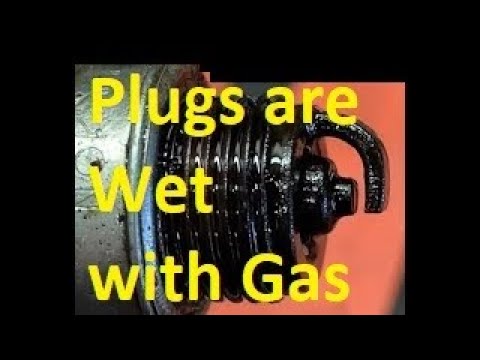

Spark plugs wet with gasoline show that fuel has reached the cylinder without burning normally. They do not, by themselves, prove that the fuel injector is bad. Too much fuel is one possibility; failure to ignite an otherwise appropriate amount is another.
Repeated unsuccessful starting attempts can also leave fuel on a plug and obscure the original fault. Stop repeated cranking and document what happened before removing parts.
If there is an external fuel leak, a strong persistent fuel odor around the vehicle or signs of fire, keep ignition sources away and obtain appropriate help. This guide separates the observations that matter from parts guesses, without recommending exposed-spark tests or opening a pressurized fuel system at home.

Credit: www.reddit.com
Separate fuel quantity from combustion failure
Think of the problem as two questions. Was more fuel delivered than the engine could use, or did the engine fail to burn fuel because another required condition was missing? The same wet plug can appear in both situations. NGK describes wet fouling as having several possible causes, so a fuel-system diagnosis needs supporting evidence.
Ask when the engine last ran normally and what changed afterward. A vehicle that began misfiring directly after plug replacement needs a different first inspection from one that developed a hot-start problem over several weeks. The first useful step is often reconstructing the sequence, not installing more new components.

Credit: www.youtube.com
Record when the plug became wet
An observation made immediately after multiple failed starts is different from one made during a planned inspection of a running engine. Record the number and approximate duration of starting attempts, whether the engine fired briefly, and whether the problem was cold or hot. Do not perform additional attempts simply to reproduce wetness. A workshop needs the original conditions to interpret the finding. If the plug was cleaned or replaced before inspection, say so. That change matters because the new appearance may no longer represent the condition that caused the initial no-start.
Misfire codes identify a location, not a component
A cylinder-specific misfire code can help organize the inspection, but it does not distinguish a plug, coil, connector, injector or mechanical cause on its own. Save the code and any available freeze-frame information before clearing it. Confirm the engine's cylinder numbering before labeling parts; the physical order across the engine is not always the diagnostic numbering order. If the vehicle shakes badly or its malfunction indicator flashes, avoid continuing to drive and follow the owner's instructions. Do not use a road test under heavy load as a home method of forcing the fault to identify itself.
Fuel consumption is supporting history
Increased fuel use may accompany a combustion problem, but one tank calculation cannot identify why a plug is wet. Keep the measurements separate from assumptions about the repair. Note whether the problem began after fueling, maintenance, battery trouble or a prolonged period without use. Record the actual fuel or additive used if relevant. Avoid adding a cleaner as a diagnostic experiment; a new chemical in the tank does not show whether the existing fuel failed to ignite. A practical repair conversation focuses on repeatable symptoms and measured results rather than the belief that every fuel-related complaint needs an injector-cleaning product.
Compare cylinders before choosing a test
One wet plug and several dry plugs suggests examining the affected cylinder's ignition, fuel delivery and mechanical condition. A whole wet set calls for considering shared starting and control conditions as well. These patterns narrow the questions; they do not establish a failed part. Label the plugs and photograph them promptly because the appearance can change after removal.
DENSO notes that gasoline wetness can dry off soon after removal. Do not identify the liquid by burning it, heating it or placing your face close to the plug. If its identity remains uncertain, describe it as wet contamination until inspection provides better evidence.
What information to bring to the workshop
Bring the exact vehicle and engine identification, maintenance history, saved codes, plug part numbers and the labeled photographs. Explain any work already done, including parts swapped between cylinders. A list of experiments is useful only if the order is preserved; otherwise the technician may be examining a different arrangement from the one that produced the original code. If the engine will not start, arranging recovery can be more productive than replacing several components in the driveway. Ask the shop to establish a diagnosis before ordering a complete set of injectors or coils.
Removal is not the first step on every engine
Some engines make plug access straightforward; others require significant disassembly and careful handling of connectors or intake components. Follow the service procedure and work on a sufficiently cool engine. Do not force a plug that resists removal, and do not allow debris or liquid to enter an open cylinder. If you cannot keep the area controlled, leave removal to the technician. A plug inspection that creates damaged threads or drops contamination into the engine has made the original problem harder to solve. An intact but wet plug does not justify an aggressive cleaning or extraction method.
A multimeter cannot prove ignition under load
Electrical measurements have a role when they are the measurements specified for that circuit. A continuity reading does not demonstrate that a coil or lead will operate correctly under combustion conditions. DENSO explains that firing-voltage demand changes with gap and cylinder conditions, which helps explain why a simple static check can miss a running fault. Do not touch high-voltage ignition components during cranking or running. Avoid pulling a coil off and exposing a spark near fuel vapor to see whether it works. A shop can use suitable diagnostic equipment and the vehicle's procedure while controlling both the electrical and fuel hazards.
Use a sequence that preserves evidence
First stop unnecessary starting attempts and record the complaint. Next save diagnostic information and inspect obvious changes associated with recent service, with the ignition off. Then decide whether the evidence calls for ignition, fuel or mechanical testing. That sequence avoids replacing the wet plug before asking why it became wet.
If a replacement plug temporarily restores operation, document the result but keep investigating a recurring condition. A short improvement is evidence that ignition behavior changed, not proof that every other system is healthy. Keep removed components available until the cause and the follow-up plan are clear.
A repair should match a demonstrated fault
A disconnected coil connector requires a different repair from a damaged plug or a verified injector leak. The estimate should say which fault was found and how it was confirmed. Fuel-system pressure and injector tests require appropriate equipment and procedures; do not loosen fittings or inspect spraying injectors as a driveway check.
If fuel has accumulated enough to raise concern about liquid in a cylinder or contaminated engine oil, stop trying to start the engine and obtain professional assessment. Whether the oil needs replacement and how the cylinder is made safe should be decided from the actual condition and the service information.
Prevent recurrence without inventing a starting ritual
Use the starting instructions for the specific vehicle. Do not assume that holding the accelerator fully down activates a clear-flood mode on every engine, or that pumping the pedal helps an electronically controlled system. A manufacturer may prescribe a particular recovery sequence, but it must be verified for the model and powertrain. Repeated long cranking attempts can create additional problems while the underlying fault remains. If the manual's permitted attempt fails, stop and diagnose. Recording the failed attempt is more useful than escalating to a succession of unverified pedal combinations or improvised fuel-disable tricks.
Maintenance should follow the application
Use the correct plug specification and interval rather than treating every wet plug as overdue maintenance. Check that previous work used the intended part number, especially if the complaint started immediately afterward. A plug can be unsuitable or damaged even when recently purchased. Preserve the invoice and packaging where available so the installed item can be identified.
If wires or coils were moved during service, document their original routing and any connectors disturbed. The separate guide to misfire after changing spark plugs covers that service-related branch in more detail. Do not assume a wet plug makes that branch irrelevant.
Fuel quality is not a universal explanation
A recent refueling event is worth recording, but it does not prove contamination or justify draining a tank without evidence. Use the fuel type specified for the vehicle and keep the receipt if the timing is suspicious. Tell the shop whether other symptoms began at the same time.
A plug that becomes wet because ignition is absent will not be corrected simply by purchasing a different fuel brand. Similarly, an additive marketed for deposits does not establish whether an injector leaks or whether a control signal is present. Keep product choices separate from the diagnostic questions so that a plausible story does not replace a confirmed finding.
When recovery is the better next step
Arrange help when there is suspected external fuel leakage, severe misfire, repeated no-start, unusual mechanical noise or concern that liquid has accumulated in a cylinder. Keep the vehicle away from ignition sources and do not run it in an enclosed space. A stopped engine can still have a pressurized fuel system, so shutting it off does not make opening lines a safe inspection method. Describe the warning messages and any recent work to the recovery service or repairer. This lets the next person start with the actual risk and symptom instead of another round of cranking.
Recurring wetness needs a revised diagnosis
If the same cylinder wets a replacement plug, compare the new evidence with the original diagnosis. Ask whether the repair addressed fuel delivery, ignition or only the fouled part. A repeated symptom should trigger review of the earlier test results rather than an automatic repeat of the same purchase. Record how long the engine ran correctly and under what conditions the problem returned. The timing can be more useful than a description that the new plug is bad too. Request a clear explanation of what the next test will distinguish and how its result will change the repair recommendation.
Keep oil and dry soot out of the fuel diagnosis
A wet-looking black surface may contain oil rather than gasoline, and dry black carbon is another separate observation. The oil-wet plug guide explains why an oily well can contaminate a plug during removal. The black plug guide focuses on dry deposits. If the material cannot be confidently identified, preserve the part and state that uncertainty. Calling every shiny plug flooded can send the repair toward the wrong system. Good diagnosis starts with an accurate description, including the limits of what the home inspection showed.

Credit: www.fixkick.com
What a successful outcome looks like
The engine should start and run correctly under the conditions that originally produced the complaint, with the diagnosed fault repaired and relevant follow-up checks completed. New plugs alone are not a complete explanation for a recurring problem. Ask the workshop to record the cause, the tests supporting it and any remaining maintenance needs.
Keep that record with the vehicle history. Gas-wet plugs are useful evidence of unburned fuel, but the repair decision comes from establishing why combustion failed. Preserving that distinction reduces unnecessary parts replacement and avoids unsafe experiments around fuel and ignition voltage.


Automotive reference information. Confirm specifications in the manual for your exact vehicle. Original replacement guides link to their research sources. About us


