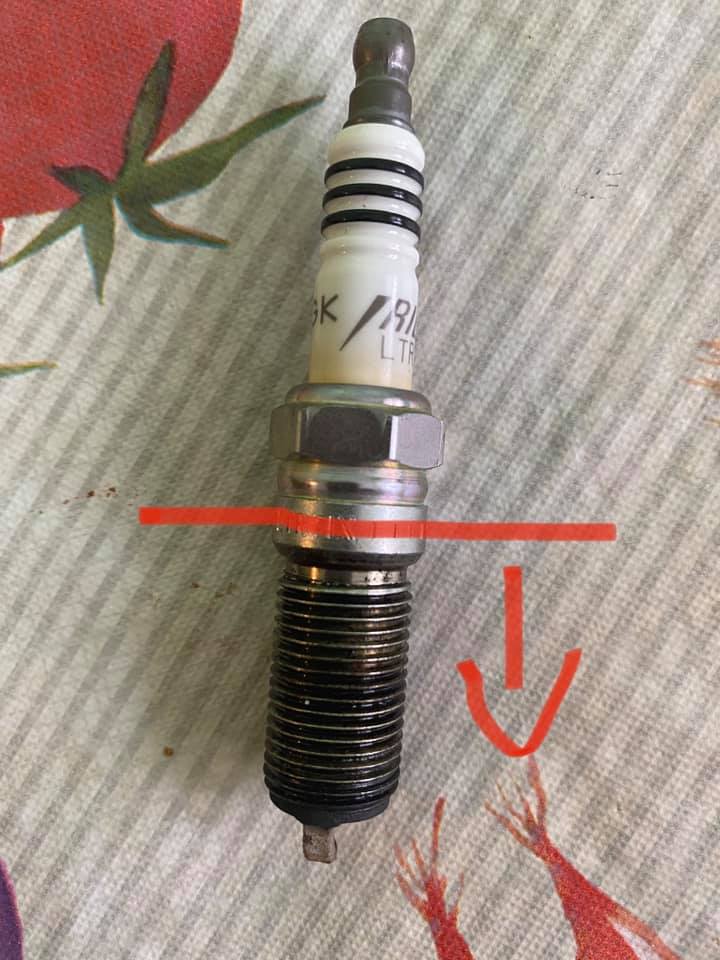

Oil on a spark plug can mean an external leak into the plug well or oil entering the combustion chamber. Those are different repairs. Oil coating the coil boot and upper ceramic points toward the outside of the plug; oil on the firing nose may indicate combustion-side fouling, but removal through an oily well can contaminate it.
Record the location before cleaning or unscrewing the plug. Do not authorize piston rings or an engine overhaul solely because a removed plug looks oily.
The immediate priorities are checking for a serious misfire, protecting the open cylinder from liquid and debris, and establishing where the oil first appeared. A useful diagnosis separates what was observed from what has merely been proposed as a cause.
Credit: www.chryslerminivan.net
Start with the well, boot and firing end
On many engines, a deep tube surrounds each spark plug. The ignition boot occupies that tube, while the threaded end extends through the cylinder head. Oil in the tube is outside the combustion chamber until the plug is loosened. That physical separation explains why an oily boot does not automatically show worn piston rings. A technician should inspect and document the well before removal, then handle any pooled liquid using the appropriate service method. Avoid deliberately letting oil drain through an open plug hole. If the plugs have already been removed, tell the shop whether the wells were wet and whether the parts were wiped before anyone photographed them.
Symptoms do not locate the leak by themselves
Rough running, a difficult start or a cylinder-specific misfire can accompany an oil-related ignition problem, but the symptom alone cannot distinguish an external seal from an internal fault. Equally, a wet well may be discovered during scheduled maintenance before an obvious complaint occurs. Describe the timing rather than assigning a cause: after a long park, immediately after a repair, or only under acceleration. A warning light that flashes during rough running calls for stopping and following the vehicle's guidance, not a long drive to clear the plugs. An oil-pressure warning or substantial loss of oil also changes the urgency. Use recovery when continued operation is unsafe or the vehicle's instructions require it.
What to preserve before cleaning
Label each removed plug with its cylinder, using the engine's correct numbering. Photograph the boot, well and firing end separately. Record the mileage on the plugs and the oil level measured by the owner's procedure. Note how much oil has actually been added over a known distance instead of describing consumption as a lot. If someone recently spilled oil while filling, include that detail without assuming it explains everything. An isolated spill and a recurring seal leak need different follow-up. Save damaged boots and plugs when requesting a diagnosis; once those parts are discarded, an important part of the evidence is gone. Do not wash every component before the repairer has assessed it.
External tube-seal and cover problems
Some engines use replaceable spark-plug tube seals; others incorporate sealing features in a cover assembly. Fel-Pro explains the role of tube seals and why their installation direction and design matter. The right repair therefore depends on the exact cover, not simply on buying a universal gasket. Inspect the cover and related sealing surfaces rather than assuming a new gasket will correct every leak.
Fel-Pro also cautions against overtightening cover fasteners, which can worsen a sealing problem. A wet outside surface may need a cover or seal repair even when the firing electrodes are healthy. Confirm the source before including unrelated internal engine work in the estimate.
Oil actually reaching the firing tip
Persistent oil on the combustion-side insulator and electrodes, documented without contamination from the well, justifies a different investigation. DENSO describes oil fouling as a wet, oily deposit and lists internal wear among possible causes. That is a starting category, not a conclusion that rings have failed. Champion includes crankcase-breather faults in its oil-fouling guidance.
A sensible repair plan checks the relevant external systems and service history before choosing a major teardown. Ask the workshop to explain why its proposed test applies to your engine. Different designs and prior repairs can change the likely oil-entry paths, and no single photograph can resolve all of them.
Build a diagnosis from more than one observation
A cylinder with a repeatedly fouled plug and documented oil consumption deserves further investigation. A single oily plug removed through a full well is much weaker evidence. Give the technician the observations in chronological order. For example, explain that the engine ran normally, oil was found around the boot, and the electrode became wet during removal. That sequence should not be summarized as the cylinder burning oil. Conversely, if a clean well surrounds a plug that repeatedly fouls at its firing tip, make that clear. The question is which explanation fits all the facts, including findings that contradict the first theory. This approach helps prevent an inexpensive external leak from becoming an unsupported engine-replacement recommendation.
Visual checks need clean boundaries
A useful inspection documents where oil is present before moving components between cylinders. Do not wipe one plug with an oily rag and then compare it with another. Keep removed parts separated and avoid adding solvent merely to improve their appearance. A technician may inspect the intake and crankcase ventilation components where the engine's design makes those checks relevant. The interpretation must follow the vehicle's service information: the mere presence of a film in a passage is not a universal pass or fail test. Ask for photographs of any claimed failed seal or damaged component. Clear documentation allows the repair decision to be reviewed later if the symptom returns.
What compression testing can and cannot settle
Compression readings can contribute to a mechanical diagnosis, but they are not a stand-alone test for every route by which oil reaches a plug. A normal result should not be advertised as proof that oil-control or valve-sealing problems are impossible. A low result also needs interpretation before a particular component is condemned. Test setup, engine condition and the comparison between cylinders matter. Depending on the engine and the results, a workshop may add leakage testing, an internal inspection or an oil-consumption assessment. Request the recorded results and the manufacturer's limits used. If the estimate jumps directly from an oily plug to major engine work, ask which observations excluded external contamination and the other relevant causes.
Owner checks that are useful and limited
Check and maintain the oil level using the vehicle's prescribed procedure and oil specification. Do not overfill as a precaution against consumption. Keep a dated record of additions, mileage and any warning messages. Look for new external leakage only where inspection is safe, with the engine off and components sufficiently cool.
Do not reach into moving belts or remove ignition parts while the engine runs. If a shop has scheduled further testing, avoid adding stop-leak or cleaning products first; changing the oil chemistry or washing evidence away can make comparison harder. Share any products already used so the technician has an accurate history rather than an incomplete description of the engine's condition.

Credit: www.chryslerminivan.net
Why cleaning alone is not the repair
Cleaning an accessible exterior surface may remove evidence of a leak, but it does not restore a failed seal. Similarly, replacing a fouled plug can improve ignition without correcting the reason it became contaminated. Ask whether the estimate includes both the source of oil and any ignition components damaged by that oil. Do not assume every coil must be replaced, or that every contaminated boot can safely be reused.
The decision requires examination and the applicable parts guidance. A fine-wire plug should not be scraped or wire-brushed simply because it is expensive. If replacement is needed, use the correct specified part and follow installation requirements rather than improvising a different heat range to resist fouling.
How to compare repair proposals
Request an itemized explanation that identifies the leak location, the supporting findings, the parts being replaced and the follow-up check. A cover-seal repair and a cylinder repair should not appear interchangeable in the explanation. If a cover assembly is recommended, ask whether its sealing elements are separately serviceable for the exact application. If internal work is recommended, ask for the test results that establish the need.
Labor varies substantially with access, so a universal internet price is not a useful approval standard. Compare like-for-like estimates with the same diagnosis and included operations. A low price for plugs alone does not represent the same repair as correcting the oil source and assessing affected ignition parts.
Confirm the repair under the original conditions
After the repair, establish a fresh oil-level and mileage record. Check whether the original symptom is resolved and whether the shop documented the cleaned area or corrected sealing joint. A brief smooth idle is encouraging, but it does not establish that a slow leak or recurring consumption problem has ended. Agree on a sensible follow-up appropriate to the fault instead of repeatedly removing plugs at home. If the condition returns, retain the same cylinder labels and describe the new evidence. Comparing before and after observations is more useful than replacing another set without reviewing the diagnosis. Return promptly for new warning lights, substantial oil loss or renewed severe rough running.
Keep contamination categories separate
Wetness is not always oil. Fuel contamination and dry carbon need different reasoning, and a mixed deposit can be difficult to identify from a photograph. Do not handle the plug near a flame or sniff closely to identify fuel. The article on gas-wet spark plugs explains the distinction between excess fueling and failure to ignite the fuel already present. For a dry, sooty firing end, use the separate black spark-plug guide. These comparisons are meant to improve the description given to a technician. They do not replace testing or justify changing multiple systems at once.
Choose parts after identifying the failure
Record the engine identification and use an application-specific parts source. A matching-looking cover seal, coil boot or spark plug may not be correct for every engine offered in the same model year. If a replacement part differs from the original, resolve the catalog or service-update question before installation. Keep receipts and part numbers with the repair record. This is particularly helpful when a fault began immediately after service, because the installed specification can then be checked without guessing. Avoid treating a high price or a familiar brand as proof of correct fitment. Correct diagnosis, compatible parts and proper installation are separate requirements; satisfying only one does not make the repair complete.
Credit: www.rollsroyceforums.com
The next decision follows the oil location
Oil in a plug well calls for identifying an external entry path and checking affected ignition parts. Oil confirmed on the firing end calls for investigating combustion-side oil entry with appropriate evidence. Contamination during removal must be considered before deciding between those paths.
Preserve the observations, avoid driving through severe misfire or oil warnings, and request measured support before approving major repairs. The practical objective is to stop the oil reaching places it should not be and restore reliable ignition. A clean replacement plug is only part of that outcome when an unresolved leak or engine fault remains.


Automotive reference information. Confirm specifications in the manual for your exact vehicle. Original replacement guides link to their research sources. About us


