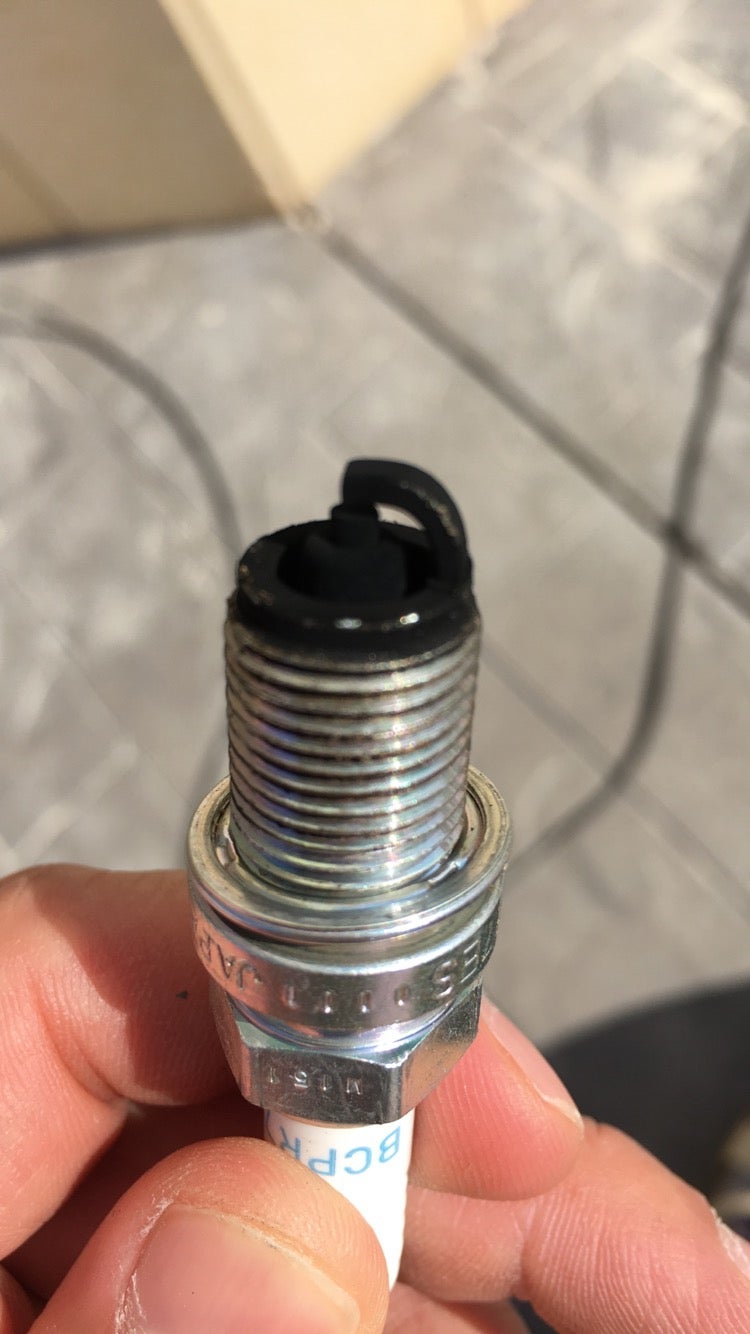

A black spark plug needs a description before it needs a diagnosis. Dry, soft soot around the firing end suggests carbon fouling. A shiny wet coating calls for identifying oil or fuel contamination. A narrow black line down the outside of the upper ceramic is a different pattern again. These observations can lead to different repairs, so the statement that a plug is black is not enough to condemn an injector, coil or engine. Start with where the material is, whether it is dry, and whether one cylinder differs from the rest. Keep the plug uncleaned until those details are recorded.
A dark appearance alone is not a reliable instruction to lean the mixture or install a hotter plug. The purpose of this guide is to help turn a vague color description into a useful diagnostic question. It does not provide a universal fuel adjustment or a cleaning method for every plug design. If the engine is running roughly with a flashing warning light, or there is a fuel leak or overheating warning, stop according to the vehicle's instructions and arrange help. Do not drive hard to burn a deposit away while a potentially damaging fault is present. If the engine runs normally and the plug was found during scheduled maintenance, record that fact too. The absence of a complaint does not make worn parts new, but it changes the urgency and the evidence available.
Photograph the upper insulator and the firing tip separately, label the cylinder and note the part number and mileage. Use neutral lighting so a shadow or oily reflection is not mistaken for the deposit itself. A useful note might say dry powder on the firing nose of cylinder two after repeated cold starts. That is more informative than saying the engine is rich. Keep the original plug alongside the photo when seeking service. Cleaning before the inspection can remove the distinction the technician needs to make. For wet surfaces, consult the separate guides to oil-wet plugs and gas-wet plugs before treating the finding as ordinary soot.

Credit: finntrail.com
How to investigate dry carbon without guessing at parts
Start with the deposit category. DENSO identifies dry, soft black deposits as carbon fouling. That category describes a condition; it does not establish which component caused it. Champion lists rich mixture, weak ignition, an unsuitable cold heat range and repeated short journeys among relevant causes of cold or carbon fouling. Each possibility needs context. A set used mostly for brief starts has a different history from one that darkened soon after a repair on a normally driven vehicle. Record the recent operating pattern without assuming it excuses an ongoing misfire. Repeatedly idling or revving the engine in place is not a controlled repair. Compare cylinders. A uniformly dark set suggests looking at shared conditions such as specification, operating history and fuel control. One markedly different plug suggests a cylinder-specific investigation as well. Neither pattern proves that the matching injector is faulty. Label every plug using the manufacturer's cylinder numbering, which may not follow the order across the engine bay. If the plugs have already been mixed together, tell the technician rather than reconstructing their positions from memory. A wrong cylinder label can send otherwise sensible testing to the wrong location. Check what was installed. Verify the complete plug number against the exact engine and any relevant service update. Similar-looking plugs are not necessarily interchangeable. The decision should account for the application, not just thread fit or the brand printed on the box. If the complaint began after maintenance, inspect the work and the disturbed components before assuming a new unrelated fuel fault. Our guide to misfire after plug replacement explains that branch. Use diagnostic records carefully. Save trouble codes and available freeze-frame information before clearing them.
A misfire code can identify an affected cylinder, but it does not name the failed component. A mixture-related code also requires the appropriate diagnostic procedure. Ask what measurement supports an excessive-fueling conclusion and under what operating condition it was taken. Do not use one scan value from idle as a complete description of every driving condition. A technician should be able to explain which test separates a fuel-control problem from an ignition problem. Do not confuse an electrical path with a cosmetic stain. A distinct track down the outside ceramic needs inspection of the plug and its boot rather than a fuel-mixture adjustment. Keep the evidence intact and avoid scraping the surface to make it look normal. Conversely, an unfamiliar band of discoloration should not automatically be labeled electrical leakage from a photograph. The exact location and condition matter. Understand why fouling can perpetuate a misfire. DENSO explains that carbon on the insulator can provide an unwanted electrical path. This helps explain why correcting the original cause may still leave a plug that needs replacement. It does not mean every black plug must be replaced before diagnosis, or that cleaning always restores it. Ask whether the repair recommendation addresses both the cause and the condition of the affected plug. A brief improvement after replacement is useful information, but recurrence means the investigation is not finished. Avoid an improvised hotter-plug cure. Heat range is an application choice, not an automatic treatment for dark deposits. Changing it to hide a symptom can obscure the original fault and create a different operating risk. Modified engines may need specialist guidance, but that guidance should follow the actual modification and test evidence rather than a guess based on appearance. Keep stock and modified specifications distinct when looking up information.
Cleaning has limits. DENSO warns that brushing thin-electrode plugs can damage them and that adjusting a worn gap does not restore a new electrode's condition. Do not file, sandblast or heat a plug to erase evidence without an applicable approved procedure. A worn or damaged plug is a replacement decision; a dirty but otherwise serviceable plug requires the manufacturer's guidance. Never perform a flame test to distinguish fuel from oil. Ask for a bounded repair plan. An estimate should identify the observed fault, the next test and what its result would justify. It should not jump from a photograph of soot to a complete injector set. If the shop believes the pattern is consistent with operating history and finds no active fault, ask what follow-up is appropriate. If it identifies a verified ignition or fueling issue, ask how the repair will be checked under the original complaint conditions. The best outcome is a documented explanation, not merely a clean-looking replacement. Consider two hypothetical inspections. In the first, every plug has light soot after repeated brief starts, the correct parts are fitted and no active fault is found. In the second, one plug rapidly darkens again after replacement while the same cylinder continues misfiring. The first case calls for interpreting operating history and maintenance findings together. The second calls for targeted testing rather than dismissing the condition as driving style. Neither example identifies the failed component from soot alone. The contrast shows why a recurrence time and a cylinder label can be more valuable than a close-up photograph without context. A sensible record includes the original cylinder pattern, relevant measurements, installed part numbers and any remaining uncertainty. That record is useful if the condition recurs and prevents the next inspection from beginning with the same unsupported assumption.

Credit: www.reddit.com
Decide what to do next from the evidence
If the plug is dry and sooty, confirm the part specification and operating history, then use the symptoms and cylinder pattern to choose fuel or ignition checks. If the surface is wet, identify the contamination before following a carbon-fouling diagnosis. If the mark is on the outside ceramic, inspect the plug and boot as an electrical assembly rather than assuming the combustion mixture caused it. These distinctions are more useful than a rule that every healthy plug must be a particular color. Keep measurements and observations separate from proposed causes when talking to a repairer. For example, state that one plug was dry and black while the others were pale, and provide the saved code, rather than announcing that the injector needs replacement. Ask what evidence would confirm or rule out the proposed repair. Do not buy several categories of parts at once simply because they all appear on a possible-causes list. Changing multiple items can restore operation without revealing which problem actually existed, making recurrence more difficult to understand.
After a repair, confirm that the original starting or running complaint is resolved and follow the shop's recommended recheck. Keep the old parts and diagnosis until that verification is complete. If the engine develops severe rough running, a flashing warning or fuel odor, do not continue a planned observation drive; stop and obtain help. If no malfunction is demonstrated, keep the documented appearance with the maintenance history and continue the specified service schedule. There is no benefit in repeatedly removing plugs to chase an ideal photograph. The goal is correct application, reliable ignition and a diagnosed engine condition. A black plug is useful evidence when its location, texture and history are preserved. It is a poor substitute for those details when used as a one-word explanation for every fuel or ignition fault.


Automotive reference information. Confirm specifications in the manual for your exact vehicle. Original replacement guides link to their research sources. About us


