
A good OBD2 scanner reliably supplies the information you need, labels it clearly and has support you can actually use. It is not necessarily the most expensive tool or the one with the longest list of advertised functions.
Quality depends on whether the complete setup works for the vehicle and task, and whether its results can be interpreted without hiding limitations. This guide provides criteria rather than a ranked shopping list.
No hands-on comparative testing is claimed. Use the criteria to assess documented capabilities and ask better questions before relying on a tool for a repair decision.

Credit: www.linkedin.com
Look for dependable information rather than impressive labels
A reader should make it clear what it queried, what it retrieved and what it could not support. Attractive gauges do not compensate for missing units, ambiguous status or unstable communication. The best evidence is a usable report from a documented application, not a promotional claim that the device diagnoses everything.
Coverage must describe the function
Innova’s coverage checker is an example of a manufacturer route for checking desired functions on a specific vehicle. A make listed on a box is less informative than confirmation of the module and operation. Quality begins with an honest scope statement rather than an assumption of universal support.
The interface should reduce interpretation mistakes
Look for readable code identifiers, status labels and units. A menu should distinguish viewing from commands that change information. A user should not have to guess whether a blank value means unsupported data or a measurement of zero. Clear warnings and cancellation routes matter as much as screen size.
Reliable data matters more than headline speed
A fast update claim is not a guarantee of accurate interpretation. Sampling, selected parameters and connection quality influence the display. The tool should make interruptions or unavailable results visible. A steady stream of poorly labeled numbers can be less useful than a slower, focused record with clear timing and units.

Credit: www.caranddriver.com
Judge quality within the equipment category
A basic reader, phone adapter and workshop platform serve different purposes. Compare each against the job it is meant to do rather than penalizing a simple reader for not being a programming system. Conversely, do not excuse an advanced tool's unclear coverage simply because it has a large screen.
A basic code reader should be clear and consistent
For supported generic work, it should retrieve complete identifiers and explain the available status views. It should preserve or allow recording of useful evidence before clearing.
A limited reader can be a good tool when its scope is explicit. It becomes a poor choice when the seller presents that scope as comprehensive vehicle diagnosis.
A wireless setup depends on both hardware and software
The adapter, phone platform and app must work together. Car Scanner’s adapter guide illustrates why interface selection matters.
Do not judge an adapter solely by a claimed version string or familiar housing. Connection stability, documented platform support and a legitimate support route are practical quality indicators.
Professional functions require professional clarity
Broader coverage can be valuable, but active tests, adaptations and programming need correct prerequisites and procedures. A good platform should make the intended application and consequences clear.
An owner should not choose advanced capability merely to experiment.
The relevant question is whether the required operation is supported and can be performed responsibly.
Use manufacturer examples as evidence, not endorsements
Official product documentation can show how a tool is positioned and supported. It does not prove superiority over every competitor. Compare exact models and actual functions. A brand may offer both simple readers and specialized equipment, so a reputation cannot replace the model-specific specification.
A defined basic-reader role is useful
The Foxwell NT301 product page identifies it as an OBDII/EOBD code reader and supplies model documentation. That clear category helps frame expectations. It should not be promoted as an all-purpose replacement for every module-specific diagnostic platform merely because it is a recognizable product.
Documented software support adds practical value
OBDLink’s firmware guidance distinguishes update methods by adapter model. That kind of specific support is more useful than a vague claim of lifetime updates. The owner needs to know the supported host, process and recovery route for the actual device, not merely that some product in the range receives software.
Function lookups should be precise enough to act on
A coverage tool is valuable when it lets the buyer identify the vehicle and intended operation. If the result is broad or ambiguous, ask the manufacturer for clarification. Keep the response. A useful answer acknowledges exclusions and software requirements rather than replacing them with an assurance that the tool works on most cars.
Assess how the tool improves decisions
The benefit of a scanner is better evidence for a next step. It can preserve a fault history or identify a missing test. It should not encourage automatic parts replacement or repeated erasure. Judge quality by how well the tool supports that reasoning, not by how often it displays a green status.
Early information is useful only when interpreted correctly
A retrieved record may help investigate a developing or intermittent concern. It does not predict every future failure. A no-code result cannot replace routine inspection or a response to an actual symptom. Avoid marketing claims that turn a limited electronic check into a guarantee against breakdowns.
Savings depend on the decisions that follow
A reader can reduce wasted effort if it leads to the right test. It can increase cost if an owner replaces parts based on a short description. FTC repair guidance supports asking for clear explanations of proposed work. A quality report helps that discussion; it does not eliminate the need for diagnosis.
Reading data does not improve performance by itself
A scanner does not create power or economy merely by being connected. A verified repair can restore intended operation, but that result belongs to the repair. Avoid treating a performance dashboard as a tuning tool or assuming that clearing a warning improves the underlying condition.
Match quality criteria to the user
An occasional owner may value simple navigation and readable reports. A workshop may need broader supported coverage, dependable updates and efficient record handling. Neither user benefits from functions that are difficult to verify or irrelevant to the actual work. Define quality in terms of repeatable useful tasks.
Describe the required evidence
List the information needed rather than a generic desire for the best scanner. Perhaps the task needs code status, a freeze-frame record or a specific supported temperature. Another task may need enhanced module access. A tool cannot be judged against a requirement that has never been stated clearly.
Consider the complete usable setup
A hardware price may exclude an app, vehicle package, subscription or accessory. Do not compare incomplete bundles as if they provide the same capability. Ask what remains available when a paid period ends and whether saved reports remain accessible. Those conditions affect practical quality over the period of ownership.
Reports should remain understandable later
An exported file should identify the vehicle, date, code status and relevant measurement context. A chart without units or a screenshot without the module name may be difficult to use later. Check whether records can be retained and shared in a form the intended repairer can read.
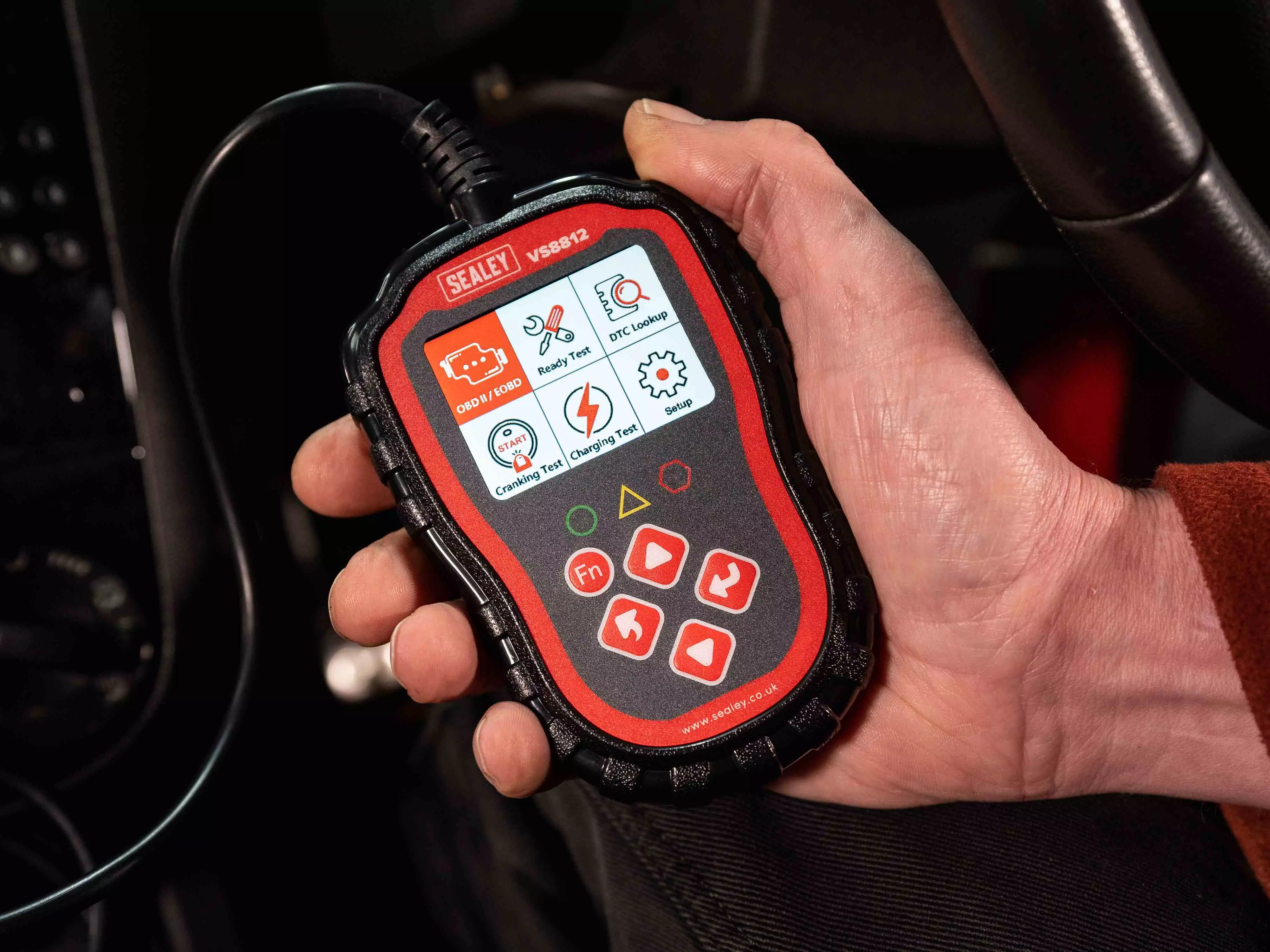
Credit: haynes.com
Recognize weak evidence in buying claims
Unqualified phrases such as all cars, all functions or guaranteed diagnosis should prompt a more specific question. A credible answer identifies supported applications and limitations. User reviews can reveal usability concerns, but they do not establish coverage for another engine, market or software version.
Do not confuse a matching plug with compatibility
OBDLink’s compatibility guidance separates vehicle and market requirements. The physical socket is only one part of the setup. A reader can power up while lacking the desired communication or function. Treat model, software and task confirmation as more important than the fact that the connector fits.
Support should cover the actual model’s life
Check how the manufacturer identifies current versions and handles discontinued products. An old tool can remain useful for supported work, but unsupported future promises should not drive the purchase. Firmware maintenance cannot add missing electronics or repair a damaged lead. Honest limits are a quality signal.
Price alone cannot establish suitability
A cheap tool that answers a modest question reliably may be a good choice. An expensive tool that lacks the required application may be the wrong one. Compare the complete supported function and the cost of professional service for the job. Avoid paying for imagined capability simply because the specification list is long.
Prefer evidence-based recommendations
A recommendation should state the intended user, vehicle scope and functions that justify it. It should also disclose whether the assessment comes from documentation or actual testing. This article uses published manufacturer information to define criteria and does not claim a comparative laboratory or workshop test.
For a beginner, clarity is a major quality
Look for understandable status labels, a straightforward read-and-save workflow and a manual that explains limits. A beginner should be able to stop before an erase or service command. Easy access to support is more useful than hidden advanced functions whose purpose and prerequisites are unclear.
For a professional, workflow and verified scope matter
A workshop needs reliable identification, appropriate module coverage, usable reports and a supported maintenance path. Advanced functions must be tied to the exact application and procedure. The value of breadth is reduced if technicians repeatedly discover exclusions only after accepting a job or connecting the tool.
For value, count useful tasks rather than features
Consider how often the tool will answer a real question and what other equipment or service will still be needed. A reader does not replace pressure tests, mechanical inspection or all electrical diagnosis. Value is the supported work it helps complete accurately over time, not the number of icons on its home screen.
Choose a tool whose limitations are visible
A good scanner provides reliable, interpretable evidence and makes unsupported information clear. Use the buying workflow to turn requirements into a purchase plan.
Use the seller-check guide to assess the supply channel. For a practical first use, see connection verification.
The strongest quality claim is a documented fit for the actual vehicle and task, backed by usable information and support. No device can turn every code into a guaranteed repair without the necessary diagnostic evidence.


Automotive reference information. Confirm specifications in the manual for your exact vehicle. Original replacement guides link to their research sources. About us


