
Spark advance on an OBD2 scanner is a reported ignition-timing parameter, commonly the standard field for cylinder number one. It describes crankshaft degrees before top dead centre (BTDC), the reference position at the top of the piston stroke; it is not a measurement of spark strength, plug condition or ignition-coil health.
The value can change as operating conditions and control decisions change. Before deciding that it is abnormal, identify the exact PID, units and engine state.
A single number at idle is not enough to diagnose an ignition problem, and the presence of the field does not mean the scanner can or should adjust ignition timing.
Identify the standard parameter first
The OBD Auto Doctor parameter reference lists PID 0E as ignition timing advance for cylinder one. A tool may abbreviate that as spark advance or timing advance. Record the full label and identifier when available. Manufacturer-specific timing, knock-related or correction fields can describe different quantities, so do not substitute one for another merely because each uses degrees.
Degrees need a reference
In the standard degrees-BTDC convention, a positive value means the reported spark timing is before top dead centre, zero is at that reference and a negative value means after top dead centre (ATDC). For example, +10 degrees BTDC and -5 degrees BTDC describe opposite sides of the reference; they are illustrative positions, not normal-value recommendations. Check the tool and vehicle information before interpreting a negative sign or a changing value. Do not treat the number as a percentage or compare it directly with a field that represents a correction rather than the reported timing itself. Misidentifying the quantity can create an apparent fault where the comparison is invalid.
Timing is one part of engine control
The controller selects operating strategies in response to multiple conditions. A changing timing value therefore needs context rather than an automatic verdict that a component is unstable. Record speed, load, temperature and the symptom being investigated. Those details help a technician determine whether the observed pattern belongs to normal control behaviour or warrants a specific diagnostic check.
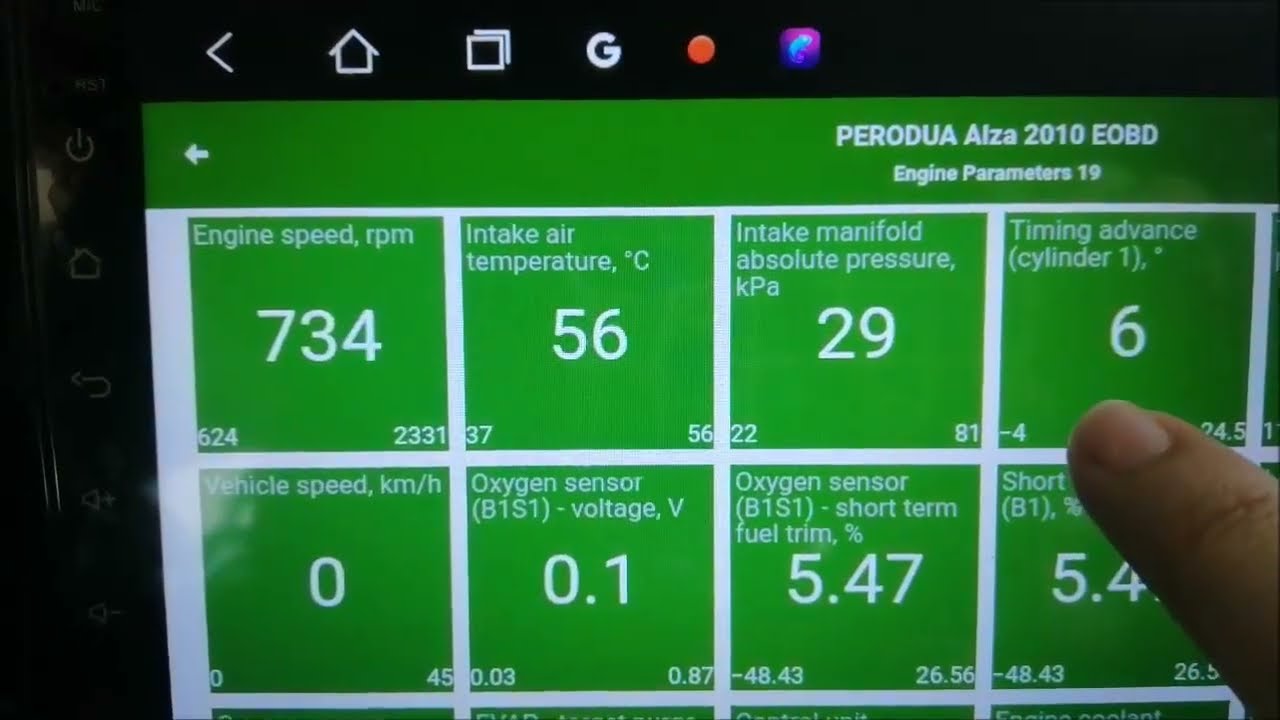
Credit: www.youtube.com
The scanner reports what the controller supplies
The displayed parameter is not an independent oscilloscope measurement of the spark event. It should not be described as direct proof that a plug fired correctly or that combustion occurred. A misfire investigation can require evidence beyond the generic timing field. Keep the difference between commanded or reported control information and confirmed physical operation clear throughout the diagnosis.
Confirm that the display is live and supported
Check that the parameter is available for the vehicle and that the screen is not paused or showing a saved recording. An unsupported, stale or mislabelled value is not a valid diagnostic measurement. If a field disappears when you change vehicles, that can be a support difference rather than evidence that the second vehicle has a failed ignition system.
Use the exact definition rather than a nickname
The Emtron’s J1979 parameter table identifies timing advance in degrees before TDC, supporting this reference convention. The name alone does not supply a normal range for every engine. If the service procedure calls for a manufacturer-specific timing or correction parameter, verify that your tool provides that exact field before using a generic substitute in the comparison.
Operating state changes the question
A cold start, a warm idle and a loaded engine are different conditions. Save the state with each observation. Comparing a value from one condition with an unrelated example from another can produce a misleading conclusion. The first task is to define the test point, not to search for a single timing number that all engines should display.
Load and timing should be interpreted together only with a reason
A diagnostic procedure may use their relationship to investigate a symptom, but a casual graph is not proof of causation. Identify which load field is being displayed and whether both values are updated at comparable times. The LOAD PCT guide explains why calculated and absolute load should not be treated as interchangeable percentages.
Do not infer fuel quality from one timing reading
If a complaint followed refuelling, record that history without declaring the fuel responsible. A reported timing change alone does not establish octane quality, contamination or the source of a noise. Follow the vehicle's fuel requirements and diagnostic process. Avoid adding products or changing fuel strategy solely to chase a timing number toward an internet example.
Temperature context belongs in the log
Record the relevant engine operating temperature and whether the vehicle was fully warmed under the test procedure. Ambient conditions and recent operation can also be useful context when comparing sessions. Do not assume a change between a cold morning and a warm afternoon isolates an ignition defect; several variables may have changed together.
Monitoring is not tuning
Reading a timing parameter does not authorise changing calibration, rotating components or using an app's advanced commands. Modern vehicle control strategies require application-specific service information. A diagnostic reader's purpose in this guide is to preserve evidence. If a repair procedure involves timing verification or adjustment, use that exact procedure and suitable equipment rather than treating a generic PID as an adjustment target.
Reject universal ideal-advance numbers
An isolated range from another engine cannot establish what your vehicle should report. The correct comparison depends on the parameter and specified operating conditions. If no applicable specification is available, say that the reading is unassessed rather than inventing a normal band. That honest limitation prevents unnecessary changes made only to match a number with no valid reference.
Fuel consumption is not explained by this field alone
Poor economy can have multiple causes and needs a broader assessment. A timing reading may contribute to a defined diagnostic test, but it is not a standalone efficiency score. Record the actual consumption complaint and conditions, then use relevant evidence. Do not claim that more advance always means better economy or that any lower value proves an engine problem.
When the vehicle also misfires or makes abnormal noise
Prioritise the symptom and the vehicle's warning instructions. Do not keep an engine operating severely rough merely to gather a longer timing log. Ford’s cited owner-manual guidance is an example of a manufacturer warning that a flashing malfunction indicator can accompany misfire and potential component damage. Use the exact instructions for your own vehicle rather than assuming the same response fits every application.
A misfire requires more than a timing screenshot
Save the complete code report and available freeze frame before clearing anything. Note whether the symptom occurred during the timing capture.
A plausible advance value does not prove that ignition, fuel delivery or compression is satisfactory. Conversely, a surprising value does not independently identify the cause of a misfire.
The next test should distinguish the plausible causes using the appropriate service procedure.
Choose a controlled next step
Check parameter identity and session validity first. Obtain the correct vehicle reference.
Compare the reported value only under the stated conditions.
If the procedure requires equipment beyond the scanner, obtain that equipment or qualified help.
Do not replace a knock sensor, coil or plug simply because it is associated with ignition and the timing field looks unfamiliar.

Credit: mechanics.stackexchange.com
Build a focused recording
Select a small set of parameters that can answer the current question and include timestamps where supported. Keep units and full names in the exported file. A few clearly documented channels can be more useful than a crowded screen whose update timing is unclear. Preserve the original file and add interpretation in a separate note so the evidence remains available for review. Include whether the engine was in the condition specified by the test and whether the complaint was actually present. If the display uses automatic graph scaling, retain a view showing the scale rather than only the trace. A large-looking movement on a tightly scaled graph may represent a modest numerical change, while a broad scale can hide detail. If the tool samples channels sequentially, avoid claiming exact event order from their visual alignment. The recording should support the precision of the conclusion, not encourage a stronger claim than its timing resolution allows.
Use a worked comparison carefully
Imagine a timing screenshot from a cold start and a second from a warmed engine with accessories operating. A difference between them does not isolate a defect because the conditions were not matched. A better comparison would define a safe stationary test condition, record relevant fields and repeat it consistently. This example demonstrates how to control the comparison; it does not predict a universal value or direction of timing change.
Keep the conclusion proportional to the evidence
A useful statement might say that a named timing field changed during a documented symptom under stated conditions and needs further investigation. An unsupported statement would say that the timing number proves a particular part failed. Preserve that distinction when sharing screenshots or seeking repair advice. It allows a technician to use the observation without inheriting an unjustified diagnosis.

Credit: www.reddit.com
What spark advance can tell you
The field can describe part of the engine's reported operating strategy and help reproduce a diagnostic condition. It cannot certify spark quality, identify every misfire cause or supply a universal tuning target.
Confirm the PID and reference, record the conditions and use vehicle-specific information for the next test.
For a broader reading method, see how to interpret OBD2 live data.


Automotive reference information. Confirm specifications in the manual for your exact vehicle. Original replacement guides link to their research sources. About us


