
Some bus steering wheels sit closer to horizontal than the wheel in a passenger car because they are part of a different driving-position and cockpit arrangement. The driver sits relatively upright, and the seat, column, instruments, pedals and entry space must work together. However, bus wheels are not all flat, and many provide substantial adjustment. A photograph of one bus is not a specification for every coach, city bus or school bus.
It also helps to separate three questions that often get mixed together: why the wheel is tilted at that angle, why its diameter may be large, and how much effort the steering system requires. The angle primarily concerns positioning and packaging. Diameter affects leverage at the rim.
Steering assistance and the rest of the mechanism determine much of the effort needed to turn the road wheels. A flatter angle does not itself multiply steering torque. This article explains those distinctions and how to evaluate a driver's position without treating an unfamiliar wheel angle as either a defect or an invitation to modify the steering system.

Credit: www.reddit.com
Flat describes orientation, not one universal bus design
In this question, flat usually means that the plane of the steering wheel looks more horizontal, like a shallow tray, instead of standing more upright in front of the driver. That is different from a flat-bottom wheel whose rim is not fully circular. Changing the orientation of a circular wheel does not change its diameter or turn it into a different steering ratio. Before comparing vehicles, identify which feature you are actually seeing. The observer's camera angle can also exaggerate how horizontal a wheel appears. A bus cockpit should be considered as an assembly rather than as a wheel mounted in isolation. The driver's seat height and fore-and-aft position affect how the hands meet the rim.
The instrument display must remain visible, and the driver's legs need suitable clearance. Access to the driving seat and controls adds another constraint. Different manufacturers and vehicle generations solve those requirements differently, so a single historical explanation is unlikely to describe them all. Volvo Buses: designing the B13R driver workspace provides a useful modern example: it describes an adjustable driver workspace with steering-wheel controls and a neck-tilt feature intended to accommodate driver preferences. The practical lesson is that adjustability and the whole workspace matter more than a rule that buses must have horizontal wheels. That source describes the B13R platform; it should not be used to assert the same adjustment mechanism exists in an unrelated bus. For a particular vehicle, consult its operator information instead of measuring an angle from an online picture.
Why a larger rim and a flatter angle are different ideas
Mechanical leverage comes from the distance between the steering axis and where the driver applies force, together with the direction of that force. OpenStax: torque and lever arm explains this through torque and the perpendicular lever arm. In a simple comparison with the same tangential hand force, a larger wheel radius produces more torque at the steering shaft. Tilting the whole wheel does not increase that radius. This is why saying that a bus wheel is flatter to provide more leverage skips an important distinction. Its diameter and its orientation are separate design choices. As an illustrative calculation only, doubling the radius while keeping the tangential force unchanged doubles the applied torque.
- That is a physics example, not a recommendation to install a larger wheel or an estimate of a particular bus's steering effort. The steering gear, assistance system, tire loading and operating conditions also matter. A bus with an assisted steering system can have a large wheel without requiring the driver to supply all the force at the road wheels. Likewise, a smaller wheel is not automatically unsuitable merely because it looks more like a car's. Changing a wheel's size or column arrangement can affect control reach, clearance and system compatibility, so these are not casual customization decisions. If the actual complaint is heavy steering, have the system checked against its specifications. A different wheel angle cannot be assumed to repair failed assistance, binding or another mechanical problem.
The driver needs reach, visibility and room to operate
A usable seating position allows the driver to control the vehicle without continually reaching away from the seat or crowding the rim. That requirement is more useful than declaring one wheel angle ideal for every person. Drivers differ in height, arm length and preferred supported posture, and buses differ in the adjustment available. Set the seat and steering position using the vehicle's instructions while stationary and secured. Confirm that the instruments can be seen and the normal controls can be reached. A wheel that looks comfortable in a parked photograph may be poorly positioned once the driver needs the full operating range of the controls. Do not adjust the column while the bus is moving or use a position that prevents secure locking.
If a locking mechanism will not hold, report the defect rather than compensating by gripping the wheel differently. The correct operator manual should describe the release control, permitted adjustment and confirmation that the assembly is locked. Volvo Buses: vehicle-specific Driver Guide selects information by vehicle identity, illustrating why the specific bus matters. A generic internet description cannot establish the release method on an unfamiliar vehicle. The same caution applies when a driver changes between fleet vehicles: familiar appearance does not guarantee identical controls. During a handover, ask for instruction on the actual column and seat controls rather than experimenting during a trip. Passenger transport also involves operator procedures and training that a general explanatory article cannot replace.
Do not confuse normal geometry with looseness or a fault
An unfamiliar angle alone is not evidence that a steering column is damaged. Movement in a locked adjustment, unexpected changes in effort, excessive free movement or a new noise are different concerns. Describe the behavior precisely. Does the whole column move relative to the dashboard, does the rim turn before the road wheels respond, or is the wheel simply positioned differently from the last bus you drove? Those observations point toward different checks. Do not tighten an accessible fastener or force an adjustment lever in an attempt to make the wheel resemble a passenger car's. The attachment and locking mechanism require the applicable service information.
- A fleet maintenance team should assess a reported defect before the vehicle returns to service when control or retention is uncertain. Also distinguish the wheel's tilt from its rotational center position. A wheel that is off-center while the vehicle travels straight raises an alignment or steering-position question, not an ergonomic tilt question. Repositioning the tilt adjustment will not correct that. Similarly, a new popping sound should be investigated as a symptom rather than explained away because buses have different wheel angles. The related steering-wheel popping guide explains why sound location and operating conditions matter, although a commercial vehicle still needs its own service procedure. Normal cockpit geometry, an unlocked adjustment and a mechanical steering fault should remain separate categories when reporting a problem.
Questions that clarify a bus steering-wheel comparison
When comparing two buses, begin with the vehicle type and driver workspace rather than assuming one design is better. Is one a city bus and the other a coach? Is the wheel being shown in its driving position or moved to help the driver enter and leave? Is the seat set for the same person? Can the column's tilt and reach be adjusted independently? Those questions can explain an apparent difference without inventing a universal angle specification. Consider wheel diameter separately from orientation, and check the actual equipment before drawing conclusions about steering assistance. A wide rim does not prove the steering is unassisted, and a steeply inclined wheel does not prove the driver has better control.
If you are evaluating a vehicle for work, ask to review the operator information and receive a proper familiarization session. Assess whether you can see the instruments and operate the controls in the documented seating position. Do not treat a short stationary impression as a complete evaluation of fatigue over a shift. That requires the driver's experience, working conditions and a broader ergonomic assessment. If discomfort persists despite correct adjustment, report it through the employer's process rather than improvising a spacer, extension or replacement wheel. Modifications can introduce compatibility and safety issues beyond the original discomfort. A photograph can start a useful question about design, but it cannot establish fit for a particular driver or the condition of the steering system. The strongest comparison uses the exact vehicle's adjustment range, equipment and operating instructions.
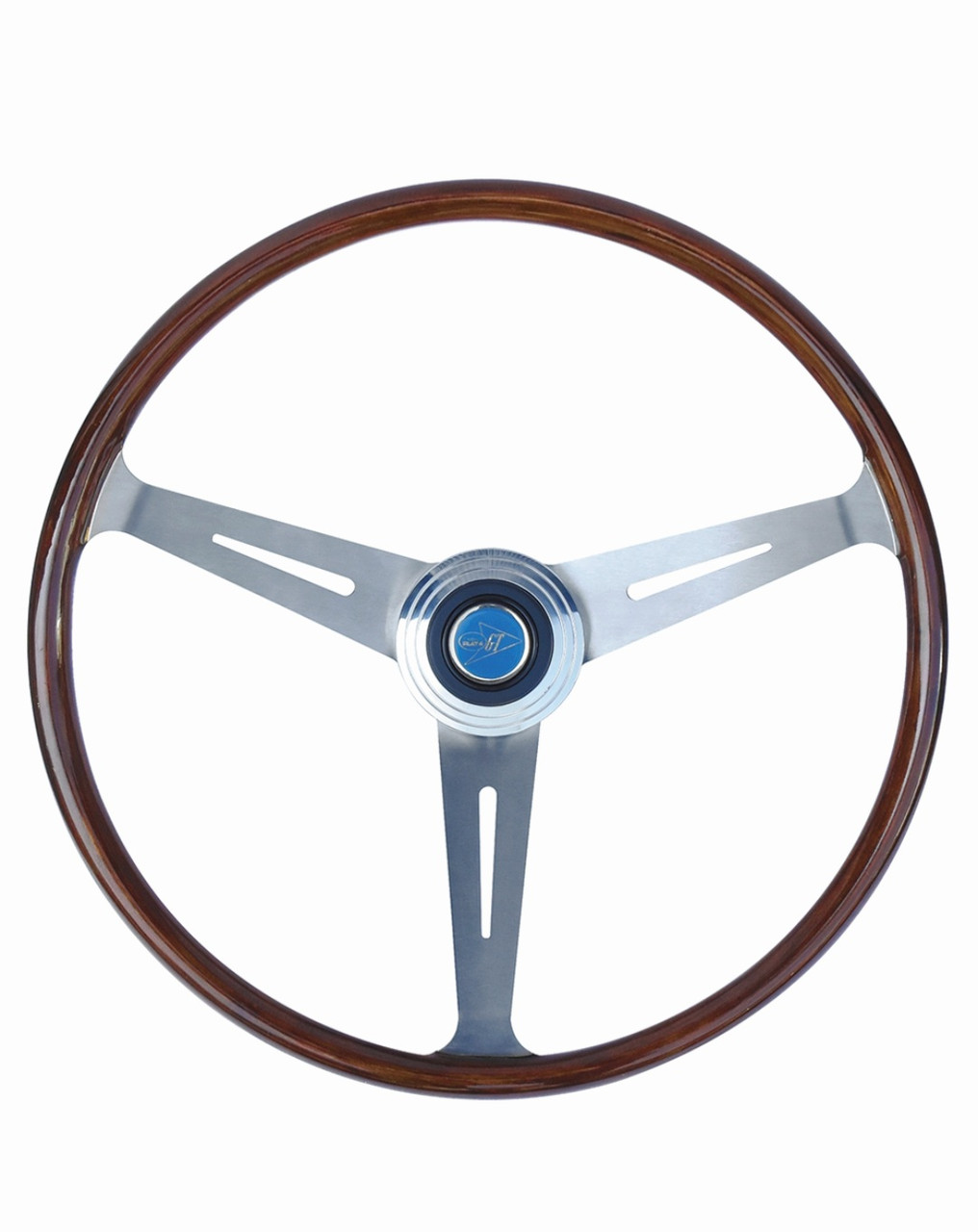
Credit: vwispwest.com
The useful answer is about the complete driving position
A flatter-looking bus wheel is one way to arrange the driver's workspace; it is not a universal requirement for buses and does not create extra leverage merely by being horizontal. Rim size affects the hand's lever arm, while column orientation affects how the driver reaches and uses the wheel within the cockpit. Assistance and steering geometry remain separate parts of the system. Modern adjustable designs reinforce that distinction: the correct position depends on the vehicle and driver, within the maker's permitted settings. If your interest is simply why the wheel looks different from a car's, compare seating and cockpit layout before reaching for a mechanical explanation.
If you are the driver and the position feels wrong, use the documented adjustment and check secure locking before the journey. If there is looseness, binding, unusual effort or an adjustment that will not stay fixed, have the vehicle assessed. Do not try to solve a functional steering problem by changing its appearance. Understanding which dimension is being discussed makes both design comparisons and maintenance reports much more precise.


Automotive reference information. Confirm specifications in the manual for your exact vehicle. Original replacement guides link to their research sources. About us


