
A crooked steering wheel usually means the rim is not centered while the vehicle travels along a straight path. That is different from a car that continually pulls to one side, although both conditions can occur together.
Wheel geometry, steering position and the condition of tires and components need to be considered before choosing a correction. Do not remove the steering wheel or adjust tie rods simply to make the spokes look level.
The useful goal is correct vehicle geometry and predictable steering, not a cosmetic change that hides the original problem.
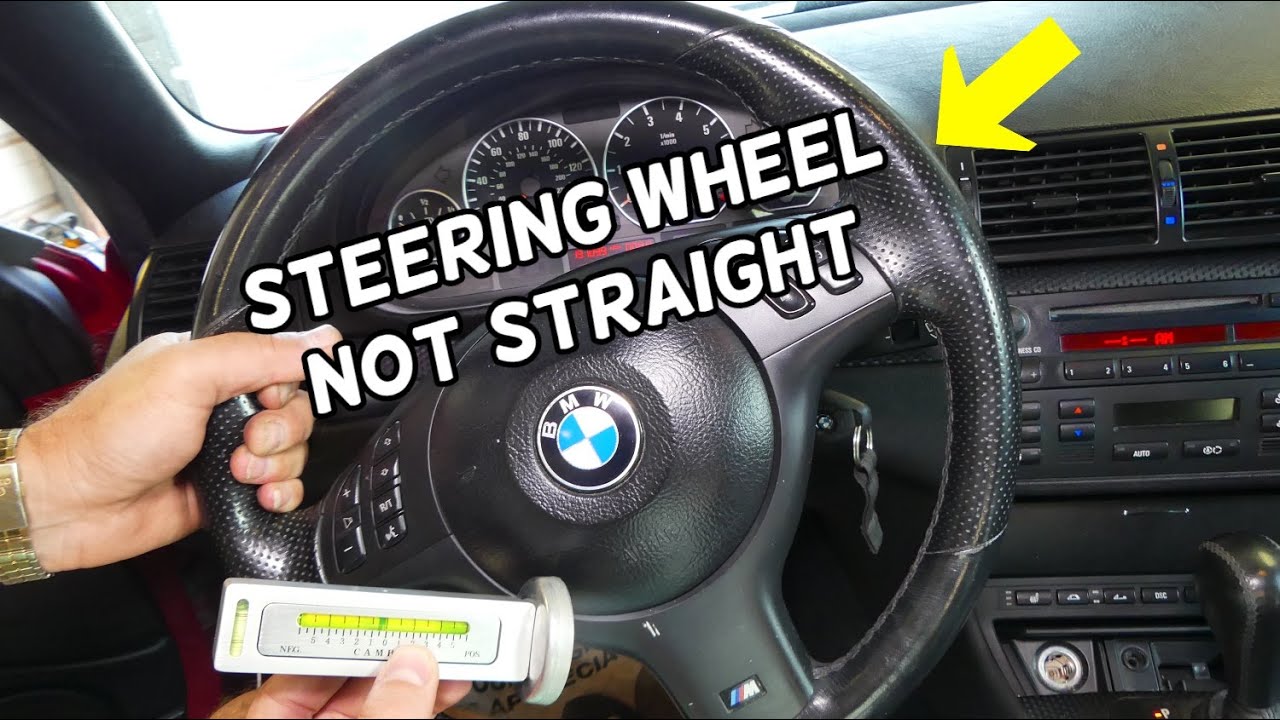
Credit: www.youtube.com
Confirm what you mean by crooked
Describe whether the wheel is angled during ordinary straight travel, only on a particular road, or while parked. A parked photograph does not show whether the road wheels are pointing straight ahead. Keep control during driving and do not release the rim to test the vehicle path. If the condition is severe or handling has changed suddenly, stop safely and arrange inspection rather than continuing to compare roads.
Rim position and vehicle pull are separate observations
A car can travel along a straight path with the rim held at an angle, or require a continuing corrective force to counter a pull. Tell the workshop which condition you observe. Avoid using those terms interchangeably. A repair aimed only at spoke position may not resolve a pull, and correcting a tire-related pull may not establish that steering position and geometry meet the vehicle requirements.
Alignment describes measured geometry
Michelin: alignment and balancing distinctions distinguishes alignment from balancing and identifies an off-center steering wheel as a reason for assessment. An alignment inspection should compare the applicable angles with the vehicle specifications. The fact that the wheel looks crooked does not identify which angle is wrong or which component needs replacement. Ask for the measurements and the explanation rather than requesting a particular adjustment from a generic diagram.
Balancing does not center the steering wheel
Balancing addresses how a tire-and-wheel assembly rotates. It can be relevant to road-speed vibration, but it is not the same operation as setting alignment geometry. If the estimate includes balancing for an angled steering rim, ask which additional symptom supports that service. A vehicle can have both problems. They should still be diagnosed and verified separately instead of treating every tire service as interchangeable.
The correct starting point is a sound vehicle
Before adjustment, a repairer should consider whether damage, looseness or an installation problem prevents meaningful alignment. An angle may change under load if a component is not secure or serviceable. Turning adjusters without addressing that condition can produce an unsatisfactory result. Ask whether the inspection found anything that needs repair before measurements can be relied on. Do not interpret a printed green value as proof that every related component is sound.

Credit: m.youtube.com
Tire condition can complicate the complaint
Incorrect pressure, damage or differences in tire condition may affect how the vehicle responds. Michelin: identifying changed handling describes tire-related changes in steering behavior. Check the specified pressures and report unusual wear or a recent replacement. Do not deliberately alter one side's pressure to make the wheel appear straighter. That changes operating conditions without correcting a verified cause and can make the later inspection more confusing.
Record when the condition began
Did the rim gradually become more angled, change after service, or move suddenly after an impact? The timing helps determine the investigation. Keep invoices for recent tire, steering or suspension work. Do not assume that a crooked wheel on an older vehicle is merely normal aging. A change in position can be worth investigating even when the car still appears to follow a straight path.
A recent alignment needs a return assessment
If the wheel was not straight when you collected the vehicle after alignment, contact the servicing shop with its printout available. Describe whether the original complaint remains or whether this is a new condition. The post-alignment centering guide focuses on that service follow-up. Avoid making your own adjustment before the shop can compare the result with its recorded work.
An impact is a different starting point
After a pothole, curb strike or collision, an off-center rim can accompany tire, wheel or mechanical damage. It should not automatically be booked as a routine adjustment. Tell the repairer about the event and any change in handling.
The post-impact steering guide covers that inspection path. If control is unpredictable, arrange assistance rather than driving to obtain more observations.
Do not reposition the wheel on its shaft
Removing and refitting the wheel to make its spokes level can conceal an unresolved geometry or steering-position problem. It may also involve an airbag and system-specific procedures. Do not pry off the hub cover or disturb electrical connections for a cosmetic correction. A properly scoped repair should establish why the rim is angled and use the manufacturer's method to restore the correct relationship.
Tie-rod adjustment is not a visual shortcut
An internet instruction to turn both tie rods by a guessed amount is not a substitute for alignment measurements. The steering linkage layout, thread arrangements and required settings vary. The tie-rod centering guide explains the distinction between appearance and measured geometry. Ask a qualified repairer to use the appropriate equipment and specifications rather than changing the adjustment by trial and error.
Road conditions can affect what you notice
A sloping or uneven road can influence the steering effort needed to maintain a path. That does not explain every persistent angled rim. Record whether the condition is consistent during normal use rather than trying to find a perfectly flat road yourself. Do not perform a hands-off test. The workshop can evaluate the complaint under suitable conditions and distinguish the driver's observation from a confirmed alignment finding.
Describe effort, position and stability together
Tell the technician whether the wheel is simply angled or whether it also feels heavy, loose or notchy. Mention wandering, pulling, vibration and warning messages. These additional symptoms can change the urgency and inspection scope.
A cosmetic-looking complaint may coexist with a functional fault. Conversely, an angled rim alone does not prove a rack has failed. Keep the observations separate until they have been assessed.

Credit: www.reddit.com
Use the exact vehicle specification
The correct alignment information depends on the vehicle and its configuration. Provide the VIN and mention modified wheels, suspension changes or replacement components. Do not assume a specification for another trim or model year is interchangeable. If the vehicle has been modified, ask the repairer how the applicable requirements will be established. A generic target chosen only to make the wheel look centered is not an adequate explanation.
Electronic steering information may also matter
Some vehicles have system-specific requirements following steering or alignment work. Those requirements should come from the actual service information, not a claim that every car needs the same reset. Ask whether any relevant procedures apply to the installed systems and whether they were completed. Do not use undocumented scan-tool functions or disconnect the battery as a centering experiment. Preserve any warnings for diagnosis.
Read the alignment report as evidence
A before-and-after report can show which measured values changed, but it needs interpretation in the context of the vehicle. Ask the shop to explain the complaint, the adjustments and any values that could not be corrected. The report should not be used as a substitute for checking the final steering position and operation. Keep it with the invoice so a later concern can be compared with actual recorded work.
Ask about limits rather than invented universal angles
There is no universal number of degrees that makes an off-center steering wheel acceptable for every vehicle. The relevant requirements and test conditions belong to the manufacturer and the installed system. Avoid estimating alignment from a phone level placed on the steering spokes. That may describe appearance but does not measure the road-wheel geometry or establish the correct steering relationship.
A repair estimate should name the reason for each item
If the shop recommends parts as well as alignment, ask which findings justify them. A tire replacement, joint repair and steering calibration are different services. Each should connect to an observed or measured condition. Do not approve a full steering assembly solely because the wheel is crooked. Equally, do not refuse a confirmed safety repair just because the original request sounded like a simple adjustment.
Verification should include the original complaint
After the work, the technician should reassess steering position and operation under appropriate conditions. Ask whether pulling, vibration or other symptoms you reported remain. If the rim still appears angled, arrange a follow-up with the repair record available.
Do not compensate by changing tire pressure or grip position. A clear comparison between the initial complaint and the result is more useful than repeatedly purchasing the same service.
What if the wheel was always like that?
A long-standing condition can still deserve inspection, especially if the vehicle's history is unknown. Ask whether the geometry and steering position meet the applicable requirements rather than assuming persistence proves safety. Mention prior collision repairs or modifications if known.
Avoid inventing a history when records are missing. The workshop can document its current findings and identify what further evidence would be needed.
When to stop using the vehicle
Stop safely and obtain help if the angled wheel accompanies sudden loss of predictable control, severe pulling, major vibration, a serious warning or visible impact damage.
There is no general safe mileage that can be assigned from the rim's appearance alone.
If the condition is stable and operation otherwise normal, arrange an inspection based on the vehicle guidance and actual assessment rather than an online assurance.
The correction should restore the relationship, not hide it
A centered steering rim is one result of a correctly assessed and adjusted vehicle. It should not be achieved by concealing a pull, moving the wheel on its shaft or altering tire pressures away from specification.
Begin with an accurate complaint, inspect relevant components, use the correct measurements and verify the result. Keep the alignment report and repair explanation.
Those records make a later change easier to diagnose and help distinguish a returning fault from a new event.


Automotive reference information. Confirm specifications in the manual for your exact vehicle. Original replacement guides link to their research sources. About us


