
Steering free play is movement at the steering wheel before the expected steering response begins. It is different from steering that simply feels light or a vehicle that wanders on the road.
The cause must be located through the steering system, and the acceptable assessment depends on its design and the relevant procedure. Do not tighten a steering-box adjuster or column fastener by guesswork.
A new or pronounced delay, a loose wheel, a knock or unpredictable control needs prompt inspection. Stop safely and arrange assistance if control is affected.
Define the movement you are describing
Explain whether the rim rotates without an apparent response, moves up and down at its mounting, or feels vague while driving. These observations can point to different inspection paths. Do not combine all of them under loose steering. A technician needs to know which movement you noticed and whether it changed suddenly. The description should precede any recommendation for an alignment or replacement assembly.
Light assistance is not necessarily free play
A heavily assisted steering system can require little hand effort without having excessive mechanical lost motion. Conversely, a wheel can feel heavy and still have a worn connection. Describe the delay in response separately from the force needed to turn.
The loose-feeling steering guide covers subjective wandering and lightness. This article focuses on establishing and locating actual unwanted movement.
A stationary observation needs the correct context
Steering-system condition and test setup affect what an observer sees. Tire contact, suspension loading and assistance state can change the apparent response.
Do not compare an improvised driveway observation with a universal number from the internet. Tell the workshop how you noticed the movement.
It should assess the system using the applicable manufacturer procedure and suitable equipment rather than treating every design as identical.
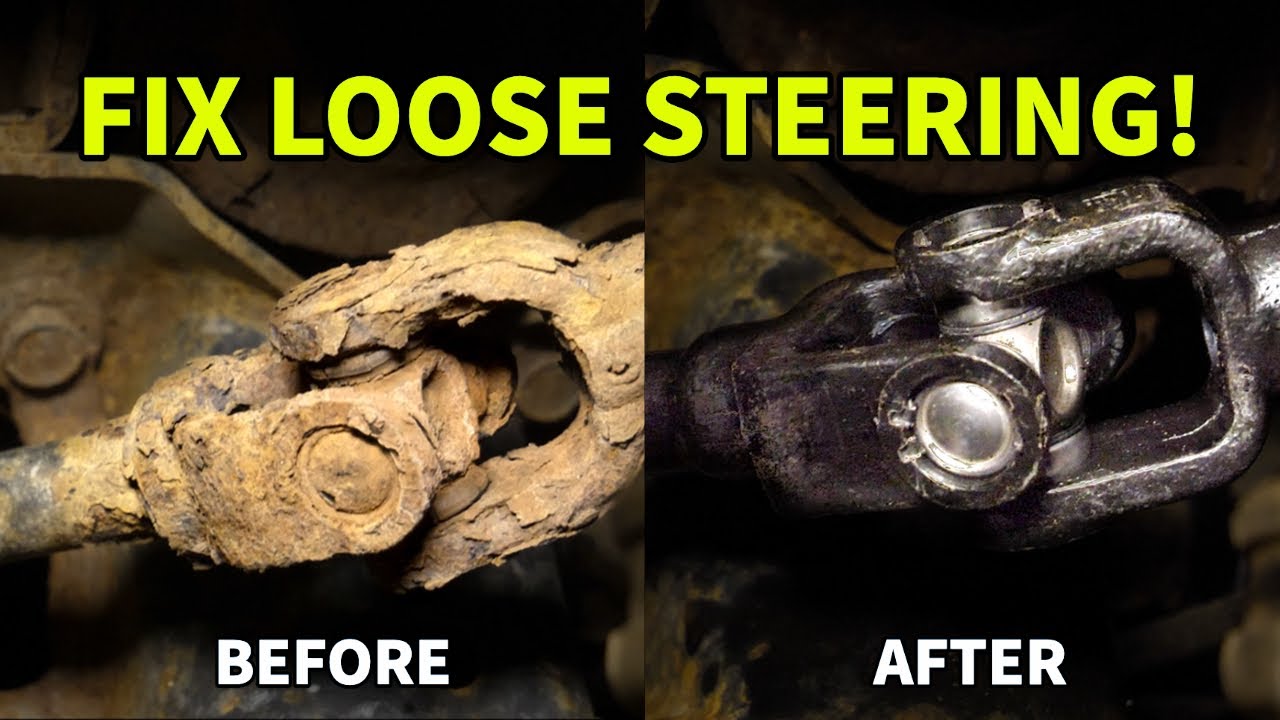
Credit: www.youtube.com
Follow the movement through the system
The diagnostic task is to identify where input motion stops being transmitted normally. A repairer can compare the steering wheel, column connections, steering gear, linkage and road-wheel response under controlled conditions. The first visible movement is not automatically the defective part. Several connections may need examination. A supported finding identifies the location of excess movement and explains how it was distinguished from normal system behavior.
Tie-rod condition is one possible branch
Tie rods transmit steering movement, but free play at the rim does not prove an inner or outer joint has failed. The joint must be inspected using the appropriate method. Do not order both sides from a symptom description alone. If a joint is found defective, the repairer should also address the applicable installation and alignment requirements. Replacing a part without checking the resulting geometry is an incomplete plan.
Ball joints require their own inspection method
A ball joint's role and loading depend on the suspension design. An incorrect lifting or levering method can produce a misleading result. Avoid using a generic wheel-shake test as a final diagnosis. The workshop should compare its findings with the correct limits and condition criteria. If steering control or joint integrity is in question, do not keep driving while waiting for a more obvious sound.
Steering gear security differs from internal wear
Movement of a steering gear at its mounting is not the same finding as wear inside the gear. Both need appropriate assessment, but the repair may differ substantially. Ask the technician to identify which condition was observed.
A statement that the rack is loose should be clarified before authorizing replacement. Mountings, structure and connections belong in the inspection, not just the internal mechanism.
Alignment cannot remove a worn connection
Alignment adjusts geometry within the limits of the installed system. It does not restore material or security to a damaged joint. If excess movement is confirmed, the repairer should determine what needs correction before meaningful final alignment. Do not assume that a green printout resolves a mechanical free-play complaint. The original unwanted motion must be reassessed after the repair.
A crooked rim is another separate observation
An angled steering wheel while traveling straight may require a centering and geometry investigation, even if response is immediate. Mention it, but do not use it as proof of lost motion. The crooked steering-wheel guide explains that distinction. A vehicle can have more than one steering complaint, and the final check should address each rather than treating one correction as a universal solution.
Tire behavior can imitate vague response
Pressure, condition and tire characteristics can affect the way steering feels on the road. Michelin: identifying changed handling discusses tire-related handling changes. Those factors should be considered when the complaint is vague or wandering, but they do not excuse a visibly insecure steering connection. Keep the tire assessment and mechanical inspection connected without allowing one to substitute for the other.

Credit: www.youtube.com
Suspension movement can influence the steering result
The steering linkage operates alongside suspension components that locate the wheels. If a relevant component moves abnormally under load, the vehicle's response can change. MOOG: steering and suspension diagnostic relationships illustrates that loose-feel complaints can involve several steering and suspension elements. Its diagram is a guide to relationships, not proof that every listed component needs replacement on your vehicle.
A bushing should be assessed in context
A rubber bushing may show movement by design. The question is whether its condition and movement meet the applicable requirements, not whether it moves at all. Ask the repairer to explain any deterioration or abnormal displacement it found. Do not use a spray or a photograph alone to determine whether a bushing causes the steering complaint.
Do not confuse ride control with steering clearance
A vehicle that bounces or feels unsettled may require a suspension assessment, but that does not identify the source of a dead zone at the steering rim. Describe ride behavior and steering response separately. A shock or strut replacement should have its own supporting evidence. Combining every handling symptom into one diagnosis can lead to unrelated parts being replaced without locating the actual lost motion.
A moving column deserves specific attention
If the whole wheel or column shifts rather than simply rotating, stop treating it as an ordinary alignment complaint. Check only that any owner-adjustable position lock is used according to the manual, while parked. Do not tighten hidden brackets or dismantle the column. A mounting or adjustment-lock concern should be inspected with the correct service procedure before the vehicle is relied on.
Connection work is safety-critical
Column and shaft connections can have specific fastener, indexing and installation requirements. Do not loosen a coupling to test whether a noise changes. Do not assume a general bolt torque applies. If a repairer identifies a connection fault, ask for the applicable correction and verification. The goal is secure, correctly assembled steering, not merely a reduction in the amount of movement felt by hand.
Avoid adjusting a steering box by feel
Some steering gears have adjustment provisions, but an external screw is not an invitation to remove all perceived play. An unsuitable adjustment can affect operation elsewhere in the steering range. Use the exact service procedure and diagnostic criteria. A generic instruction to tighten until it feels better does not establish that wear has been corrected or that the system remains safe throughout its travel.
Assist-system concerns are a separate diagnostic layer
A hydraulic leak or electric-assist warning can change steering effort, but it does not by itself establish a worn mechanical joint. Identify the installed assistance system before considering fluid checks. Electric systems may have no fluid reservoir to inspect. Record warning messages and changes in effort so the technician can investigate assistance and mechanical movement as appropriate.
Document leakage without identifying fluid by color alone
If you notice a fluid stain, record its location and have it identified. Do not reach near hot components or crawl underneath an unsupported vehicle. A steering-fluid leak, where a hydraulic system is fitted, requires the correct checking and repair procedure. Do not top up an unidentified reservoir or assume that fluid loss explains every loose-feeling steering symptom.
A valid assessment includes the specified test conditions
DVSA: steering inspection methods and play assessment separates steering-gear security, linkage, column condition and steering play in its inspection framework. It also specifies different setups for different checks. This is a UK inspection reference, not a universal adjustment specification for every vehicle. Its useful lesson is that test method matters. Ask the repairer to identify the applicable manufacturer limits rather than borrowing an unrelated threshold.
Keep changes in the service history
Record when the movement first appeared and whether it followed an impact, steering repair or suspension work. Note any accompanying knock, warning or pull. A short timeline helps the workshop choose where to start. Do not conceal a previous home adjustment; tell the technician exactly what was changed so the correct baseline can be restored and inspected.
Routine checks should not become improvised stress tests
Follow the vehicle's maintenance and inspection schedule. If something changes, arrange assessment rather than repeatedly jerking the steering wheel to exaggerate movement. Do not drive hands-off to judge the response.
Safe observations can support a complaint, but forceful experiments may create risk without producing a meaningful measurement. A qualified inspection is the appropriate next step when unwanted movement is suspected.
Ask for the finding and the completion check
A repair estimate should identify the component or connection responsible for the observed excess movement. Ask whether related alignment or system procedures are required afterward.
Once repaired, the original free-play complaint should be reassessed using the correct conditions. Keep the measurements or condition findings where available.
A parts invoice alone does not show that the unwanted motion was located or eliminated.

Credit: www.reddit.com
Do not assign a safe driving distance from the rim movement
There is no universal mileage allowance for unexplained steering play. The risk depends on the actual condition and its effect on control.
If the wheel is insecure, response is unpredictable or the problem has worsened suddenly, stop safely and arrange assistance. If the concern is mild but unexplained, have it inspected rather than relying on an online estimate.
A useful outcome identifies the source of movement, corrects it with the applicable procedure and confirms normal steering operation afterward.


Automotive reference information. Confirm specifications in the manual for your exact vehicle. Original replacement guides link to their research sources. About us


