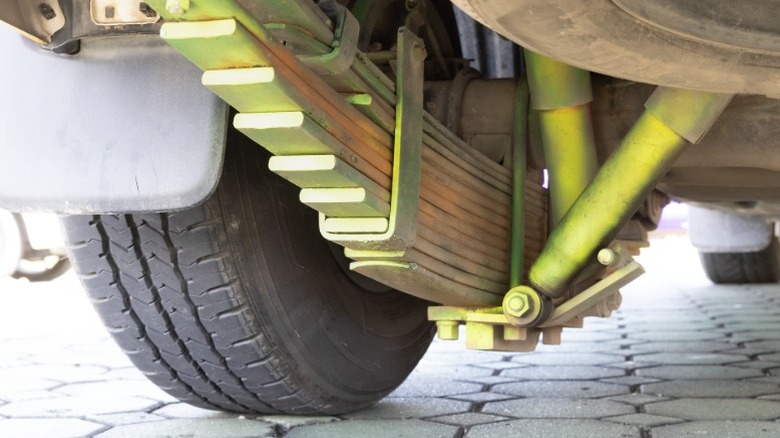

Trucks still use leaf springs because they offer a practical way to support changing loads and, in many layouts, help keep a solid axle located beneath the vehicle. Their continued use reflects the whole suspension package: cost, space, durability, service needs and the intended work. It does not mean every truck requires them.
Some trucks use coils or air suspension, and manufacturers choose different arrangements for different models. Comparing one spring type in isolation misses the links, bushings, dampers and structure that make the complete system work.
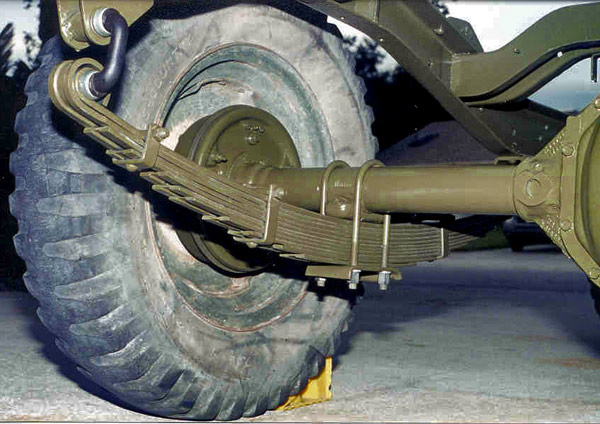
Credit: en.wikipedia.org
One assembly can perform several jobs
In a conventional longitudinal leaf-spring rear suspension, the spring bends as the axle moves and carries load through its attachments to the frame. Its geometry also contributes to controlling axle position. That can reduce the need for a separate collection of locating links.

Credit: www.youtube.com
The arrangement still depends on sound attachments. Spring eyes, shackles, axle clamps and bushings are functional parts of the suspension, not just fittings holding a metal strip in place. Damage in those locations can affect how the truck behaves even when no leaf has visibly snapped.
Spring rate and load are different quantities
Load is the weight the suspension is supporting; spring rate describes how resistance changes with deflection. EATON’s leaf-spring resources distinguish those ideas and emphasize vehicle-specific spring selection. Counting leaves is not enough to identify a truck’s capacity or predict its ride.
Leaf dimensions, material, geometry and how individual leaves come into contact affect behavior. Some arrangements engage additional support as load increases. A design suited to a work truck can therefore behave differently empty and loaded without either condition proving that something is faulty.
What owners gain and what they trade away
A conventional leaf layout can package useful load support into a relatively straightforward assembly with established replacement parts. For a working vehicle, service access and predictable performance under its intended load can matter as much as an empty-bed test drive.
The tradeoffs can include an unloaded ride that feels firm, friction within a multi-leaf pack and compromises associated with a solid axle. Coil and air systems offer other tuning possibilities but also need the surrounding structure and locating arrangement designed for them. No spring type wins every comparison regardless of vehicle use.
Why stronger springs do not create a higher-rated truck
Air Lift states that adding its air springs does not change vehicle weight ratings. The same decision principle matters when considering helpers: reducing visible sag is not evidence that the vehicle can legally or safely carry more than its established limits.
Payload and axle ratings involve more than spring stiffness. Tires, wheels, brakes, axles and the vehicle structure remain part of the system. Follow the certification and loading information for the actual truck, and verify real loaded weights rather than using level bodywork as a loading gauge.
When the question is really about a rough ride
Before changing the suspension, compare tire pressures with the vehicle’s instructions for the load, identify modifications and have worn components checked. A truck that now rides differently from its previous condition needs diagnosis before being dismissed as “just leaf springs.”
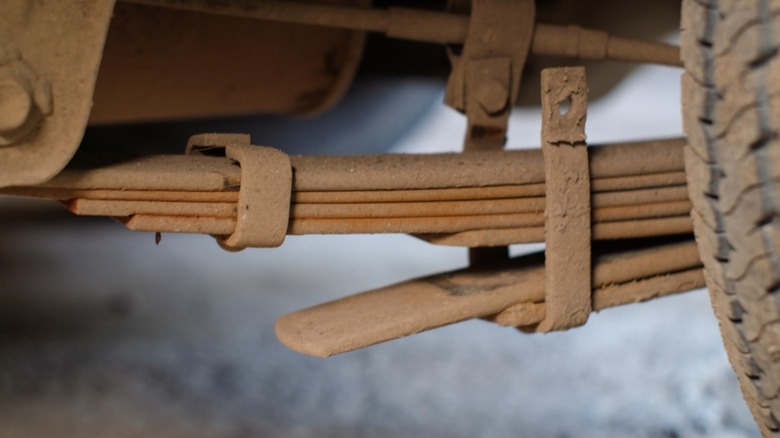
Credit: www.jalopnik.com
If the vehicle leans or bottoms out with a familiar load, check loading against its limits and inspect the suspension. The guides to bad leaf-spring symptoms and leaf-spring squeaks address those separate problems. Select replacements by the correct application, not by a promise that more leaves automatically mean better performance.


Automotive reference information. Confirm specifications in the manual for your exact vehicle. Original replacement guides link to their research sources. About us


