
Copper-free brake pads are better at reducing the copper released by their friction material, but the label alone does not prove shorter stopping distances, longer life or quieter braking. A suitable, validated copper-free formulation can provide the braking performance the vehicle needs. The right purchase combines that application evidence with the environmental benefit. Start with the correct part for your car, then verify its copper designation and intended use instead of treating copper content as a complete quality rating.
“Better” needs a defined comparison. Are you trying to reduce copper entering waterways, replace a compliant original part, reduce wheel dust, or improve braking under a particular load? Those are related purchasing concerns, but they are not the same test. A product can offer a clear reduction in copper content without evidence that it outperforms every competing pad on every other measure. Separating the questions avoids both dismissing a useful reformulation and overpromising its benefits.
This guide uses current public manufacturer information and the named US regulatory sources below. It does not report our own stopping-distance or durability tests. For compatibility, begin with our brake-pad fitment checklist. For the broader composition terms, see what organic brake pads contain. A ceramic or organic description does not, by itself, establish a copper-compliance level.

Credit: www.kirks.com
Why copper content matters in brake wear debris
As friction parts wear, material leaves the working surfaces. Copper from brake formulations can reach roads and subsequently waterways. The EPA Copper-Free Brake Initiative addresses this route of pollution through cooperation with states and the automotive industry. Reducing the copper in the friction material tackles a source of that metal. It does not establish that all brake wear has disappeared or that the remaining dust can be handled without normal precautions.
The environmental benefit has a specific scope
Washington's Department of Ecology identifies copper as harmful to salmon and other aquatic species and explains the connection between brake wear and waterways. This is a reason to favor an appropriate compliant formulation when replacing worn brakes. It is not evidence that a particular owner's car caused a measurable wildlife outcome, or that copper reduction by itself solves all runoff pollution. Keep the benefit tied to the substance being reduced.
The performance question is a separate comparison
A brake manufacturer has to deliver a finished formulation with suitable friction behavior, wear characteristics and compatibility. Removing an ingredient does not automatically improve or weaken those qualities. The relevant evidence concerns the replacement formula, not an imagined pad made by simply omitting copper from the old mix. Ask whether the current product is approved or specified for your application and what testing supports its particular performance claims.
Credit: thebrakereport.com
What manufacturers use instead of copper
There is no single copper substitute shared by all brands. Ferodo describes its Eco-Friction development as combining materials including minerals, fibers, ceramic particles, metal sulphides and graphite types. The roles of the former ingredient are addressed within the new mixture. This is an example of one manufacturer's approach, not a recipe for an unknown product. Different successful formulations can use different solutions.
The practical consequence is that copper-free identifies a material characteristic, not a unique compound. For example, Brembo describes its P85119NX Xtra Ceramic formulation as copper-free with less metal than its Xtra pads. That description differentiates named products; it does not authorize extending the same formulation claim to every pad bearing the brand. Confirm the actual part number and market version before relying on a family-level description.
How to interpret copper-free and Level N markings
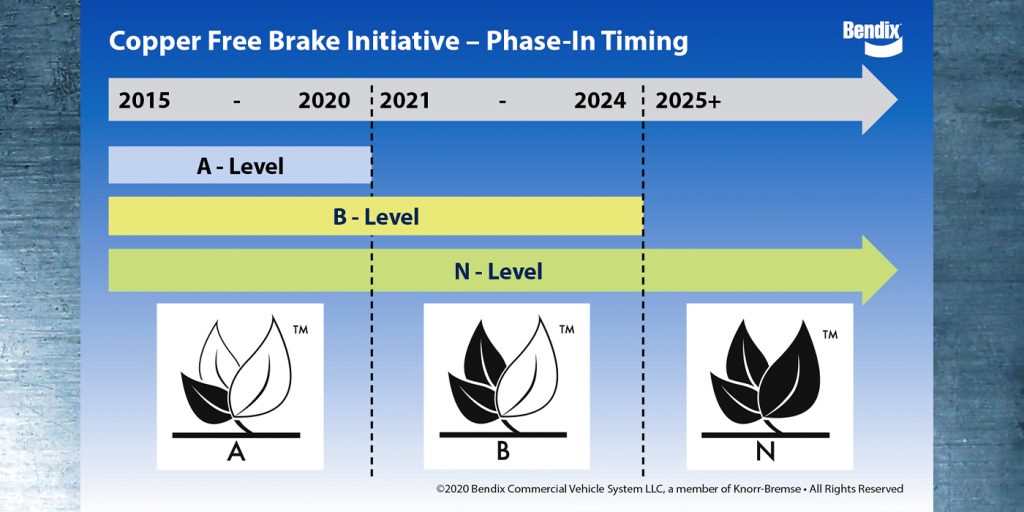
In Washington's published Better Brakes guidance, Level A concerns limits for specified substances, Level B adds a copper threshold below 5% by weight, and Level N meets the final requirements including copper below 0.5%. The guidance identifies a three-leaf symbol for Level N. In this compliance context, a copper-free designation need not mean mathematically zero copper. Read the stated threshold instead of assuming the everyday meaning of the word free.
California's Department of Toxic Substances Control presents its N marking as copper not exceeding 0.5% by weight, together with its A-level substance requirements, effective January 1, 2025. Its wording is not identical to Washington's less-than threshold. The agencies also describe testing and certification requirements. Use the authority relevant to the sale and installation rather than rounding a threshold or turning two state programs into a universal legal rule.

Credit: www.instagram.com
Do copper-free pads stop sooner or last longer?
The designation alone cannot answer either question. Ferodo publishes comparative performance claims for its Eco-Friction products, and Akebono describes performance retention in its own low-copper and copper-free development. These are manufacturer statements about named formulations. They support the existence of engineered alternatives; they do not establish that every copper-free pad outperforms every copper-containing pad on an unidentified vehicle.
When assessing a stopping-distance claim, look for the vehicle, test conditions, comparator and tested product versions. For a life claim, ask what duty cycle and wear measurement were used. A result with one car and one comparison cannot automatically rank an entire category. If the underlying details are unavailable, record the claim as unverified rather than converting its largest advertised improvement into an expected result for your own car.
Noise, dust and price need their own evidence
Less copper does not necessarily mean less visible wheel dust. Dust quantity, appearance and composition are different measures. Similarly, a quiet result depends on the complete brake application, its condition and correct installation. If a listing promises cleaner wheels, ask whether that is a documented characteristic of the specific product. Do not assume it follows from the copper-free wording. Our guide to squeaking new pads explains why noise needs a separate assessment.
Compare installed quotations for equally suitable products. Include the required hardware, inspection and any confirmed corrective work. There is no universal price premium or guaranteed payback period for copper-free pads. A projected saving based on assumed extra mileage is not meaningful unless the life estimate is supported for the relevant use. Buy the required performance and documented compliance first; compare cost after the scope and suitability match.
Which rules apply to a purchase?
Washington and California have specific brake-friction-material requirements, with the final copper stage identified in their guidance for 2025. Details such as production dates, sale restrictions and exemptions matter. A shopper who needs a legal-compliance answer should confirm the exact product with the supplier using the applicable authority's current information. A broadly worded marketplace listing does not replace certification or resolve whether an exception applies.
The EPA initiative is an industry and government agreement, which should be distinguished from a claim that an identical statutory ban applies worldwide. If you are outside the United States, check your own market's requirements and the vehicle manufacturer's approved application. Global brands can sell different product versions, so a photograph of US packaging cannot establish the compliance status of every part offered under a similar name elsewhere.
A purchase checklist that keeps the claims separate
First confirm the vehicle, axle and brake package against the manufacturer's catalog. Second obtain the exact product number and current copper designation. Third check suitability for your operating use. Fourth evaluate any extra claim, such as reduced noise or longer life, against evidence for that product. Record each answer separately. A clear compliance mark cannot fill a missing fitment answer, and a good fitment match cannot prove an unsupported comparative claim.
For example, imagine two correctly fitting pads. One has a documented Level N designation and a clear road-use application; the other says premium ceramic but provides no copper information. You can compare the first product's documented environmental characteristic with an unknown, not with a proven failure by the second. Ask for the missing documentation before deciding. This avoids rewarding vague marketing or unfairly assuming that an incompletely described product is noncompliant.
What to do when replacing an older copper-containing pad
Ask the supplier for the current replacement specified for the car, which may be a reformulated product. Do not insist on matching an obsolete ingredient list if the manufacturer has validated its successor for the application. Bendix's Original Euro announcement is one example of a brand describing a copper-free formulation introduced for a named range. The existence of a newer compound is not itself a reason to reject the correct replacement.
Also separate normal replacement from an unresolved mechanical fault. If the old pads have irregular wear, contamination or signs of overheating, ask the workshop to determine the cause before fitting new ones. Changing to a copper-free formula is not a repair for a sticking component or a leak. The environmental specification and the condition of the brake assembly both matter, but they solve different problems.
Follow the selected product's fitting and initial-use instructions, including any requirements for the mating rotor or paired components. Do not invent a universal bedding sequence from the copper label. Keep the packaging and invoice so later questions can be traced to the installed part. If the actual box differs from the ordered number or its documentation is unclear, resolve that before installation.
For removed parts and collected service waste, follow the workshop's or local authority's disposal requirements. Copper-free does not mean biodegradable, suitable for ordinary compost or safe to scatter. Keep used friction parts and dust out of drains. An environmental improvement in formulation should be accompanied by appropriate handling, without claiming that the new label eliminates every environmental concern associated with braking.
Choosing a suitable copper-free pad
For a car that needs replacement pads, a documented copper-free or compliant low-copper product is a sensible option when it matches the required application and use. Its clear advantage is reduced copper content in the wear material. Judge stopping behavior, noise, durability and total cost using product-specific evidence and a properly inspected brake system. Those checks are more reliable than treating either the presence or absence of copper as a shortcut to overall quality.
Keep the final decision concise: correct part, verified material designation, suitable intended use and traceable supplier. If those are established, the copper-free label provides useful additional information. If they are missing, the label is not enough to make an unidentified pad a safe or better purchase.


Automotive reference information. Confirm specifications in the manual for your exact vehicle. Original replacement guides link to their research sources. About us