
Ordinary pad wear is not enough to diagnose an ABS warning. The anti-lock system and the pad-wear warning system perform different jobs. Worn pads may be present at the same time as an ABS fault, but installing pads without checking that fault can leave the warning and its cause unresolved.
Treat the exact warning and the physical brake condition as two separate inspection questions. This prevents both unnecessary parts replacement and the more serious mistake of assuming that a warning is harmless because the pads still look thick.
Read the complete warning combination
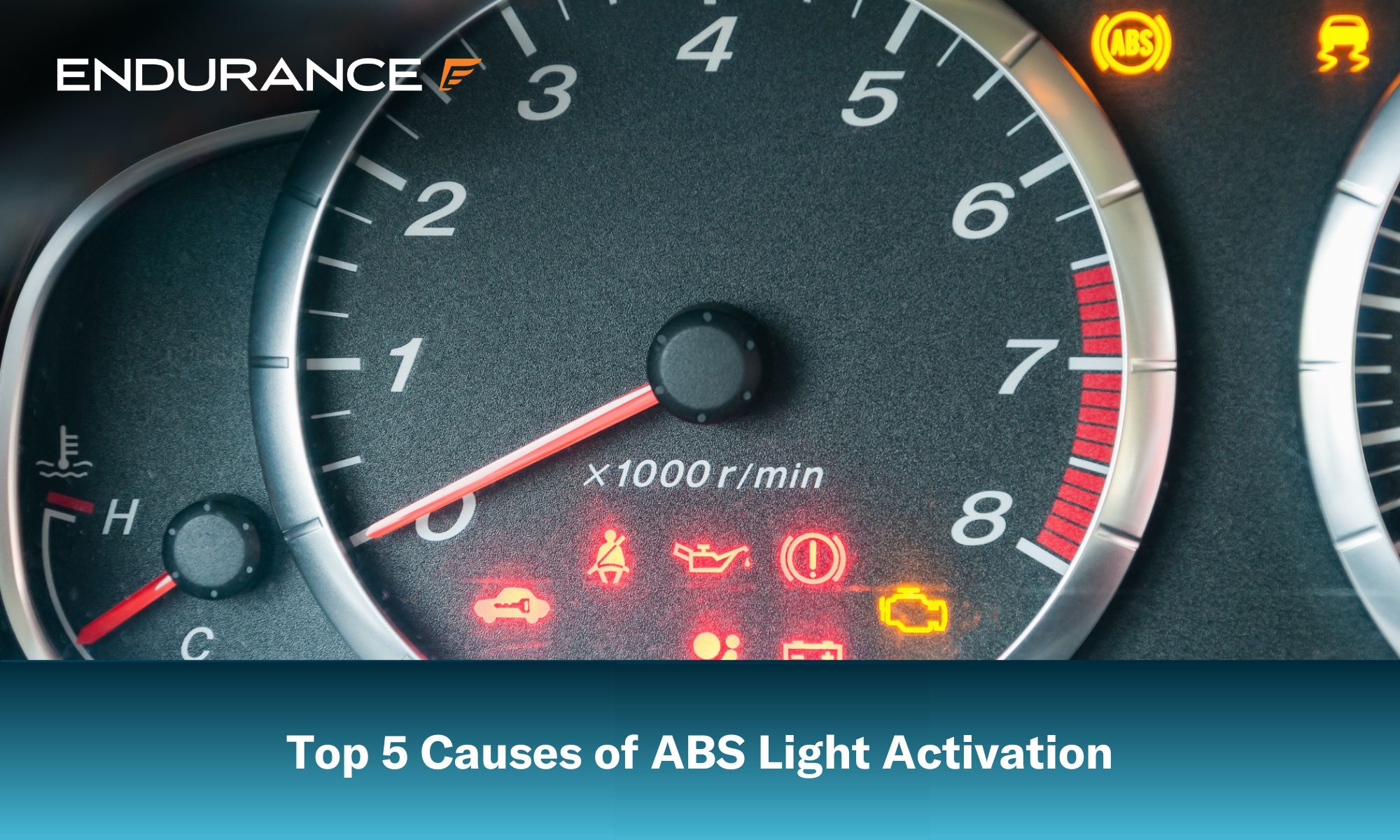
Check which symbol or message remains after the normal startup check. Record whether it is ABS alone, a pad-wear message, a red brake warning or a combination with stability-control warnings. The owner’s manual for the exact vehicle determines the meaning and the response.
For example, Chevrolet’s brake-system guidance distinguishes the ABS indicator from the brake-system warning. Do not generalize an instruction for one lamp to every brake warning. If the pedal changes, braking is reduced, fluid leaks or the vehicle gives an urgent stop instruction, arrange assistance rather than testing its stopping ability in traffic.

Credit: king-racing.com
Pad wear and anti-lock control are different measurements
A pad-wear indicator may be mechanical or electrical. HELLA’s explanation describes audible wear tabs and electrical warning contacts. Those devices should not be confused with the wheel-speed information used by anti-lock control.
The practical consequence is simple: a measured thin pad justifies evaluating friction wear, while an ABS warning calls for evidence from the ABS system. Neither finding automatically explains the other. Some vehicles share messages or related functions, which makes the actual diagnostic information more important than the wording of a generic internet answer.
What can connect the two situations indirectly
Consider the timing. If the warning started after a brake job, the workshop should check the areas disturbed during that work, including relevant wiring and connectors, and confirm the installed components. A new warning after repair is a reason to inspect the repair area, not proof that the replacement pads are defective.
A low-fluid finding also needs its own assessment. Fluid level can change as a brake system wears, but a low level may indicate leakage or another problem. Do not top up the reservoir merely to extinguish a warning and then assume the cause is resolved. Use the specified fluid and inspection procedure.
Ask for ABS-capable diagnostics
A basic engine-code reader may not access the brake control module. Ask which brake-system fault codes are stored, whether they are current, and what tests support the proposed repair. A component name in a code description is a starting point for testing rather than automatic authorization to replace that part.
The technician may need to evaluate signal plausibility, circuit condition or other vehicle-specific checks. There is no universal pad replacement, fuse removal or battery-disconnection procedure that correctly repairs every ABS warning. Clearing the warning without addressing its cause also removes useful diagnostic context.
Inspect the friction brakes separately
Have the inner and outer pads checked, along with rotor condition and signs of uneven wear or drag. A view through the wheel may show only one pad. If one pad is much thinner, the uneven-pad-wear guide explains why the mechanism must be inspected before another set is installed.
Credit: www.endurancewarranty.com

Credit: king-racing.com
Keep the findings on the invoice: actual pad condition, the ABS fault evidence, completed repairs and post-repair verification. That record should show why the work was needed and whether both concerns were resolved. A light going out briefly is not equivalent to a verified repair.


Automotive reference information. Confirm specifications in the manual for your exact vehicle. Original replacement guides link to their research sources. About us


