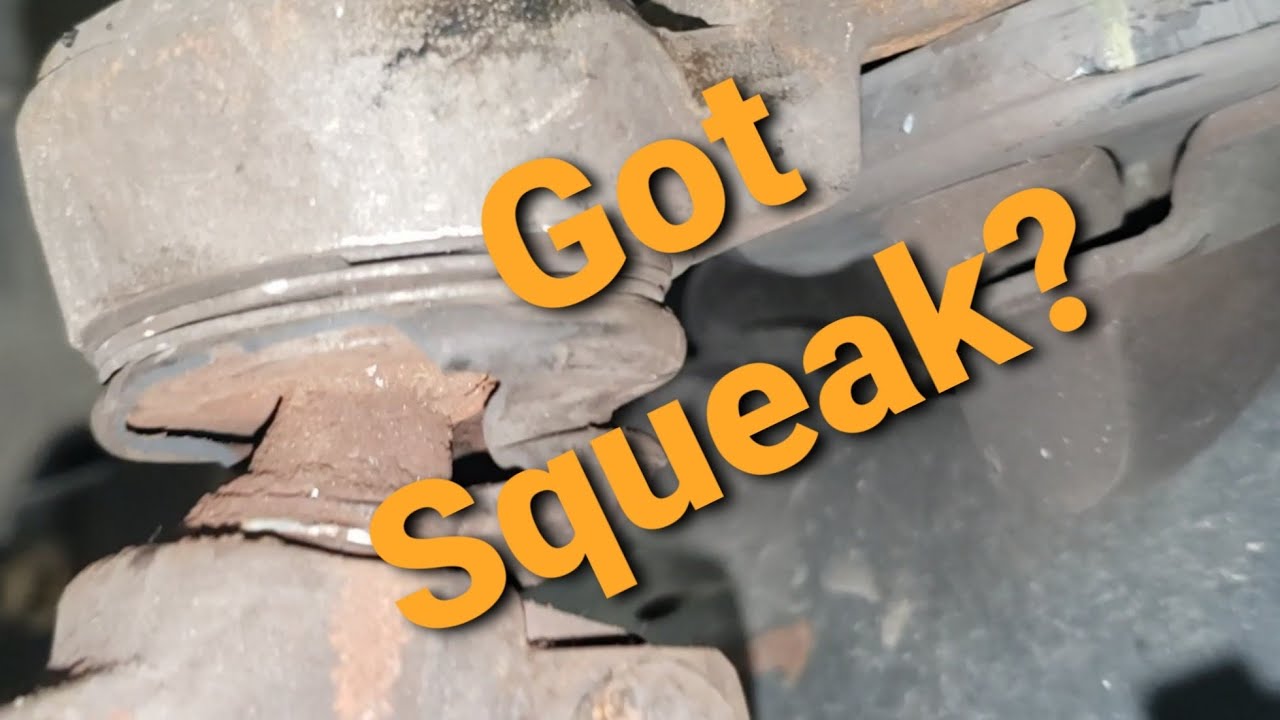

Yes, a ball joint can squeak or creak. That does not make every squeak near a front wheel a ball-joint fault. Bushings, suspension mounts, steering components, brakes and unwanted contact between parts can produce noises in the same area.
A useful diagnosis identifies the component and the movement producing the sound before deciding on repair. Treat the noise as information, not a verdict. Note whether it occurs while steering, crossing a bump, braking or moving the suspension.
If there is a loose steering connection, visible suspension damage, a displaced wheel or a sudden loss of steering control, stop using the vehicle and arrange appropriate assistance. A quieter noise does not establish that the connection is safe, and a louder noise does not measure remaining component life.

Credit: hometowneautorepairandtireofwoodbridge.com
Why a moving suspension joint can make a squeak
A ball joint allows angular movement between suspension components. Its bearing surfaces, protection and lubrication form a designed assembly. Deterioration can affect that assembly, but an external sound recording cannot show the internal condition. MOOG’s ball-joint overview explains the role of the protective boot and the effects of contamination.
That makes boot condition relevant to an inspection without turning a torn boot into proof that it caused a particular noise. A useful primary-source example is Bentley’s front-axle squeaking and creaking bulletin for listed Bentayga applications. It concerns specified 2017–2022 vehicles and discusses assigning the noise to the lower ball joint. The bulletin establishes that this type of joint can be a noise source.
Its application-specific repair instructions should not be transferred to another vehicle, and the existence of the bulletin does not diagnose a different model by similarity of sound. Sound travels through connected metal parts. A noise heard beside the wheel may originate at another point on the suspension or body. The driver’s location inside the cabin changes what is audible.
A phone recording can be helpful for reproducing an intermittent complaint, but it does not reliably identify the exact joint. A technician needs a repeatable condition and a safe way to distinguish nearby moving components. Separate squeaking from the other observations that may accompany it. A clunk describes a different sound characteristic.
Steering stiffness is a functional symptom. Uneven tire wear is a pattern that requires its own interpretation. These observations can strengthen the case for inspection, but adding several nonspecific symptoms together still does not prove that a ball joint needs replacement. Ask which physical finding confirms the recommended repair.
The mechanism behind deterioration is a separate topic from locating the current noise. Our explanation of how ball joints go bad covers contamination, protection and installation factors. Here the immediate question is whether this joint is actually producing the reported squeak and whether the suspension has a safety defect. Keeping those questions separate helps avoid replacing a noisy-looking part while leaving the true source untouched.
Record the conditions and rule out nearby sources
Start with observations that do not require entering a hazardous area. Record the speed range, road surface, steering movement and whether braking changes the noise. Note whether it happens only after rain, after the vehicle has stood or after a recent repair. These details guide reproduction; none is a unique signature of a failed ball joint. Do not deliberately drive over severe bumps or perform aggressive steering to make a noise louder. Distinguish a squeak during wheel rotation from one during suspension movement. A sound that follows each wheel revolution deserves inspection of rotating and contacting components as well as the suspension. A sound associated with pressing the brake pedal changes the diagnostic starting point. A sound while steering at low speed involves several moving interfaces. Describe the pattern precisely rather than labeling it “the ball joint noise” before the inspection. Check recent work in the area. A disturbed bracket, shield, liner or routed wire may contact a moving part.
A replacement component may have incorrect clearance or an improperly seated protective feature. The timing of a noise after service is relevant evidence, but it does not automatically prove negligence or a defective replacement. Have the actual contact or assembly condition identified and documented. A workshop may use controlled movement and suitable listening equipment to localize the source. The vehicle must be supported and loaded as required for that test. Keep hands away from pinch points and components that can move suddenly. Do not place yourself beneath a vehicle supported only by a jack. A helper turning the wheel does not make an improvised under-vehicle listening position safe. Do not rely on a universal wheel-shaking test to clear every ball joint. MOOG’s inspection bulletin for wear-indicator designs describes why the correct loading and inspection method matter for covered parts. Different designs can require different checks and allowable conditions.
A result obtained with the wrong support arrangement can be misleading. The technician should identify the joint design and apply the relevant procedure before reporting it as serviceable or worn. Ask for a distinction between noise localization and wear measurement. A component may be confirmed as the sound source while the repair decision still depends on its condition and the manufacturer’s guidance. Conversely, a dangerous mounting problem may be found on a joint that did not make the reported squeak. Both findings matter. Repairing the unsafe condition takes priority, but it should not be represented as a guaranteed cure for an unrelated noise. Useful documentation includes the conditions that reproduce the sound, the component where it was localized and the applicable inspection result. Photographs can show boot damage, an insecure mounting or unwanted contact. They cannot show every internal defect. A quotation should explain whether the recommendation is based on confirmed wear, damaged protection, a manufacturer-directed repair or another identifiable finding.
Avoid noise-masking fixes and choose a supported repair
Spraying lubricant around the suspension is not a reliable diagnostic repair. It may reach several surfaces, alter the sound temporarily or contaminate nearby components. A temporary change does not prove which internal interface was responsible. Keep products away from brake friction surfaces and follow compatibility restrictions. Do not puncture a sealed boot, inject an arbitrary fluid or use penetrating oil as a substitute for the joint’s specified lubricant. For a serviceable joint, follow the fitted product’s maintenance instructions. MOOG’s grease guidance applies to the greaseable components and conditions it describes. It is not permission to grease every sealed joint or to use one interval for all vehicles.
Confirm the lubricant, fitting and method for the actual part. If the fitting is blocked, forcing greater pressure without understanding the cause can create another problem. Greasing does not reverse wear or repair a loose mounting. If movement exceeds the applicable limit, a quieter result after lubrication does not restore the lost condition. A damaged boot also needs a supported repair decision rather than a cosmetic coating of grease. Determine whether the manufacturer permits a boot-related service or requires a larger component replacement. Do not assume every joint is independently replaceable within its control arm.
If replacement is recommended, ask how the new part was matched to the vehicle and what else will be inspected. Receiving-component damage, incorrect hardware and clearance problems can undermine a new installation. The repair should address confirmed defects rather than simply exchanging the part named in the initial complaint. Related suspension work may require alignment or other final checks under the vehicle procedure. Verify the complaint after the repair using an appropriate, controlled check. Record whether the original condition can still be reproduced. A different remaining noise should be investigated on its own evidence.
Do not accept repeated parts replacement as the only diagnostic method when the original sound has not been localized. Equally, do not demand a road test when an unresolved safety defect makes driving inappropriate. For an owner, the best next step is usually a clear description of the noise and a suspension inspection, not a home lubricant experiment. Tell the repairer about recent impacts, modifications and service. Ask whether any finding makes the vehicle unsafe to drive and whether recovery is needed. There is no defensible universal mileage allowance for a squeaking ball joint because the sound does not establish its condition. Before approving a repair, ask whether the estimate includes diagnosis, the replacement component, necessary fasteners and the applicable final checks.
An estimate that names a control arm rather than a separate joint may reflect the construction of that vehicle, but the repairer should explain the choice. Keep the inspection findings with the invoice so a later recurrence can be compared with the original complaint. If the noise disappears in wet weather or returns after warming up, report that change rather than assuming the problem has repaired itself. Intermittent symptoms need an accurate history, not increasingly forceful attempts to reproduce them. A quiet joint can still have an important defect, while a squeak may come from a different component entirely. The decision should rest on a localized source, a correct inspection method and a documented repair requirement. That approach gives the owner a reason for the work and a useful standard for checking whether the original complaint was actually resolved.


Automotive reference information. Confirm specifications in the manual for your exact vehicle. Original replacement guides link to their research sources. About us


