
Burnishing, also called bedding-in, conditions the contact between new friction material and its mating surface. Follow the procedure supplied for the installed pads and vehicle. There is no single series of speeds, stops and temperatures that is correct for every road pad, performance compound and brake system.
Before doing any bedding procedure, the mechanical repair must be complete and the brakes must have passed their normal safety checks. Burnishing cannot fix an insecure assembly, a fluid leak, an abnormal pedal or pads that do not fit correctly.

Credit: www.powernationtv.com
Find the instructions for the installed product
Record the pad brand, range and part number, then locate the manufacturer’s instructions for that product. Check whether the vehicle has additional requirements. A generic video or a track guide for another vehicle is not a substitute for this identification.
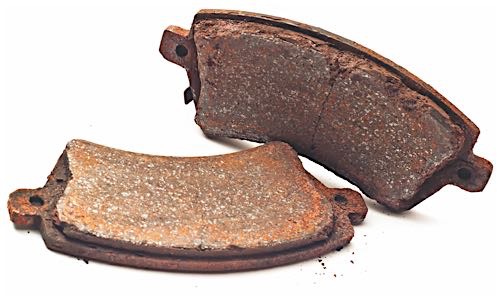
Credit: www.brakeandfrontend.com
Wagner publishes a road-brake burnishing recommendation that emphasizes moderate applications and cooling intervals rather than panic braking. Brembo’s bedding guidance describes a gradual running-in period and warns against severe applications that overheat new friction components. These sources illustrate why context matters; their guidance should not be mixed into a new improvised routine.
Confirm that the brakes are ready for conditioning
Before movement, the repairer should have completed the specified pedal, fluid, fastener, wheel and parking-brake checks. Rotor and pad condition must meet the relevant service criteria. Any relevant fault message or unexpected behavior needs assessment first.
If the vehicle pulls, grinds, leaks or requires abnormal pedal travel after the repair, stop and investigate. Do not perform progressively harder stops to determine whether bedding will cure it. The distinction between a normal running-in process and a mechanical defect must be established before using the vehicle.
Plan a suitable setting
The prescribed procedure needs a lawful, controlled setting with enough space and visibility, without placing other road users at risk. Never carry out repeated unexpected slowdowns in traffic. If the required conditions cannot be arranged safely, ask the installing workshop to perform the appropriate conditioning.
Track-only instructions belong in their specified environment and application. They may require heat levels, speeds or cooling behavior unsuitable for a normal road-brake job. Do not treat an aggressive routine as a more thorough version of ordinary bedding.
Cooling is part of the procedure
Follow the manufacturer’s rest and cooling instructions as carefully as the braking applications. Completing the requested number of stops while omitting the intervals changes the heat input and is not the same procedure. More heat is not automatically better.
Wagner explicitly cautions against heavy-load or high-speed braking that damages new friction material. Brembo likewise warns about overheating during its running-in guidance. These are reasons to follow the actual instructions, not to guess a temperature by the presence of smell or smoke.
Do not use bedding as a cure-all for noise
Some noise after a repair may involve hardware, fitment, contamination or another fault. A bedding instruction does not cancel the need to inspect those possibilities. For a structured distinction, see new brake pads that squeak.
Do not continue a procedure through worsening braking, a new warning or a changed pedal merely to finish a planned cycle. Stop safely and obtain an assessment. The aim is a correctly functioning brake system, not an arbitrary count of applications.
Ask what the workshop has already completed
If a shop installed the pads, ask whether it performed the applicable bedding process and what driving guidance remains. Record the product fitted and retain the instructions. This avoids duplicating a heat cycle unnecessarily or following conflicting advice from several sources.

Credit: www.youtube.com
During the initial use period, monitor the vehicle for abnormal behavior and follow any product-specific limits. A quiet stop alone is not proof that the installation was correct; the inspection and service record remain the basis for accepting the repair.


Automotive reference information. Confirm specifications in the manual for your exact vehicle. Original replacement guides link to their research sources. About us


