
A brake-pad spreader is used to retract a compatible caliper piston so new pads can be installed. It is not suitable for every caliper or every piston mechanism. Confirm the vehicle’s specified retraction method before applying force, especially on rear brakes with integrated parking-brake mechanisms.
A tool that fits into the available space has passed only a clearance check. It has not established that straight compression is the correct action or that the piston is mechanically healthy.
Identify the piston mechanism first
Determine whether the caliper uses a conventional push-back piston, a mechanism requiring a specified rotation procedure or an electronic parking-brake service process. Use the exact vehicle procedure; piston appearance alone is not a reliable guide.
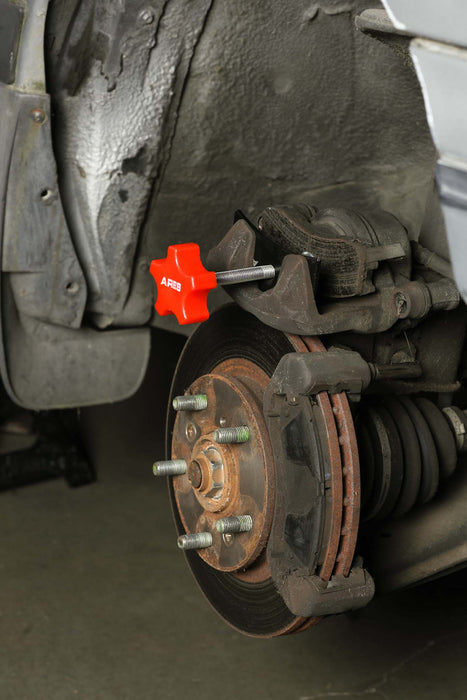
Credit: www.arestool.com
For example, the 2018 F-150 owner’s manual distinguishes a rear-brake maintenance mode from normal parking-brake operation. This illustrates why releasing a switch is not automatically sufficient preparation. It is not a generic instruction for every vehicle with an electric parking brake.
Choose the tool by its intended job
Lisle describes its 24400 disc brake pad spreader as a piston-compression tool for pad installation on many cars and light trucks. The wording is not a claim of universal compatibility or permission to use it on a mechanism that requires another method.
Check the tool’s contact area, opening and clearance against the caliper and its instructions. Multi-piston designs may require a method that controls several pistons together. Do not assume one small screw pushing at one point is appropriate for every assembly.
What size C-clamp is needed?
There is no dependable universal C-clamp size for brake pads. The opening must span the intended contact points, the throat must reach them, and the contact surfaces must apply force squarely without damaging the housing, piston or boot. A nominal clamp size does not describe all of those conditions.
Use a clamp only if the vehicle procedure and tool arrangement permit it. If the clamp is too small, sits crooked or bears on a fragile edge, choose the correct service tool. Do not extend the handle or use extra force to compensate for poor fit.
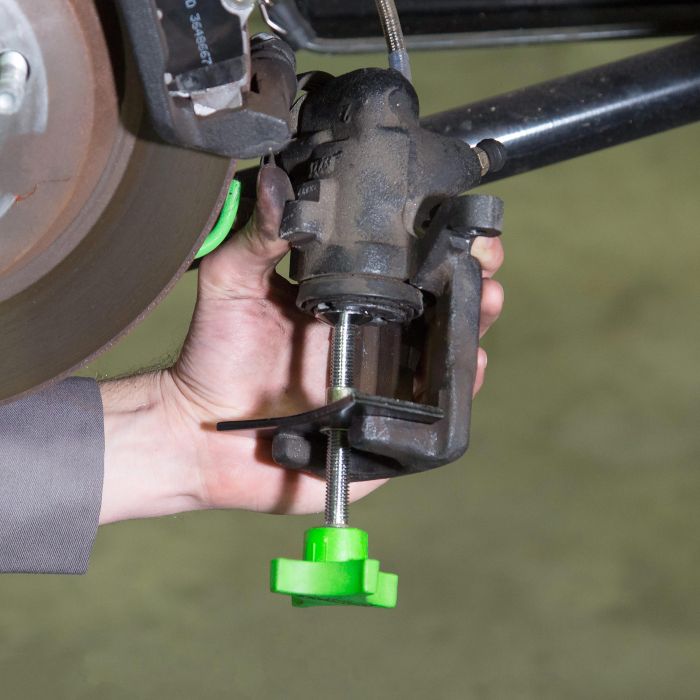
Credit: www.greatnecksaw.com
Prepare the brake according to the service procedure
Secure the vehicle and support the caliper without loading its hose. Establish the required parking-brake and electrical state before putting hands or tools in the assembly. Follow the specified precautions for fluid displacement and reservoir level as the piston retracts.
Do not open a bleeder or clamp a hose as an improvised universal shortcut. If the procedure requires hydraulic work, complete its bleeding and verification requirements. Protect paint and friction surfaces from brake fluid and other contamination.
Keep the force square and stop at resistance
Position the tool at the approved contact points and apply controlled, gradual force according to its instructions. Watch that the tool stays aligned and that boots or other components are not trapped. Do not use an impact wrench on a hand-operated spreader unless its manufacturer specifically permits that use.
If movement is unexpectedly difficult, stop. Recheck the mechanism, service preparation, tool position and component condition. Forcing a reluctant piston can conceal a wrong method or damage a part; successful forced movement does not prove the caliper will release correctly in service.
Finish with functional verification
Remove the tool, complete installation using the specified parts and fastener requirements, and carry out the required brake and parking-brake checks. Verify normal pedal behavior before any road use. Follow applicable running-in instructions only after the mechanical work is confirmed sound.

Credit: www.youtube.com
If the piston will not retract correctly, see the caliper-compression diagnostic guide. The next step is identifying the reason, not selecting an ever-larger clamp.


Automotive reference information. Confirm specifications in the manual for your exact vehicle. Original replacement guides link to their research sources. About us


