
When a brake caliper will not compress during a pad change, do not assume it needs more force. What actually moves is the piston inside the caliper, and its correct retraction method depends on the assembly. Resistance can come from the wrong reset procedure, an incorrectly seated tool, an unreleased parking mechanism, a hydraulic problem or internal damage. The useful first step is to identify which of those conditions the evidence supports. Stop if a tool slips, the boot twists, fluid appears or the piston moves unevenly.
If the vehicle already had a smoking wheel, severe drag or impaired braking, keep it out of service and arrange assessment. This guide is a diagnostic sequence for a refused service operation. It complements our reset-method identification guide and does not replace the exact procedure for your vehicle. No single clamp size, rotation direction or amount of effort can safely cover every brake.

Credit: m.youtube.com
Describe the refusal before choosing a remedy
Record what happened before the caliper was removed. Did the brake operate normally and only resist during installation of thicker pads, or was that wheel already overheating? Was the parking brake applied, released or placed into its prescribed service state? Did the piston start moving and then stop, or never move at all? These observations separate an incomplete setup from a pre-existing release fault. They also help a technician avoid repeating an approach that may already have damaged something.
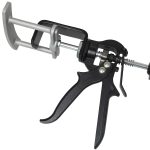
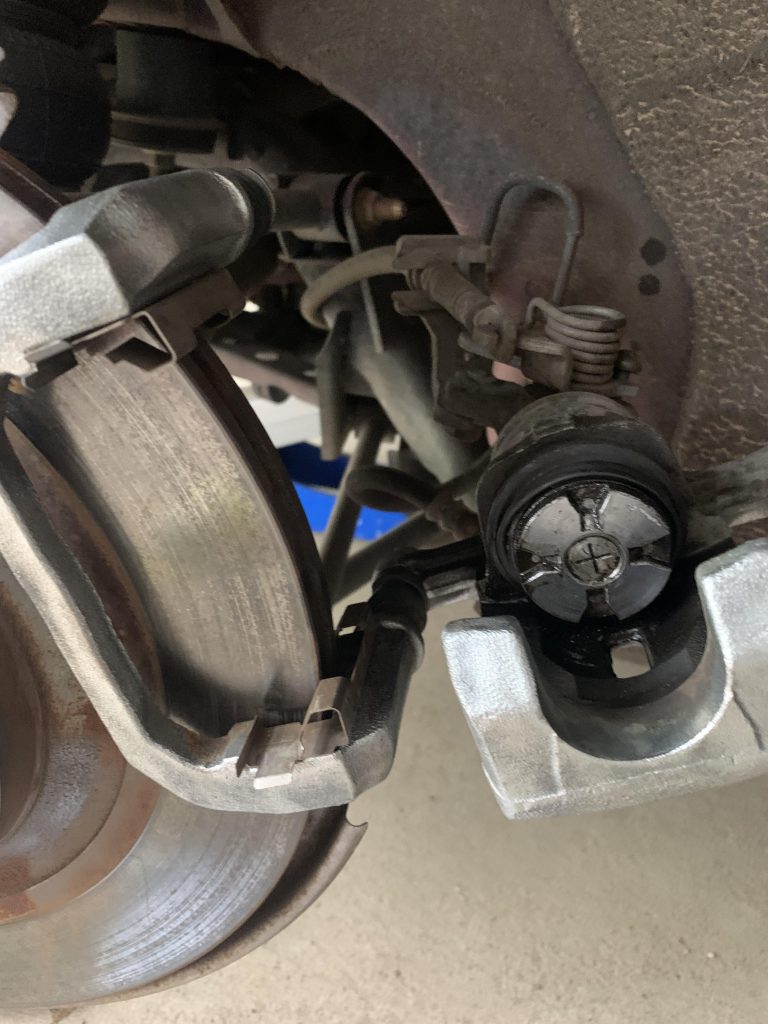
Describe the tool contact as precisely as the symptom. A plate resting on an uneven piston feature or a screw pushing at an angle can make resistance difficult to interpret. Check that the tool is intended for the assembly and is bearing only where permitted. HELLA’s retraction guidance warns about damage from unsuitable levering tools and pliers. A piston resisting an unsuitable tool does not establish that the hydraulic part is seized. Likewise, a tool being sold for brakes does not establish compatibility with every piston face.
Separate the main causes using specific evidence
First confirm the service method. Some pistons retract with controlled straight pressure, while others require rotation or a manufacturer-defined electronic preparation. A rear location alone does not identify the method. Notches in the face are useful observations but should not substitute for the applicable instructions.
If the identification remains uncertain, stop before testing several directions or applying stronger pressure. The service procedure should explain what is meant to move and what must already be released. Next check the parking mechanism. HELLA’s integrated handbrake-caliper information explains why an additional mechanism changes servicing.
Releasing a dashboard switch or cable is not always the complete preparation required for replacement pads. An electronic parking brake may need a supported service mode and later initialization. Do not disconnect the motor and assume the mechanism is ready, or apply external battery power as a generic shortcut.
The absence of a warning lamp is not proof that every mechanical service prerequisite has been completed. Then evaluate alignment without forcing movement. A tool should remain stable and follow the prescribed contact arrangement.
A piston that appears tilted, a distorted boot or a tool that repeatedly walks off centre warrants reassessment. Do not use a longer handle to overpower an unstable setup. If one piston in a multi-piston assembly moves while another does not, use the assembly's specific instructions for controlling their positions.
Do not let an unrestricted piston travel outward while trying to judge a neighbouring one. Consider the hydraulic return path as a separate diagnostic branch. Displaced fluid has to be handled according to the vehicle procedure, including reservoir-level precautions.
A reservoir near its limit requires the specified clean fluid-management method, not an improvised spill. However, changing the reservoir level does not diagnose a blocked return path. Wagner’s inspection checklist includes hose restriction among causes that can resemble caliper trouble.
An exterior hose inspection alone cannot rule out every internal problem. Look at physical condition and history. Corrosion around a damaged protective boot, unexplained wetness, prior overheating or evidence of tool damage can justify a closer internal assessment.
None of those observations should be erased by spraying oil under the boot. A clean exterior also does not prove the piston and seal are sound. Record where the problem appears and distinguish what you can see from what would require disassembly.
That distinction matters when choosing between a supported rebuild and replacement. Finally, consider whether the obstruction is being misidentified. If the piston retracted normally but the caliper still will not fit over the pads, verify the replacement pad and disc specifications, hardware seating and component orientation.
Do not continue compressing a piston simply because another fitment error prevents assembly. The question has changed from a refused piston movement to an assembly-clearance problem. Correctly describing that change can prevent damage to an otherwise serviceable caliper.
Choose the response that matches the finding
The remedy should follow a verified cause rather than a list of increasingly forceful tricks. Completing the correct service preparation may resolve a setup issue without any hydraulic repair. A damaged piston or housing requires a different decision. Retained pressure calls for system diagnosis, while mismatched pads call for fitment correction. Each branch needs its own evidence and a check that the original difficulty is gone for the right reason.
If the available service information or equipment cannot distinguish those branches, stop with the vehicle safely supported and the brake secured. Do not leave a loose caliper hanging on its hose while looking for another tool. Do not operate the pedal with parts removed or pistons unrestrained. A stopped job is easier to recover from than a piston expelled from the housing, a damaged boot or an opened connection that now requires additional hydraulic work.
Do not treat bleeding as an automatic compression cure
Bleeding removes air through a specified procedure; it is not a universal response to a piston that refuses to retract. Opening a bleeder may form part of an approved service method or a controlled diagnostic test, but that does not make venting pressure a repair. If a technician finds that the piston behaves differently after a pressure-related test, the reason still needs investigation. Do not drive with a loose bleeder or repeatedly release fluid to keep a wheel turning. Any opened circuit must receive the required bleeding and leak verification before use. Keep fluid away from friction surfaces and avoid contaminating the reservoir.
Treat fluid at the piston as a separate safety finding
Fresh fluid around the piston or its protective boot requires a leakage assessment. Do not assume it is harmless because the immediate goal is only to fit new pads. Establish whether the fluid came from a recently handled connection, an accidental spill or the caliper itself. Cleaning may help locate a source, but it cannot prove a seal is reliable. A piston that compresses after leaking has not passed a serviceability test. Stop the work if the origin cannot be explained and resolved. Check any affected friction components under their applicable contamination criteria rather than simply wiping them and continuing.
Avoid chemical and force shortcuts
Penetrating oil, general grease and external brake cleaner are not substitutes for a supported hydraulic repair. Their suitability for an exposed metal housing does not establish compatibility with seals or brake fluid. Do not inject them under the boot to see whether resistance changes. Equally, heating the caliper or striking the piston can cause damage without clarifying the diagnosis. Our stuck-piston decision guide explains the limits of trying to obtain movement from a suspect assembly. The target is repeatable safe operation, not one successful inward stroke that hides the fault.
Decide between supported repair and replacement
A rebuild is only an option where the exact assembly has a supported procedure, compatible parts and acceptable component condition. Brembo’s repair-kit guidance distinguishes application-specific repair components. It does not establish that every damaged housing or parking mechanism can be restored. The inspection must account for the piston, sealing surfaces, protective components and any associated mechanism. A new seal cannot correct a damaged mating surface. If the defect exceeds supported repair limits, choose the correct replacement and investigate whether drag or overheating also damaged pads, discs, hoses or fluid. Replacing one item should not leave the original cause elsewhere unresolved.
Verify the finished brake, not just piston movement
After correcting the cause, complete the assembly-specific retraction and installation steps. Confirm that the boot is positioned properly, the replacement friction parts are correct and the guides and hardware are installed as required. Use the specified tightening procedure for each connection.
A piston now sitting farther inward is only an intermediate observation. It does not establish that the finished brake seals under pressure, releases normally or has no trapped air. Complete all required bleeding, fluid checks and parking-system initialization.
Before moving the vehicle, verify the prescribed stationary checks, including pedal behavior, secure assembly and absence of leakage. An abnormal pedal, warning or unexplained wetness means the brake is not ready for a road test. Do not use a drive to bed in a repair that has not passed those initial checks.
If a controlled functional test reveals renewed drag or other abnormal behavior, stop and revisit the diagnosis. Keep a short record of the failed operation and the finding that resolved it.
For example, distinguish an incorrect reset setup from a verified component defect rather than writing only that the piston was freed. That record helps if the symptom returns and gives a workshop useful context.
It also prevents a temporary improvement being mistaken for a completed repair. A clear answer to why the caliper would not compress is more valuable than a stronger tool that made the original question disappear.


Automotive reference information. Confirm specifications in the manual for your exact vehicle. Original replacement guides link to their research sources. About us