
Tie rod ends are articulating connections in the steering linkage. In a common rack-and-pinion arrangement, the linkage transfers movement from the steering rack to the wheel’s steering knuckle. The joints allow that movement to occur while the suspension and steering change position.
They are essential steering components, not optional stabilizers. A worn connection can let the wheel’s direction differ from the intended position. A joint that separates can compromise steering control, so suspected damage needs proper assessment rather than an attempt to drive around it.
Inner and outer describe positions, not interchangeable parts
The outer end is near the steering knuckle. The inner joint is closer to the steering rack and is commonly protected by the rack bellows. Other steering layouts use different linkages, so the exact arrangement should be identified on the vehicle rather than assumed from a generic diagram.
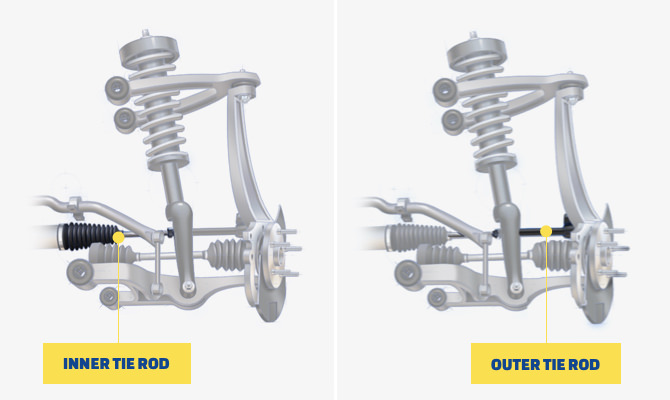
Credit: www.moogparts.com
Delphi separates outer tie rod ends and inner tie rods in its product information. When a workshop says “tie rod,” ask which joint and side it means. That clarification prevents ordering an outer end when the diagnosed play is inside the bellows.
Why a small amount of unwanted movement matters
Steering depends on a predictable relationship between driver input and wheel direction. A loose joint introduces movement that is not part of the intended articulation. It can also make an alignment unstable: setting wheel angles cannot restore a worn joint’s internal condition.
Think of the inspection as checking the link between the steering command and the wheel. The useful question is where unwanted movement occurs, not simply whether the assembly moves at all. Ball-and-socket joints must articulate; they should not be condemned merely because they can change angle.
Symptoms point toward inspection, not a certain diagnosis
Noise, uneven tire wear and an imprecise steering feel can occur with tie rod problems, but those symptoms have other possible causes. MOOG’s symptom guide identifies these warning patterns and the potential seriousness of a failed connection.
Ask the technician to show the movement or damage and name the component. A report saying “front-end play” is less useful than identifying a particular inner socket, outer end, wheel bearing or another steering part. The difference determines what needs repair.
The boot is part of the protection system
Inspecting a tie rod includes looking at the protective boot and its seating. A split or displaced boot deserves attention because the joint’s protection has been compromised. However, the appearance of a boot alone does not measure internal clearance or establish the remaining service life.
A clean-looking boot is not a guarantee that the joint is good. Likewise, greasing a serviceable joint is maintenance, not a way to rebuild worn bearing surfaces. See which tie rod ends can be greased before assuming every joint has the same service requirement.

Credit: www.myride901.com
What a repair decision should include
A useful estimate identifies the failed part, the replacement application, required hardware and alignment work. It should distinguish confirmed wear from a suggestion to replace other components while access is convenient. Ask for that distinction before approving a large steering repair.
For the next step, use the tie rod inspection guide or the replacement planning guide. If steering control is abnormal or a connection is visibly insecure, keep the vehicle out of traffic and arrange professional assistance.


Automotive reference information. Confirm specifications in the manual for your exact vehicle. Original replacement guides link to their research sources. About us


