
When a steering wheel shakes at a particular road speed, the tire-and-wheel assemblies are an important starting point, but imbalance is not the only possible cause. Tire damage, wheel damage and steering or suspension problems can produce similar sensations. The useful first distinction is whether the vibration occurs while cruising, only while braking, or while the vehicle is stationary.
This article focuses on shake that appears with vehicle speed. A new severe vibration, visible tire damage or unstable handling warrants stopping safely and arranging inspection.
Do not accelerate through a vibration to see whether it disappears. A repeatable speed range helps a technician; deliberately reproducing a dangerous condition does not.

Credit: www.youtube.com
Build a speed-related description
Record the speed range already observed during normal driving and where you feel the vibration: steering rim, seat, floor or pedals. Note whether it continues with a steady accelerator position and whether it changes on different road surfaces. Do not use a phone or take notes while driving. A passenger can help record observations when it is safe, or you can write them down afterward.
The location of the sensation is a clue, not a reliable way to identify one wheel. Vibration can travel through the vehicle structure. A shop may need to compare tire condition, wheel condition and the suspension rather than replacing a component based on where the driver feels it.
Why balancing belongs near the beginning of the investigation
Michelin: vibration and shimmy diagnosis identifies tire imbalance as one explanation for vibration or shimmy and recommends further checks when balancing does not resolve it. A balance problem is different from a steering wheel that sits crooked. Balancing addresses the rotating tire-and-wheel assembly; it does not correct every source of vehicle vibration. Tell the technician whether tires were recently installed, repaired or moved to different positions.
- Ask whether the complete assembly was checked and whether there is visible damage or another reason it may not run correctly. Adding weights repeatedly without examining a damaged tire or wheel can miss the actual problem. Keep the previous balance receipt if the symptom returned soon afterward.
Alignment is a different measurement
Wheel alignment concerns wheel geometry rather than the rotating mass distribution of an assembly. Michelin: alignment and balancing distinctions explains that alignment and balancing solve different problems. A vehicle may need one, both or further mechanical inspection. A pull, uneven wear and a steering wheel that is not centered add useful context, but they do not turn every speed-related shake into an alignment fault.
Ask for the reason an alignment is being recommended and whether worn or damaged components need correction first. Adjusting angles cannot repair a loose joint. Likewise, a satisfactory alignment printout does not prove that the tires and wheels are free from imbalance or damage.
Keep braking-related vibration on a separate branch
If the wheel shakes mainly when you press the brake pedal, describe that clearly rather than reporting only highway vibration. The brake system may require a different inspection, even if the same steering rim carries the sensation.
- Note whether the vibration disappears when normal braking ends and whether there is pulling, a warning or altered pedal behavior. Do not perform repeated hard stops to make the symptom more obvious.
- For that pattern, see the braking-vibration guide. If cruising shake and braking shake are both present, report both.
- One repair may not address two separate conditions, and a tire balance should not be treated as a universal brake diagnosis.
Check the tire history and visible condition
Inspect accessible tire surfaces only when the vehicle is safely parked. Look for obvious cuts, bulges, missing tread or an unusual shape, and have concerning damage assessed before further driving. Do not crawl underneath an unsupported car to inspect hidden surfaces. Record tire size and whether matching tires were fitted according to the vehicle requirements.
A recently repaired puncture, long storage period or impact can be relevant to the onset of a vibration. Michelin: identifying changed handling emphasizes that tire condition can change steering response. Appearance alone cannot establish internal integrity, so a tire professional may need to inspect a tire that looks ordinary from the outside.
Steering and suspension condition still matters
A rotating disturbance can be felt more strongly when another component is worn or damaged, but the sensation does not identify which part needs replacement. Tell the workshop about clunks, wandering, uneven tire wear or a recent curb strike.
Ask it to verify joints, mountings and other relevant components using the correct vehicle inspection method. Do not try to judge every joint by shaking a wheel while the car rests on its emergency jack.
Different suspension designs require different loading conditions for meaningful checks. A steering complaint should be investigated as a system, with measured findings recorded before an expensive parts list is approved.
Why a narrow speed band can be useful
A vibration that becomes noticeable over a particular speed range provides a repeatable description for diagnosis. It does not mean that driving above or below that range is a repair. The way a vehicle transmits vibration can make an existing disturbance more noticeable at one speed than another. Tell the technician the observed range without assigning a component to it.
Avoid statements such as every shake at a certain speed means the front wheels are unbalanced. A narrow band can guide a controlled professional evaluation, while tire condition, assembly measurements and mechanical inspection establish the cause. If the car feels unsafe, arrange recovery instead of obtaining a more precise speed reading.
When conventional balancing is not the whole answer
A tire-and-wheel assembly can require further evaluation even after a balancing machine indicates an acceptable result. Audi: application-specific wheel vibration bulletin discusses radial-force variation and imbalance in a defined Audi service context.
- That example shows why a simple balance reading is not the only possible measurement; its model coverage and procedures should not be transferred automatically to other vehicles. Ask a tire specialist whether tire uniformity, wheel runout or mounting condition needs examination for your complaint.
- Do not demand a particular machine result without knowing the applicable specification.
- The valuable outcome is an explanation connecting the measured assembly condition to the vibration, followed by verification that the correction actually helped.
After an impact, do not treat shake as routine maintenance
If the vibration started after a pothole, curb strike or collision, tell the repairer before booking a simple balance. An impact can affect more than a wheel weight.
- Visible tire or wheel damage, a newly crooked steering wheel or altered handling changes the inspection scope. Do not assume that a wheel is sound because it still holds air.
- Record the date of the impact and which side appeared to be involved, while acknowledging that the actual damage location needs inspection.
- The post-impact steering guide covers the separate situation in which straight-ahead steering position has changed.
Recent service provides a useful starting point
A vibration that began immediately after tire work deserves a prompt return to the shop. Bring the invoice and explain whether the symptom was absent beforehand.
- The shop can inspect installation-related details using the vehicle's requirements, including the wheel and tire specification and the appropriate fastener procedure. Do not loosen or tighten wheel fasteners by feel as an experiment.
- If there is any suspicion that a wheel is insecure, avoid driving and arrange inspection. A service-related timeline does not prove negligence, but it gives the technician a focused place to start.
- Ask for the findings and correction in writing so a recurring complaint can be followed logically.
Do not confuse idle vibration with road-speed shake
A vehicle that vibrates while stationary has a different starting point from one that shakes only as road speed rises. Engine operation, mounts and accessories may be relevant to a stationary complaint, but an internet description cannot identify the cause. Note whether the sensation occurs with the vehicle stopped and whether warning messages or rough engine operation accompany it.
- Avoid testing by shifting repeatedly between gears or applying throttle against the brakes. Give the repairer the observed conditions and let it select safe tests. If both stationary and moving vibration exist, record them separately rather than assuming one tire-related repair must resolve everything.
Use the specified tire pressures
Check tire pressures with an appropriate gauge under the conditions specified by the vehicle maker. The placard or manual supplies the relevant recommendation; the sidewall's maximum marking is not a universal target. Record the readings before correcting them so a significant difference can be investigated.
- Do not deliberately overinflate tires to reduce a vibration or make the steering feel sharper. If a tire repeatedly loses pressure, have the cause assessed. A pressure correction may be part of addressing changed handling, but it does not establish that a tire with impact damage is safe or that an unexplained shake has been diagnosed.
Agree on a verification plan
Ask what the workshop found, what it corrected and how it will verify the complaint. A useful repair record distinguishes a balance correction from a damaged tire replacement, wheel repair or suspension work.
- If the vibration is intermittent, explain the original road and temperature conditions. Do not accept a parts replacement as proof of success before the vehicle is reassessed safely.
- Conversely, do not keep repeating a road test when the symptom has become severe. A technician may need to stop and inspect again.
- Keep the original observations available so the result can be compared with the complaint rather than with a vague expectation of improved feel.
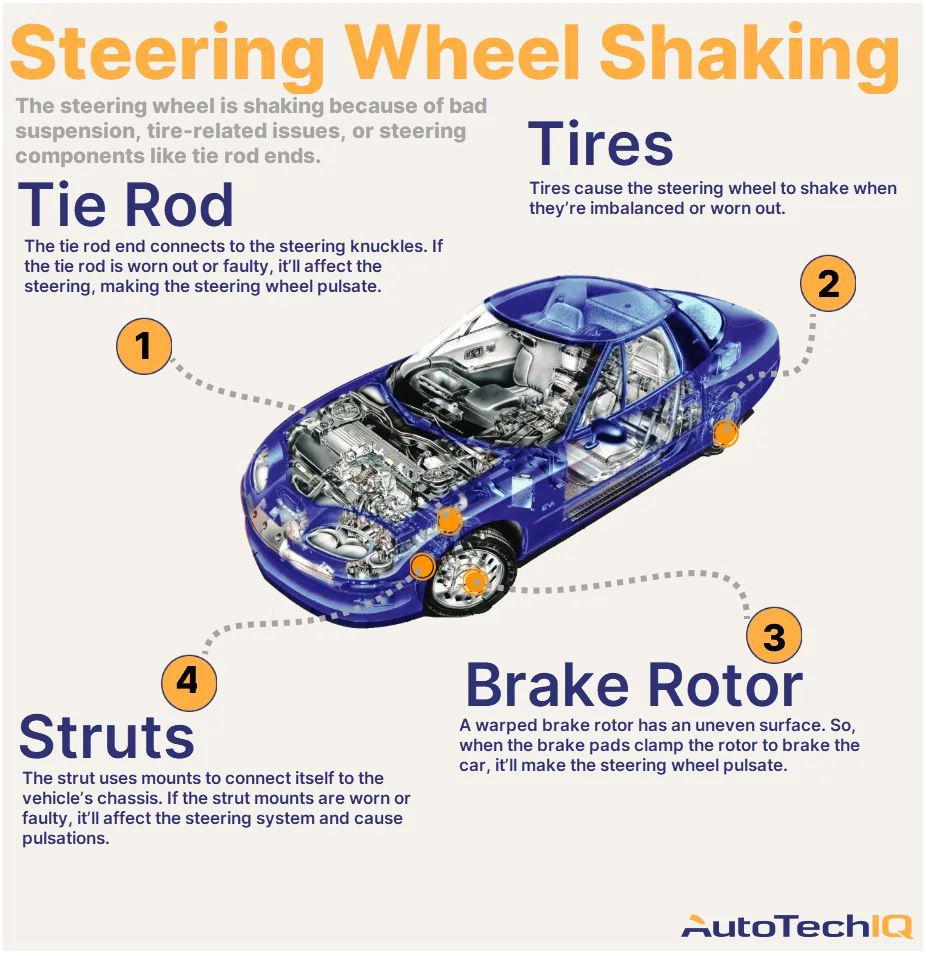
Credit: www.autotechiq.com
The practical next step
For a speed-related steering shake, begin with a safe description and a tire-and-wheel inspection, then follow the evidence. Report braking-only symptoms, impacts, new noises and changes in steering control separately. Avoid buying a rack, pump or set of suspension parts merely because a list of possible causes includes them. The right repair is the one supported by inspection and appropriate measurements.
If a previous balance did not help, provide that history and ask what additional evidence will be collected. Stop using the vehicle if vibration becomes severe or handling is unpredictable. A careful diagnosis should explain both why the original repair was chosen and how normal operation was confirmed afterward.


Automotive reference information. Confirm specifications in the manual for your exact vehicle. Original replacement guides link to their research sources. About us


