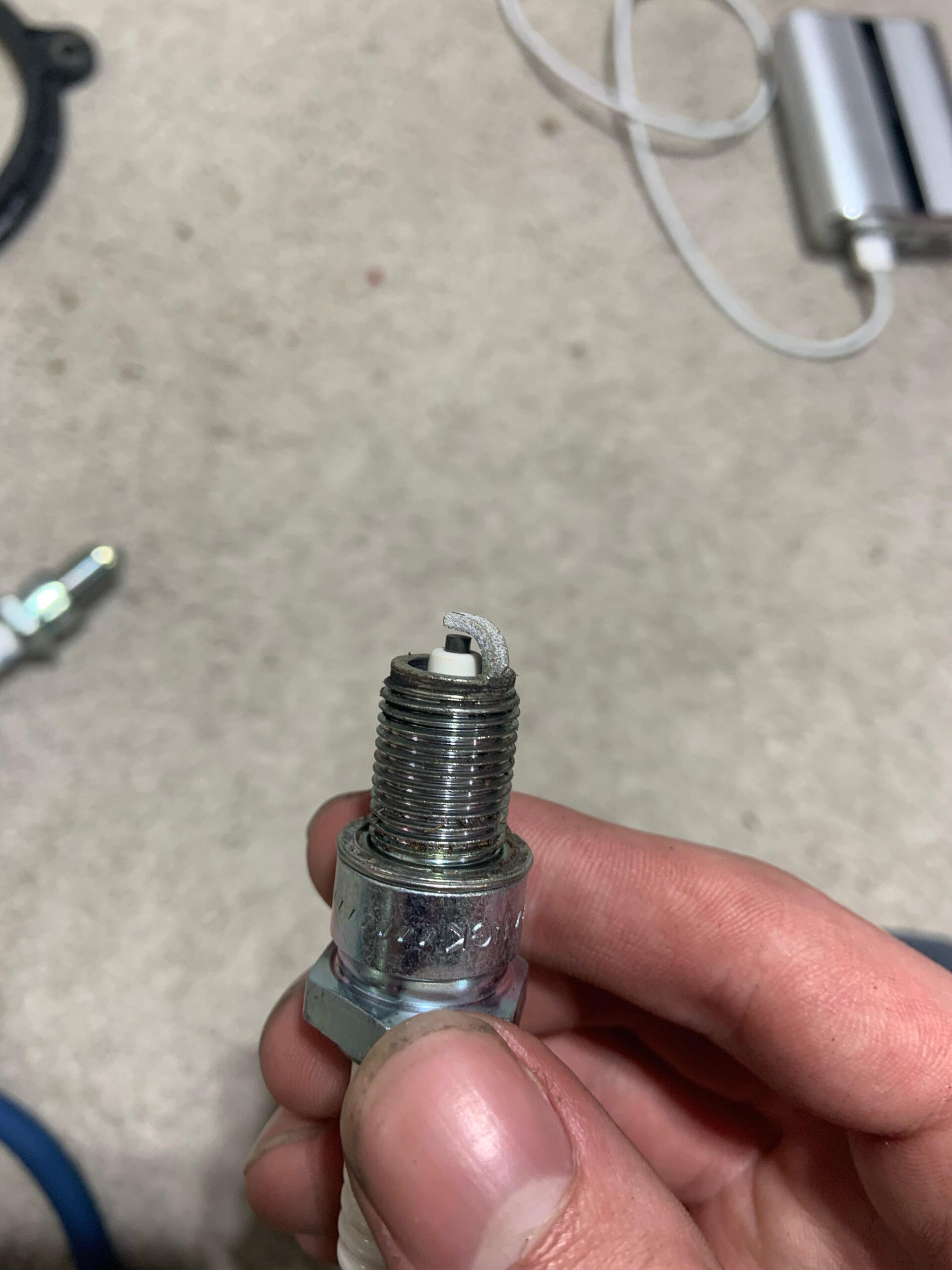

A white spark plug does not automatically mean the engine is running lean. The useful distinction is between a pale, intact firing tip and a scorched insulator accompanied by unusual electrode wear, blistering or melting. A photograph of the ceramic alone cannot identify the cause.
Begin with where the white material is, whether the plug has physical damage, and what the engine was doing before removal. A car with no symptoms and uniformly pale plugs presents a different problem from one that lost power under load and has one damaged electrode.
Do not change fuel injectors, ignition timing or spark-plug heat range solely to produce a preferred color. This guide explains what to record, which findings deserve prompt attention, and how a technician can separate a normal appearance from a fault that needs testing.

Credit: www.reddit.com
Which part of the plug looks white?
The upper ceramic around the terminal is naturally pale and sits outside the combustion chamber. The smaller insulator nose beside the electrodes is exposed to combustion. Calling both areas the tip creates confusion when comparing photographs or asking for repair advice. Photograph the entire plug first, then the firing end in neutral lighting. Avoid judging a wet or brightly lit surface against a dark reference image. Note any coating on the shell, but keep that observation separate from deposits at the electrode gap. If the white appearance is only the clean upper insulator, there may be nothing abnormal to explain. A mark on the outside of the plug also does not establish a combustion temperature problem. Describe the actual location before interpreting its meaning.
Pale deposits can be normal
The DENSO reference catalog notes that unleaded-fuel operation can leave a white or gray insulator base. That makes the familiar rule that every healthy plug must be brown unreliable. Evaluate the plug against its service history and the manufacturer's illustrations rather than a single internet color chart. A plug removed soon after installation has had less time to accumulate deposits than one near its replacement interval. Different cylinders may also show modest variations without identifying a failed component. Record whether the engine starts, idles and accelerates normally. A pale plug with intact electrodes and no supporting symptom is a reason to check context, not an instruction to enrich the mixture or add a fuel treatment.
Texture and damage are more informative than shade
Look for distinct findings: an intact ceramic surface, a deposit that covers it, a cracked nose, and an electrode that has lost material. These are different observations even when they appear similarly white in a phone photograph. Do not scrape the tip before recording it. Scraping destroys evidence and can damage a fine electrode. The DENSO troubleshooting guide associates overheating with an unusually white firing nose and rapid electrode deterioration; melted electrodes require more concern than color alone. That description is a diagnostic lead rather than proof of one failed system. If a piece is missing, preserve the plug and stop treating the job as routine maintenance. The technician needs to consider where the missing material went and whether further engine inspection is appropriate.
Compare the whole set without losing cylinder identity
Lay removed plugs out in labeled positions so that each can be traced back to its cylinder. Use the vehicle's cylinder numbering, which may differ from the order visible across the engine bay. A difference affecting one cylinder directs attention toward that cylinder's fuel delivery, ignition, installation and mechanical condition. Similar findings across every cylinder suggest checking shared conditions, including part selection and operating history.
Neither pattern proves a particular fault. Include the plug part numbers and mileage in the record, not merely a statement that they are new. If access requires removing major components, consider having the inspection performed once by the shop that will diagnose the problem. Repeated removal adds time and creates opportunities to damage connectors or threads without improving the evidence.
Separate a surface coating from heat damage
A dry residue is not the same thing as the ceramic itself being heat damaged. Record whether the deposit is thin and uniform or a heavy accumulation around the electrodes. Also record fuel or oil additives used recently, without assuming the additive caused the appearance.
Product names, amount and timing are more helpful than the word cleaner. There is no dependable home color test that identifies every residue. If substantial deposits recur quickly, a workshop can combine the plug examination with oil-consumption history and other engine checks.
Do not choose an aggressive cleaning method to make an unfamiliar deposit disappear. If a plug is worn, damaged or outside its service interval, replacement with the correct specification addresses that plug; it does not answer why the deposits formed.
When a lean-mixture investigation makes sense
Lean operation becomes a useful diagnostic direction when other evidence supports it: relevant fault codes, measured mixture corrections under documented conditions, or a verified intake or fuel-delivery problem. The NGK technical question guide includes very lean operation among potential overheating contributors. It does not turn white ceramic into a direct air-fuel ratio measurement. A scan result must be interpreted for the particular engine and the operating condition when it was recorded.
A fuel-trim reading during warm idle cannot be assumed to describe mixture under heavy load. Likewise, a code identifies a monitored condition rather than authorizing replacement of the component named in an online explanation. Ask what test would distinguish insufficient fuel from unmetered air before purchasing either injectors or sensors.
Do not compensate by changing the plug specification
The plug's heat range describes its ability to manage heat at the firing end; it is not a general setting for making the engine run cooler. Ordering a different heat range to hide a pale appearance can create a new problem. Confirm the exact engine, any relevant manufacturer updates and the approved replacement part first. Modified engines require guidance appropriate to the modification, not the stock catalog alone or a guessed correction. Record modifications openly when asking for diagnosis. An engine tune, changed boost setting or nonstandard fuel can alter the information a shop needs. If the installed plug is incorrect, return to the specified application through the appropriate service procedure. Do not use the appearance of a replacement after a brief idle as proof that the underlying condition is fixed.
Symptoms that change the urgency
Loss of power, new knocking, a flashing malfunction indicator or an overheating warning matters more than the exact shade of a removed plug. Stop driving when the vehicle's warning instructions require it, and arrange recovery for severe rough running or evidence of damage. Do not perform a hard acceleration test to see whether the plug becomes whiter. Such a test can worsen a problem and rarely provides the controlled information needed for diagnosis. Report when the symptom occurs: cold start, hot restart, climbing, steady cruising or immediately after service. Note whether it began before or after the plug replacement. The sequence helps separate an installation-related fault from a condition that was already present and merely became visible during maintenance.
What a workshop can measure
A useful inspection starts with the documented complaint and the installed components. Depending on the findings, the technician may check recorded codes, fuel delivery, intake integrity, cooling operation or cylinder condition using the vehicle's specified methods. These are possible diagnostic branches, not a list of parts to replace. Request the result and the condition of each test rather than a conclusion based only on plug color. For example, a claim that an injector is restricted should be supported by an appropriate test, not by one pale electrode photograph. If tests are normal, the correct outcome may be documenting the appearance and returning to the normal service schedule. Diagnosis should be allowed to conclude that an observed color has no demonstrated fault behind it.

Credit: www.reddit.com
Cooling problems and installation deserve separate checks
An actual overheating complaint needs cooling-system diagnosis even when spark plugs look unusual. Never open a hot pressurized cooling system to inspect it. Once safe, follow the owner's guidance for checking the indicated levels and obtaining service; do not assume adding coolant resolves the reason it was lost. Plug installation is another distinct issue.
NGK explains that seating and tightening affect heat transfer from the firing end to the cylinder head. A damaged or incorrectly seated plug cannot be corrected by selecting a fuel additive. Installation torque must come from the applicable instructions, with the specified thread condition. Repeatedly tightening an already installed plug by feel is not a diagnostic method and may damage the plug or head.
Useful prevention is specification-based
Keep the maintenance record specific: installed part number, replacement date, mileage and any symptoms found during service. Use the fuel specification required for the vehicle and avoid combining additives to chase a visual result. A car that has no driveability problem does not need repeated plug removal simply because an online image looks different. If plugs are due for service, have their condition documented during that service.
Preserve invoices when a shop has corrected an installation or cooling fault so that future recurrence can be compared with the earlier work. A new symptom deserves attention even if the previous set looked normal. Conversely, an unchanged light color is not by itself evidence that the shop's repair failed.
Credit: www.crvownersclub.com
When to stop home inspection
Seek professional help for broken ceramic, melting, missing electrode material, damaged threads or an unresolved overheating or misfire complaint. A plug stuck during removal introduces a separate extraction problem; do not apply more force merely to complete a color comparison.
Keep the removed parts available and label them. A shop can often make better use of an uncleaned plug and a clear symptom history than a polished part accompanied by an assumed diagnosis.
If the plugs instead have wet deposits, follow the separate guides to oil on spark plugs and gas-wet spark plugs. Those conditions require distinguishing the material and its location before choosing the next test.
A practical decision before replacing parts
First identify the part of the plug that looks white. Next record whether there is actual damage or only a pale surface. Then compare cylinders and match the observations to symptoms, service history and vehicle specifications. If those steps reveal no fault, avoid unnecessary mixture adjustments.
If they reveal abnormal wear or a driveability concern, investigate the system indicated by the evidence. The goal is dependable combustion and a healthy engine, not a particular shade on every plug. Use the linked manufacturer references as diagnostic context, while relying on the exact vehicle's service information for test procedures and installation requirements. A clear record makes that next decision more reliable than a color-based parts recommendation.


Automotive reference information. Confirm specifications in the manual for your exact vehicle. Original replacement guides link to their research sources. About us


