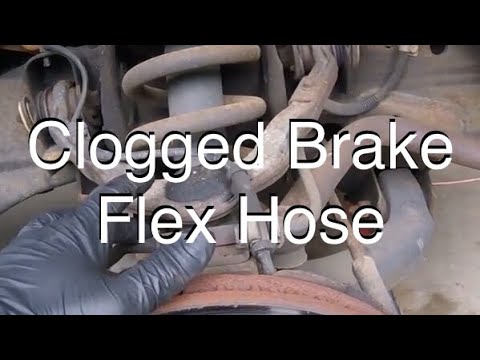

A brake line that seems clogged should not be treated like a blocked household drain. The first decision is whether the braking system contains unsuitable fluid or debris, has a damaged passage, or is simply not releasing pressure correctly. Those conditions require different repairs. Pouring cleaner into the reservoir or forcing air through an assembled system does not establish which one exists. If braking has changed, a wheel is dragging, fluid is leaking, or the pedal is abnormally low, keep the vehicle out of service and arrange recovery rather than driving to see whether it improves. This guide deals with contamination and the scope of a proper hydraulic service. For a wheel that receives little fluid during a repair, see the separate guide to tracing an apparent brake-line restriction. A lack of fluid at one bleeder does not, by itself, prove the metal tube needs cleaning. A closed or obstructed bleeder, a hose defect, a component fault, or an unsuitable bleeding procedure can produce a similar observation. Start by preserving the history. Write down when the symptom started, which work preceded it, and what fluid or chemical may have entered the reservoir. Keep the actual bottle or a photograph of its label for the technician. An uncertain description such as brake oil is less useful than a complete product name and specification. Record whether the vehicle was driven or the brake pedal operated after the suspected mistake, without doing either now simply to gather evidence. There is no universal cleaning recipe in this article because the fluid chemistry, affected components, and manufacturer's recovery procedure matter. A technician needs to distinguish the original fault from damage introduced by an attempted fix. Adding several products before diagnosis can make that job harder and expand the uncertainty. The useful outcome is a documented cause, a justified repair boundary, and verified brake operation, not merely fluid that looks clearer in the reservoir.
Old fluid, contamination and physical restriction are different
Routine fluid renewal deals with fluid that has reached the vehicle's specified service condition or interval. Chemical contamination means something unsuitable has entered the circuit. A physical restriction means a passage cannot transmit fluid normally. These categories can overlap, but a scheduled fluid change is not automatically a repair for all three. Ask the workshop to name the category it has actually confirmed before agreeing to a flush advertised as a complete solution. Fluid selection must follow the vehicle specification, including any additional viscosity or manufacturer requirements. Valeo’s brake-fluid guidance warns against contamination and distinguishes DOT fluids from mineral hydraulic fluids. The fact that two containers both mention hydraulic use is not evidence that they are interchangeable. Likewise, a higher number on a label does not authorize an unlisted fluid conversion. The reservoir marking and current vehicle service information are the starting points. There are legitimate exceptions to simplified statements about brake fluid. HELLA describes LHM+ as a mineral-based fluid for specified hydraulic systems. That does not make mineral fluid suitable for a conventional system designed around a different chemistry. It shows why the diagnosis must begin with the particular vehicle rather than a rule copied from an unrelated model. A product can be correct in one system and contamination in another. Fluid color alone cannot identify an unknown substance or prove that the circuit is safe. A sample can help a technician decide what further investigation is needed, but a visual guess is not a chemical identification. Nor does a clear reservoir establish that the wheel circuits or hydraulic control unit contain the same condition of fluid. Ask what the inspection or test actually measures and what it cannot establish. An internal hose fault is a separate possibility. CRP Automotive explains that internal brake-hose swelling can contribute to drag and pulling. That finding calls for evaluating the hose and related brake operation, not assuming a detergent will restore its structure. Metal tubing, flexible hoses and hydraulic components should be described separately on the diagnosis. Calling all of them brake lines conceals important differences in what can fail and what can be replaced.

Credit: www.youtube.com
Information that changes the contamination assessment
The repairer needs more than a photograph of dark fluid. The exact added substance, approximate amount and sequence of events can change the investigation.
Say whether the container was new, reused or unlabelled. Explain whether the addition happened during a top-up, a component replacement or a previous attempt to cure the symptom.
- If you do not know, report that uncertainty rather than inventing a likely answer. The technician can then avoid building the repair around a false history.

Credit: mossmotoring.com
Separate documented findings from assumptions
| Ask the workshop to distinguish direct observations from conclusions. A damaged seal, an identified wrong product and a sample of unknown fluid are different kinds of evidence. A suspected substance may require further investigation rather than an immediate claim about its identity. |
The repair record should also distinguish what was inspected from components whose condition remains unknown. This helps explain why a recovery procedure may have a broader scope than the visibly affected area. It also creates a useful basis for a second opinion without repeating potentially harmful tests.
Handling the vehicle before the assessment
- Leave the reservoir closed and stop adding products. Do not operate the brakes just to circulate a sample.
- Keep containers upright and retain their labels. Tell the recovery provider that braking may be impaired.
- Explain any wheel that appears locked or has been overheating. Do not touch hot brake components or try to free them by opening a connection.
- If the vehicle is at a workshop, ask that the suspected exposure be recorded before ordinary service begins.
- A clearly communicated contamination concern helps prevent the job from being mistaken for a routine scheduled fluid change.
What a contamination repair plan should establish
A useful workshop plan starts with the vehicle identity, required fluid, reported exposure and observed symptoms. It should explain what is known and what remains uncertain. For example, an identified wrong product poured into the reservoir is stronger evidence than an unexplained dark sample. Neither the amount circulated nor the condition of every seal can be safely inferred from a quick glance at the cap. The technician should use the vehicle manufacturer's contamination guidance to define the necessary inspection and replacement scope. Ask whether the proposed work is routine fluid replacement, diagnosis, or recovery after incompatible-fluid exposure. The estimate should separate those tasks. If rubber-containing components may have been affected, the plan needs to address them explicitly; replacing the fluid does not demonstrate that affected material has regained its original properties. Depending on the vehicle and findings, the relevant circuit can include hoses, seals, the master cylinder, wheel actuators and the hydraulic control assembly. This is a scope discussion, not a universal instruction to replace every listed part. Similarly, retained metal tubing needs a reasoned serviceability decision. Corroded, kinked or otherwise damaged tubing is not made sound by passing liquid through it. Where the manufacturer's procedure permits retaining a component, the shop should follow that procedure and its specified service materials. Where it does not, a cheaper improvised cleaning process is not an equivalent substitute. Ask which components are retained and why, rather than judging the repair only by the volume of fluid consumed. Brake cleaner intended for external parts is not automatically approved for introduction into a hydraulic circuit. Household solvents, fuel, penetrating oil and compressed air are not owner-level substitutes for a documented repair process. They can also obscure the original evidence or introduce another unwanted substance. Do not attempt to push a blockage toward the ABS unit or wheel cylinders. A component that fails an inspection should be repaired or replaced by its approved method, not cleared until some fluid happens to emerge. Completion requires more than filling the reservoir. The estimate should include the correct bleeding procedure, any vehicle-specific electronic service functions, leak checks and functional verification. If air entered a hydraulic control unit, ordinary wheel bleeding may not be the entire procedure. The shop should explain how normal operation was confirmed before the vehicle returns to use. Disposal of removed fluid also belongs in the service plan; it should not be poured onto the ground or into drains.
Questions to ask before approving a brake-line cleaning service
Can a flush remove every kind of contamination? No universal claim is justified. Fluid exchange and recovery from incompatible chemicals are different jobs. Ask whether the proposed procedure is supported for the identified contaminant and the exact vehicle. An estimate that says only clean lines leaves the most important decisions unspecified.
A good explanation identifies the evidence, affected circuit and criteria for retaining or replacing components. Does a stuck brake prove dirty fluid? No. Mechanical binding, a restricted hose and retained pressure elsewhere can resemble one another from the driver's seat.
Our guide to a hose-related sticking caliper explains that distinction. If the linked topic does not match the reported fault, ask for a diagram showing where pressure or movement was abnormal. Replacing unrelated parts based only on a symptom can leave the original problem present. Can I drive after adding the correct fluid to dilute the wrong one?
Do not use dilution or a normal-feeling pedal as permission to drive after suspected contamination. Inform the repairer before the vehicle is moved under its own power. Recovery arrangements should take account of any dragging wheel or other mechanical limitation. The person collecting the vehicle needs that information as well as the address.
What should a written diagnosis include? Request the fluid specification, exposure history, observed condition, tests performed, parts condemned and the reason for each decision. If the cause is still uncertain, the document should say so. A statement such as suspected restriction is different from a component that failed a defined inspection.
That difference helps you understand whether a quoted repair is conclusive or still part of a diagnostic process. How can future contamination be avoided? Keep the reservoir closed except when service requires access. Use only the specified new fluid from an appropriate container and equipment dedicated to that fluid.
Do not reuse a funnel or suction tool that previously held engine oil or another automotive chemical. Label stored fluids clearly and keep their original identification. These are handling precautions, not a replacement for the vehicle's maintenance schedule. What if a recently repaired vehicle develops the same symptom?
Stop using it and give the workshop the original invoice, fluid information and a precise description of the recurrence. Ask whether the first repair addressed a confirmed contaminant or only one symptom. A repeated low pedal, pull or hot wheel deserves a fresh investigation rather than another undocumented flush. The final decision should rest on restored, checked system function and an explained cause, not the promise that every brake problem can be washed out.


Automotive reference information. Confirm specifications in the manual for your exact vehicle. Original replacement guides link to their research sources. About us


