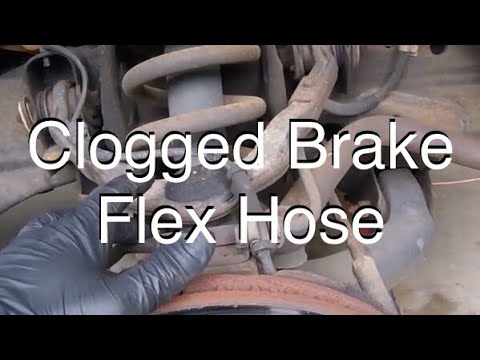

If brake fluid will not emerge from a bleeder, do not assume the metal line is clogged and start forcing something through it. The observation identifies a problem with that test under those conditions; it does not identify the failed part. The bleeder itself, the chosen bleeding method, a flexible hose, a hydraulic component or the tube may need investigation. The repair should follow the confirmed cause rather than the convenient name clogged brake line. A restricted circuit can also appear as a brake that applies or releases abnormally. These are different observations from a visible leak or a soft pedal. Record the actual behavior before attaching a diagnosis to it.
If a wheel remains hot or locked, braking is reduced, the pedal changes suddenly or fluid leaks, stop driving and arrange appropriate recovery. Opening a bleeder to make a dragging wheel release is not a repair or permission to continue driving. This guide explains how a workshop narrows the fault. It deliberately avoids a universal instruction to disconnect fittings or cycle a pump: the safe test procedure depends on the hydraulic layout and any electronically controlled braking equipment. For suspected wrong-fluid exposure rather than a localized flow problem, use the separate contamination and system-service guide. A chemical problem can require a wider investigation than one obstructed passage.
Define what is not flowing and under which conditions
A hydraulic circuit includes more than a length of metal tubing. It connects a pressure source, control components and wheel actuators, with flexible hoses where movement must be accommodated. A blockage somewhere in that path cannot be located by looking only at the far end. The circuit diagram and the point where the abnormal behavior was observed provide the starting map for diagnosis. Tell the workshop whether the concern arose during ordinary driving, gravity bleeding, pressure bleeding or a component replacement. Those situations impose different conditions. Note whether one wheel, two wheels or the entire system appeared affected.
Do not assume two wheels share a circuit merely because they are on the same axle; the vehicle's actual hydraulic arrangement matters. A symptom pattern is useful evidence only when interpreted against that arrangement. Also distinguish delayed application from delayed release. A wheel that receives pressure slowly presents a different question from one that holds pressure after the pedal is released. Both can involve a restriction, but neither uniquely identifies a hose. Mechanical binding at the wheel can mimic a release problem without an obstructed hydraulic passage. The technician should explain which possibility the next test is intended to separate.

Credit: m.roadkillcustoms.com
Useful information to bring to the workshop
- Bring the vehicle identification, repair history and the exact components recently disturbed. Include the part numbers of any new caliper, hose or master cylinder if available. Mention whether a reservoir ran low, whether a bleeder broke, and whether any fluid or chemical was added. The sequence matters: a fault present before a repair should not automatically be blamed on the newest part, but a new fault immediately afterward deserves a careful installation review. Photographs can preserve routing and visible damage without opening the system. They cannot show the inside of a hose or prove a port is clear. Do not create a test by pinching a hose, probing a passage or removing a fitting for a photograph. Avoid crawling beneath a vehicle supported only by a jack. Your most valuable contribution is a reliable history, not a potentially destructive preliminary experiment. Request a diagnosis that names the affected component or explains the remaining uncertainty. A phrase such as no flow at left rear bleeder describes an observation. It is not yet a parts order. Ask how the shop will distinguish an obstructed bleeder from a restriction farther upstream before replacing a long tube assembly.

Credit: ourbmw.wordpress.com
How a technician narrows the restriction
| The first checks establish the correct service setup and examine accessible components for damage or incorrect installation. The technician consults the vehicle procedure before deciding which tests are appropriate. A bleeder may need inspection separately from the rest of the circuit. A hose may be twisted or routed incorrectly after previous work. A metal line may be visibly kinked. Each finding should be confirmed rather than treated as an excuse to skip the remaining relevant checks. Pressure behavior can help distinguish an application problem from trapped pressure and mechanical binding. Any hydraulic isolation or pressure measurement must use suitable equipment and the vehicle's procedure. A change after relieving pressure shows that pressure contributed to the condition at that moment; it does not automatically identify the nearest hose as the only possible source. The shop must consider the upstream circuit and the mechanical condition of the brake. When a fault is localized, the repair should address the defective component and why it failed. Damaged tubing is replaced using an approved repair method; a hose with internal failure is replaced rather than restored with a cleaning chemical. If a new component causes an unexpected result, its compatibility and installation need checking. Repeating the same bleeding operation indefinitely does not add useful evidence once the setup has been verified. |
Avoid tests that create misleading confidence
- Passing air through a removed component is not equivalent to verifying its behavior in the assembled braking system. It also is not a recommended owner-level method of clearing a hydraulic restriction. A passage that permits some flow under one condition may still behave incorrectly under another. There is no reason to introduce workshop air or debris into a safety-critical circuit to obtain that limited observation.
- Do not use wire, drill bits, drain-cleaning products or an external brake-cleaner spray as an internal clearing strategy. Such methods do not establish the component's condition or its suitability for reuse. If contamination is suspected, the repair plan must address the substance and affected system rather than push it to the next component. Valeo’s fluid guidance emphasizes correct fluid and protection from contamination; that is different from authorizing a solvent flush.
- Likewise, do not assume a new hose cannot be at fault or that an old tube must be. Correct part selection, clean assembly and routing all need verification. A restriction diagnosis should be reproducible within the specified test method. Ask for the before-and-after findings rather than accepting that the part was changed because it was the easiest item to reach.
Common questions about apparent brake-line blockage
What can cause a hydraulic restriction?
Possible causes include a damaged or kinked tube, an internal hose problem, contamination or a fault within another hydraulic component. Their likelihood depends on the vehicle and history. CRP Automotive documents internal hose swelling as one cause of brake drag and pulling. That is evidence for considering the hose, not evidence that every dragging brake has the same defect. The difference between hose collapse and rigid-tube damage is particularly useful when discussing a diagnosis. A connection error can also matter after replacement work. The exact fitting and seat must match; thread engagement alone does not prove that a part belongs there. AGS describes the specifications needed to identify a brake-line fitting. A workshop should check the installed parts against the vehicle requirements rather than force an incompatible assembly into service.
Which symptoms actually locate the fault?
No single owner-observed symptom reliably locates a restriction. A pull, hot wheel, delayed release or uneven wear tells you where attention may be needed, but the cause still requires testing. A low pedal is not a specific blockage indicator either. Explain the symptom without adding certainty that the available evidence cannot support. For example, right front remains hot after ordinary braking is more useful than right front line must be clogged. The same discipline applies to a failed bleeding attempt. Was the correct bleeder identified? Was the method appropriate? Was the reservoir maintained correctly? Had the system been opened in a way requiring an additional service function? These questions belong in diagnosis. They should not be answered by improvising a universal sequence from an unrelated vehicle.
Can a restriction be cleared as a DIY shortcut?
Do not treat temporary restoration of flow as proof of a sound repair. The reason a passage became restricted may still be present, and its structure may be damaged. A defective flexible hose does not become a dependable new hose because a burst of pressure passes through it. A kinked metal tube is not restored by forcing its walls apart. Replacement or an approved component repair follows diagnosis. If the brake releases after pressure is relieved, the vehicle still needs repair and correct bleeding. That observation is a diagnostic clue for a professional, not a roadside workaround. Keep it out of traffic and tell the recovery operator if a wheel may lock again. No general distance or speed can be offered as safe for driving with an unresolved hydraulic fault.
What should a completed repair demonstrate?
The final record should identify the cause, the parts or procedures used, and the checks that establish normal operation. Fluid must meet the vehicle requirements. The circuit must be properly bled, with any required electronic service steps completed.
Connections and repaired areas need leak checks, and the original application or release problem must be reassessed. A clear stream from a bleeder is only one observation within that process. Ask whether the problem was reproduced and whether the same observation was normal after repair.
If diagnosis was limited because a symptom could not be reproduced, the report should say so rather than claim certainty. Keep the invoice and report recurrence promptly. Avoid changing additional parts or fluids before the workshop can reassess the evidence.
A careful restriction diagnosis saves unnecessary work by separating a local component problem from a wider system issue. It also prevents the misleading idea that hydraulic brakes are plumbing that can always be unclogged. The objective is correct pressure transmission and release, a sound pressure boundary, and dependable braking throughout the affected system.


Automotive reference information. Confirm specifications in the manual for your exact vehicle. Original replacement guides link to their research sources. About us


