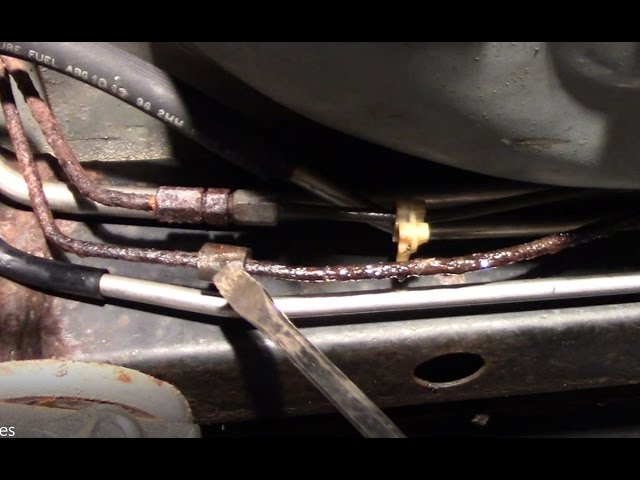

There is no general quick patch that makes a failed brake line safe to drive. A cut, leaking or ruptured hydraulic line needs the appropriate repair and brake-system checks before the vehicle returns to service.
If the car is already parked, leave it parked and arrange recovery.
Do not drive to a parts store to buy materials for a temporary fix.
This guide focuses on the immediate decisions: recognizing a possible hydraulic problem, protecting people, communicating with recovery staff and distinguishing a complete repair from an unsafe shortcut.
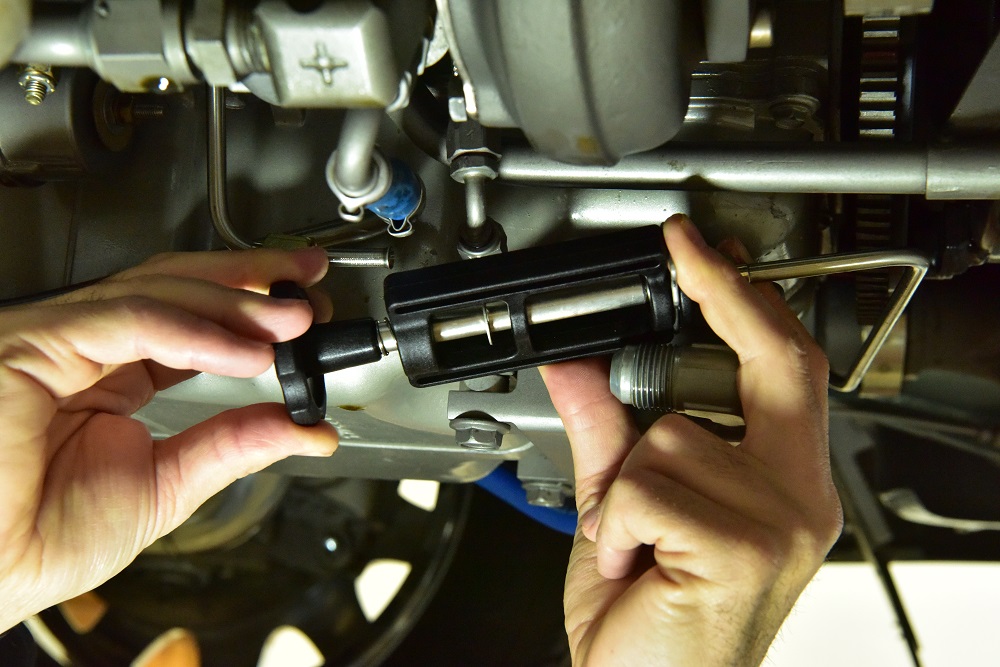
Credit: koultools.com
Treat the symptom as a stop-use decision
You do not need to identify the exact damaged fitting before deciding against further driving. Visible fluid loss associated with braking, an abnormal pedal or a brake-system warning can require urgent investigation. A line failure is one possible cause, not a diagnosis made from a photograph alone.
Keep the vehicle stationary once it is safely stopped. The priority is avoiding another journey while the system's ability to operate is uncertain.
Describe what happened without testing it again
Record whether the pedal changed suddenly. Note any brake warning message.
Describe where fluid appeared. Mention a recent impact or repair.
- Tell the repairer whether the reservoir was visibly low if you already observed it safely.
- Explain whether the vehicle was moving or parked when the problem appeared.
- Do not repeatedly press the pedal or move the car to reproduce the symptom.
- These details help triage without creating a new exposure.
- They also help distinguish a suspected hydraulic leak from unrelated water or oil beneath the vehicle.
Avoid relying on yesterday’s braking performance
A car that stopped normally on the previous journey can still have a serious fault now. A small puddle does not predict how quickly a defect will worsen under different conditions. Nor does a temporary return of pedal firmness establish that a leak has repaired itself.
| The decision should follow the present evidence and professional assessment, not the fact that the brakes worked recently. Do not use a quiet road as a place to find out. |
If the problem appears while moving
Concentrate on controlling the vehicle and reaching a safe stop using the vehicle's emergency instructions and the circumstances. Alert other road users as appropriate without distracting yourself from control.
Seek emergency assistance if there is an immediate traffic danger. A generic website cannot prescribe the correct control sequence for every braking system, road or speed.
Once safely stopped, do not restart the journey to test whether the problem persists.
Arrange recovery rather than a roadside patch
Tell the recovery provider that the vehicle may have impaired service brakes. Give its location and describe any access restrictions. The operator can determine suitable recovery equipment and loading arrangements.
- Do not represent the vehicle as normally driveable simply because the engine starts. The complete brake-line repair guide explains what must happen at the workshop after this immediate recovery decision.
Keep roadside inspection within safe limits
Do not crawl under the vehicle beside moving traffic. Do not lift it on an unstable shoulder.
- Keep passengers out of the traffic hazard as local circumstances permit.
- Avoid touching unidentified fluid.
- Do not loosen hydraulic fittings.
- Do not disconnect a hose to locate a leak.
- Do not reach near hot or moving components.
- Follow the recovery operator's instructions when help arrives.
A clear description from a safe position is more useful than a detailed inspection that exposes someone to traffic or an unsupported vehicle.
Photographs can help explain location, not certify safety
If safe, take an overview showing the vehicle area and a closer view of the visible wetness. Avoid placing your body beneath the car to frame the image. A photograph cannot show the condition of hidden tubing or confirm pressure integrity.
Send it as supporting information, with the time and observed symptoms. Do not ask the image alone to establish whether the car can be driven.
Distinguish a rigid pipe from a flexible hose
Rigid tubing and flexible brake hose serve different installation needs. Their repair and replacement methods are not interchangeable. Stainless braid on a flexible hose is not the same thing as a solid stainless tube.
- Identifying which component appears damaged helps the shop prepare, but it does not authorize an improvised repair. HELLA’s guidance on hoses and lines addresses these assemblies and their damage or routing considerations.
Do not create a leak test on the roadside
Searching for a leak by repeatedly applying pressure is not an appropriate roadside exercise for an unprepared owner. Nor should someone watch a suspect connection from beneath an inadequately supported car while another person operates the controls.
- The workshop can select the correct inspection method and system preparation. Preserve the observations you already have.
If the source remains uncertain, describe it as suspected rather than creating a stronger demonstration.
What a genuine repair appointment needs to cover
The job must identify the failed component, restore a permitted hydraulic assembly and verify the system. It may involve a complete replacement line, hose or another component rather than a short tubing section. The shop needs the vehicle details and access to the applicable service procedure. Ask whether its quote includes the work needed to return the system to service, rather than only fitting a visible part.
Why cutting out the wet spot is not automatically enough
The visible leak may be one part of a longer corroded or damaged area. A repair that retains unsuitable adjoining tubing does not solve that wider condition. The vehicle instructions may also restrict section repairs.
A flare union is not blanket permission to join a pipe anywhere convenient. Inspection and application requirements determine the scope. See brake-line union and section-repair limits for that separate workshop decision.
Why the correct tube still needs the correct connection
Tube diameter alone cannot establish compatibility. The fitting thread, flare form, mating seat and material specification matter too. A nut that seems to screw in is not a completed compatibility check.
The shop should identify the required parts before making a connection. Guessing from a wrench size or forcing an almost-fitting nut can turn a damaged line into a damaged port as well.
Why a replacement must be routed and retained properly
A repair is incomplete if the line is left rubbing, unsupported or strained at a fitting. A flexible hose must also have the required freedom of movement without twisting or contact. These installation details are difficult to establish during an improvised roadside job.
The replacement should reproduce the applicable routing and support requirements. Merely reaching from one connection to another is not the standard for completion.
Understand why bleeding is part of the recovery plan
After the system is opened, the appropriate restoration and bleeding procedure is required. The exact method depends on the vehicle and the extent to which fluid or air moved through its circuits. Some work requires diagnostic equipment or additional routines.
Ask the facility whether it can complete those steps for your model. A repair that cannot be finished with the available equipment is not ready for a drive home.
A fluid top-up does not replace containment
Adding fluid can change the reservoir level while leaving the failure untouched. It does not restore a cracked pipe, damaged hose or incorrect flare. It also does not prove that air has been removed or other faults resolved. Do not calculate a driving distance from how slowly the reservoir appears to fall. The correct decision is recovery and repair, not a supply of fluid for repeated roadside refills.
Ask how the shop will confirm completion
Request an explanation of the repair area inspection. Ask how the specified fluid level and system operation will be checked.
Confirm that abnormal pedal behavior or warnings must be resolved before release. Ask whether the repair includes inspection of adjoining lines where corrosion is involved.
- These are useful questions even if you do not perform the work yourself.
They distinguish a complete service from a promise that the new part “should be fine.”

Credit: www.amazon.com
Collect the facts that speed up the booking
Provide the vehicle identification and model details. Describe the symptoms and the location of any visible fluid.
Mention modifications or earlier brake-line repairs if known. Keep these observations separate from a diagnosis you have not confirmed.
Accurate information can reduce parts-ordering confusion and help the facility decide whether it has the equipment needed. It is more useful than asking for the cheapest patch before the component has been identified.
Do not use a firm pedal as the only clearance
A single pedal observation is not a complete inspection. A connection may be dry at rest yet unsuitable under the specified operating check.
- System behavior can also vary with operating state. The repairer should use the relevant procedure and examine the repaired assembly.
If the pedal remains abnormal or a warning returns, the vehicle needs further investigation rather than reassurance based on one acceptable press.
Require the leak itself to be resolved
The final assessment should address the original wet component and every connection disturbed during repair. Old residue should be distinguished from active leakage.
- An unexplained fresh wet area is not something to monitor by driving for a few days. Ask the facility to resolve it before collection.
A completed invoice should identify the repair, not simply record that fluid was added and the vehicle moved.
Plan collection without treating it as a test drive
Confirm with the shop that the required checks are complete. Ask about any outstanding recommendations.
Keep the repair paperwork. Report a new warning or changed pedal promptly.
- Do not deliberately make severe braking maneuvers on public roads to assess the repair yourself. If the car appears unsafe when collected, stop using it and contact the facility.
The customer handover should follow verification, not substitute for it.
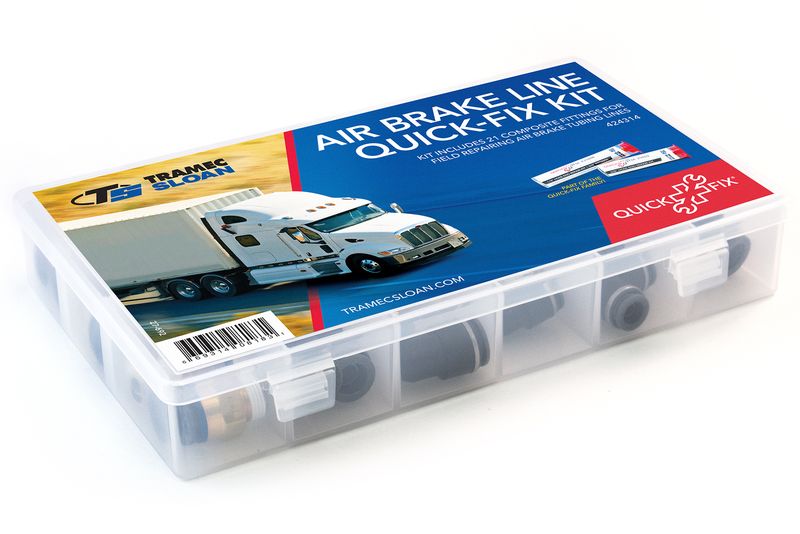
Credit: hd.tramec.com
Questions about temporary brake-line fixes
Is any temporary patch suitable for driving?
This article does not recommend one. A leak-stopping appearance is not proof of brake-service suitability.
The repair must meet the vehicle's requirements and pass the necessary checks. Tape, adhesive and external wrapping do not restore a hydraulic tube or its specified connection.
Choose recovery when a proper repair cannot be completed where the vehicle is located.
Can a cut line be blocked to use the other brakes?
Do not block a damaged circuit and treat the remaining brakes as permission to drive. That changes the system from its intended operation and does not establish adequate braking. A split hydraulic design is not an owner-approved repair strategy. Tell the recovery operator about the fault and have the vehicle transported for correct repair.
Can rubber hose and clamps bridge the break?
Ordinary rubber hose and screw clamps are not a substitute for a specified brake-line assembly. AGS’s fitting information likewise excludes standard low-pressure compression unions from brake use. A product's availability at a hardware shop does not establish compatibility with brake fluid, pressure or the vehicle connection. Do not improvise a bridge to reach a repair facility.
What is the fastest responsible next step?
Stop further use once safely parked. Give a recovery provider an accurate description.
Arrange a shop that can diagnose and complete the hydraulic repair.
Have the vehicle details and observations ready.
Speed comes from clear communication and correct preparation, not skipping the steps that make the brakes dependable again.


Automotive reference information. Confirm specifications in the manual for your exact vehicle. Original replacement guides link to their research sources. About us


